THE ADVENTURE COLLECTIVE® · Independent discovery and booking for outdoor travel

Explore three layers of ancient Egypt in one day: Memphis’s colossal relics, the Step Pyramid at Saqqara, and the experimental forms of Dahshur. This private, full‑day tour blends archaeology, geology and local insight with door‑to‑door transport.
Explore three layers of ancient Egypt in one day: Memphis’s colossal relics, the Step Pyramid at Saqqara, and the experimental forms of Dahshur. This private, full‑day tour blends archaeology, geology and local insight with door‑to‑door transport.
Morning light flattens the desert into a pale sheet as an air‑conditioned vehicle slips away from Cairo toward the west bank, carrying a private guide and a small party to the oldest monuments of pharaonic Egypt.
Verified experiences and guided adventures in the surrounding area.
Operated by HorizonTravel · Saqqara, Giza
Morning light flattens the desert into a pale sheet as an air‑conditioned vehicle slips away from Cairo toward the west bank, carrying a private guide and a small party to the oldest monuments of pharaonic Egypt.
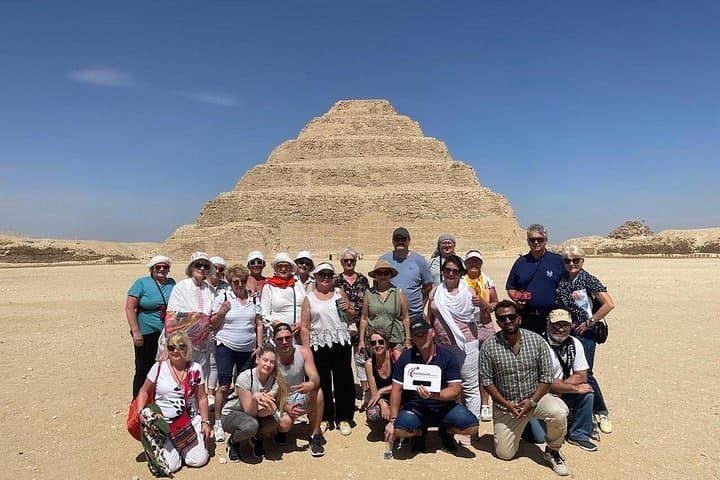
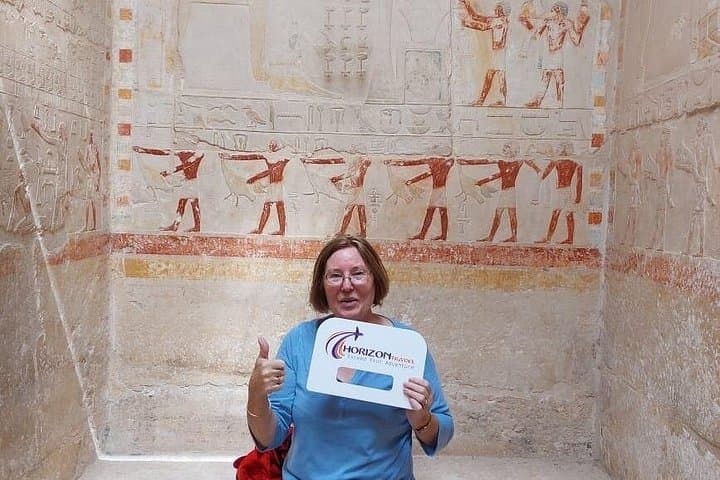
The day opens at Memphis, the sprawling ruins of an ancient capital where a colossal statue of Ramses II and the alabaster sphinx speak to millennia of empire. At Saqqara the Step Pyramid of Djoser marks a pivotal shift in masonry—stacked mastabas evolving into the first monumental stone tomb. You’ll move from carved reliefs in nobles’ tombs to the austere geometry of Dahshur, where the Bent Pyramid and the Red Pyramid reveal an experimental phase in slope and stone placement that paved the way for Giza’s later masterpieces.
Geology and craft are plain here: local limestone and fine Tura stone were quarried and manipulated into ever larger forms, while desert wind and sand continue to abrade exposed surfaces. Cultural notes: these sites span the Early Dynastic to Old Kingdom periods and remain active archaeological landscapes; local guides translate both the funerary symbolism and the practical constraints ancient builders faced.
Practical guidance: tours typically start around 8:00 AM and run 6–8 hours. Entrance fees are commonly separate, so carry cash or card and bring ID. Expect uneven ground and loose sand—sturdy shoes and sun protection are essential. Hydrate frequently, respect roped areas, and follow your guide’s route to minimize impact and make the most of each stop.
Most bookings cover guiding and transport only; entrance fees for Memphis, Saqqara and Dahshur are commonly paid onsite—bring cash or a card.
Yes—physical requirements are generally light, but expect walking on uneven ground and some steps; inform the operator of mobility needs ahead of time.
Access rules vary; some interiors are open while others close for conservation—your guide will advise on current access and safety restrictions.
Private guides are typically available in major languages; confirm your preferred language at booking to ensure availability.
HorizonTravel operates guided outdoor trips and adventures with an emphasis on safety, stewardship, and memorable experiences.


Morning light flattens the desert into a pale sheet as an air‑conditioned vehicle slips away from Cairo toward the west bank, carrying a private guide and a small party to the oldest monuments of pharaonic Egypt.
Morning light flattens the desert into a pale sheet as an air‑conditioned vehicle slips away from Cairo toward the west bank, carrying a private guide and a small party to the oldest monuments of pharaonic Egypt.
The day opens at Memphis, the sprawling ruins of an ancient capital where a colossal statue of Ramses II and the alabaster sphinx speak to millennia of empire. At Saqqara the Step Pyramid of Djoser marks a pivotal shift in masonry—stacked mastabas evolving into the first monumental stone tomb. You’ll move from carved reliefs in nobles’ tombs to the austere geometry of Dahshur, where the Bent Pyramid and the Red Pyramid reveal an experimental phase in slope and stone placement that paved the way for Giza’s later masterpieces.
Geology and craft are plain here: local limestone and fine Tura stone were quarried and manipulated into ever larger forms, while desert wind and sand continue to abrade exposed surfaces. Cultural notes: these sites span the Early Dynastic to Old Kingdom periods and remain active archaeological landscapes; local guides translate both the funerary symbolism and the practical constraints ancient builders faced.
Practical guidance: tours typically start around 8:00 AM and run 6–8 hours. Entrance fees are commonly separate, so carry cash or card and bring ID. Expect uneven ground and loose sand—sturdy shoes and sun protection are essential. Hydrate frequently, respect roped areas, and follow your guide’s route to minimize impact and make the most of each stop.