THE ADVENTURE COLLECTIVE® · Independent discovery and booking for outdoor travel

Set out from Höfn on a private full-day journey to three or four little-known glacier tongues of Vatnajökull. Expect short, uneven hikes, on-site glacier guidance, and a picnic beside ice that feels both ancient and immediate.
Set out from Höfn on a private full-day journey to three or four little-known glacier tongues of Vatnajökull. Expect short, uneven hikes, on-site glacier guidance, and a picnic beside ice that feels both ancient and immediate.
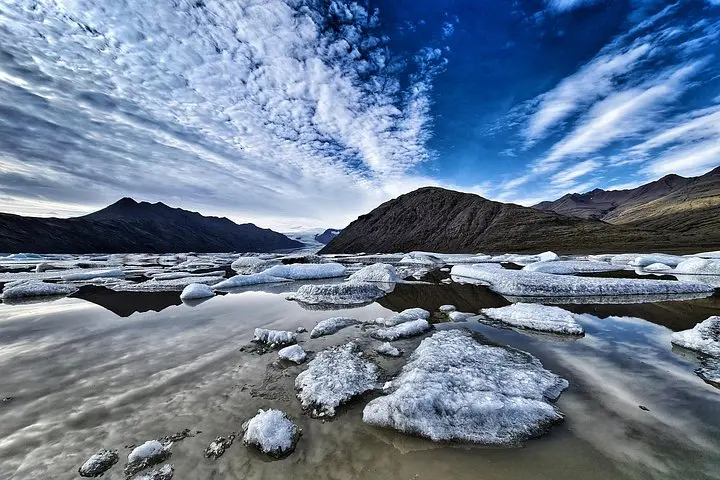
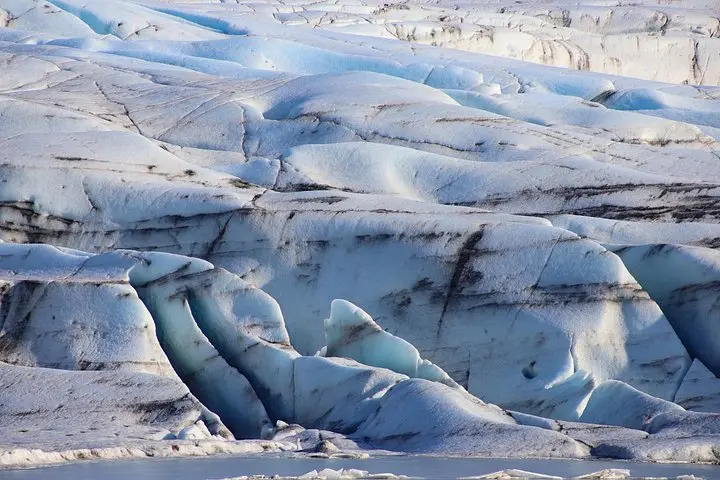
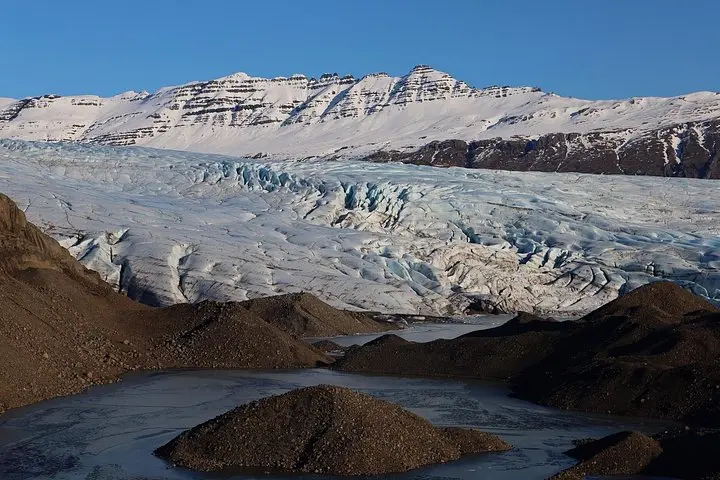
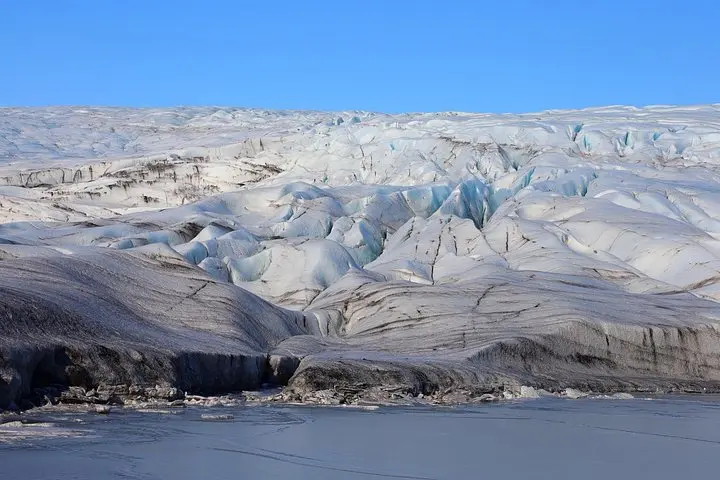
You pull on a windproof shell as the van peels away from Höfn and the coastline drops behind you. The road noses into low hills and then into the wide, slow country at Vatnajökull's edge — black sand, braided rivers that dare you to find a dry crossing, and ice tongues folding out from an inland sea of white. Your guide checks the map: today could mean Hoffellsjökull, Heinabergsjökull, the hidden west flank of Fláajökull and a close-up at Kvíárjökull. Weather and roads write the itinerary, but the promise is the same: glacier ice up close and a picnic where the world feels newly revealed.
Verified experiences and guided adventures in the surrounding area.
Operated by Marina Travel · Höfn, Austurland
You pull on a windproof shell as the van peels away from Höfn and the coastline drops behind you. The road noses into low hills and then into the wide, slow country at Vatnajökull's edge — black sand, braided rivers that dare you to find a dry crossing, and ice tongues folding out from an inland sea of white. Your guide checks the map: today could mean Hoffellsjökull, Heinabergsjökull, the hidden west flank of Fláajökull and a close-up at Kvíárjökull. Weather and roads write the itinerary, but the promise is the same: glacier ice up close and a picnic where the world feels newly revealed.
Vatnajökull is Europe’s largest ice cap, an accumulation of winter snows that compress into flowing ice over millennia. Those glaciers you visit are the cap’s fingers — dynamic, sculpted by subglacial rivers and summer melt. The surrounding terrain is volcanic and glacial in conversation: black lavas and ash fields abut milky meltwater channels, and waterfalls cascade off moraine ridges that mark where the ice once stood.
Local culture here is quietly tied to those edges. Fishing towns like Höfn grew on the fjord, but inland livelihoods have always read the seasons from the ice. Your guide will typically be a local who knows which gravel tracks open after a storm and which glacier tongues are safe to approach.
Practically, this is a full-day private tour — about eight hours door-to-door with moderate hiking. Expect several short walks from parking areas to glacier fronts: plan on 0.5–3 km per approach, with minimal elevation gain but uneven, icy, and wet terrain underfoot. The operator supplies a professional glacier guide; you’ll be kept at safe viewing distances and briefed on fragile ice features.
Bring sturdy, waterproof hiking boots, layered clothing for wind and sudden sun, and a daypack with water and snacks. Microspikes or rental crampons are wise in shoulder seasons. Roads are sometimes gravel; the guide times stops to avoid the worst weather and selects picnic spots that protect you from wind.
Timing matters: summer gives long daylight and easier roads, while late spring and early fall deliver dramatic light and fewer people but more variable conditions. The tour offers pickup in Höfn and from Jökulsárlón, and it will be canceled for unsafe weather — flexibility is part of the experience.
When you stand at a glacier’s toe and listen, the ice has a voice: slow, creaking, and indifferent. You return to Höfn with gravel in your soles, photographs that exaggerate nothing, and a clearer sense of how Iceland’s high ice shapes everything down to the shoreline.
The tour is about eight hours; expect several short hikes to glacier fronts totaling roughly 5–7 km, with mostly low elevation gain but uneven terrain.
No advanced experience required—the guide handles route choice and safety, but you should be comfortable on rocky, icy, or wet trails.
Layered clothing, waterproof boots, a windproof shell, and sunglasses are recommended; bring microspikes if you have them or request rentals.
Short walking sections make parts accessible, but the trip is not suitable for travelers with serious mobility limitations or recent spinal/cardiac issues.
This tour focuses on close-up views of glacier tongues and safe shoreline access; full glacier travel (rope/crampons roped travel) is not part of this itinerary unless specified.
The operator may cancel or alter the route for safety; full refunds are typically available if canceled at least 24 hours in advance, and the tour may be canceled same-day for unsafe conditions.
Marina Travel operates guided outdoor trips and adventures with an emphasis on safety, stewardship, and memorable experiences.
You pull on a windproof shell as the van peels away from Höfn and the coastline drops behind you. The road noses into low hills and then into the wide, slow country at Vatnajökull's edge — black sand, braided rivers that dare you to find a dry crossing, and ice tongues folding out from an inland sea of white. Your guide checks the map: today could mean Hoffellsjökull, Heinabergsjökull, the hidden west flank of Fláajökull and a close-up at Kvíárjökull. Weather and roads write the itinerary, but the promise is the same: glacier ice up close and a picnic where the world feels newly revealed.
You pull on a windproof shell as the van peels away from Höfn and the coastline drops behind you. The road noses into low hills and then into the wide, slow country at Vatnajökull's edge — black sand, braided rivers that dare you to find a dry crossing, and ice tongues folding out from an inland sea of white. Your guide checks the map: today could mean Hoffellsjökull, Heinabergsjökull, the hidden west flank of Fláajökull and a close-up at Kvíárjökull. Weather and roads write the itinerary, but the promise is the same: glacier ice up close and a picnic where the world feels newly revealed.
Vatnajökull is Europe’s largest ice cap, an accumulation of winter snows that compress into flowing ice over millennia. Those glaciers you visit are the cap’s fingers — dynamic, sculpted by subglacial rivers and summer melt. The surrounding terrain is volcanic and glacial in conversation: black lavas and ash fields abut milky meltwater channels, and waterfalls cascade off moraine ridges that mark where the ice once stood.
Local culture here is quietly tied to those edges. Fishing towns like Höfn grew on the fjord, but inland livelihoods have always read the seasons from the ice. Your guide will typically be a local who knows which gravel tracks open after a storm and which glacier tongues are safe to approach.
Practically, this is a full-day private tour — about eight hours door-to-door with moderate hiking. Expect several short walks from parking areas to glacier fronts: plan on 0.5–3 km per approach, with minimal elevation gain but uneven, icy, and wet terrain underfoot. The operator supplies a professional glacier guide; you’ll be kept at safe viewing distances and briefed on fragile ice features.
Bring sturdy, waterproof hiking boots, layered clothing for wind and sudden sun, and a daypack with water and snacks. Microspikes or rental crampons are wise in shoulder seasons. Roads are sometimes gravel; the guide times stops to avoid the worst weather and selects picnic spots that protect you from wind.
Timing matters: summer gives long daylight and easier roads, while late spring and early fall deliver dramatic light and fewer people but more variable conditions. The tour offers pickup in Höfn and from Jökulsárlón, and it will be canceled for unsafe weather — flexibility is part of the experience.
When you stand at a glacier’s toe and listen, the ice has a voice: slow, creaking, and indifferent. You return to Höfn with gravel in your soles, photographs that exaggerate nothing, and a clearer sense of how Iceland’s high ice shapes everything down to the shoreline.