THE ADVENTURE COLLECTIVE® · Independent discovery and booking for outdoor travel

Explore Giza with a private Egyptologist: walk among the pyramids, meet the Great Sphinx, enjoy a local lunch and a short camel ride. This tailored 4–6 hour tour balances history, close-up archaeology and practical comforts.
Explore Giza with a private Egyptologist: walk among the pyramids, meet the Great Sphinx, enjoy a local lunch and a short camel ride. This tailored 4–6 hour tour balances history, close-up archaeology and practical comforts.
You arrive on the Giza Plateau as the sun slices across ochre stone, the desert wind pushing cool grains across your boots while the three pyramids stand like machines of memory. A private Egyptologist meets you at an air-conditioned vehicle and the day unfolds with measured stops: wide-angle views, close-up masonry, and the Sphinx’s weathered face turning toward the Nile valley.
Verified experiences and guided adventures in the surrounding area.
Operated by Egypt Tours World · Giza, Giza Governorate
You arrive on the Giza Plateau as the sun slices across ochre stone, the desert wind pushing cool grains across your boots while the three pyramids stand like machines of memory. A private Egyptologist meets you at an air-conditioned vehicle and the day unfolds with measured stops: wide-angle views, close-up masonry, and the Sphinx’s weathered face turning toward the Nile valley.
The pyramids—Khufu, Khafre and Menkaure—date to Egypt’s Old Kingdom, roughly 4,500 years ago, built with stone, skilled labor and astronomical alignment that still puzzles engineers. Geologically, the plateau is limestone bedrock; erosion and restoration reveal layers of quarrying and human hands. Culturally, the site remains active: local Bedouin-led camel handlers offer short rides, and the adjoining Solar Boat Museum preserves the ceremonial craft of a pharaoh.
Practical guidance: expect 4–6 hours on a mostly flat but uneven plateau with loose sand; wear breathable shoes, sunscreen and a wide-brim hat. Bring small bills for tips and quick purchases at the nearby market. Photography is allowed, but climbing monuments is strictly prohibited and monitored. If you have mobility concerns, wheelchair access is possible at key viewpoints and your private guide can tailor stops.
Timing matters—early morning or late afternoon brings softer light and fewer crowds. Keep water close, move deliberately through the sun, and let the place speak: the stones hold a patient weight, the wind seems to measure out the centuries.
Tour inclusions vary—many private tours include transportation and a guide but the internal pyramid chambers can require separate entrance tickets; confirm with your operator before the tour.
Short, guided camel rides are commonly offered and generally safe; children should be supervised and handlers may require a small additional fee.
Photography is allowed at most exterior areas; flash or tripods may be restricted inside certain chambers—follow site signage and your guide’s instructions.
Key viewpoints and some paths are wheelchair accessible, and private tours can adapt the itinerary to reduce walking distances—notify your booking of accessibility needs.
Egypt Tours World operates guided outdoor trips and adventures with an emphasis on safety, stewardship, and memorable experiences.
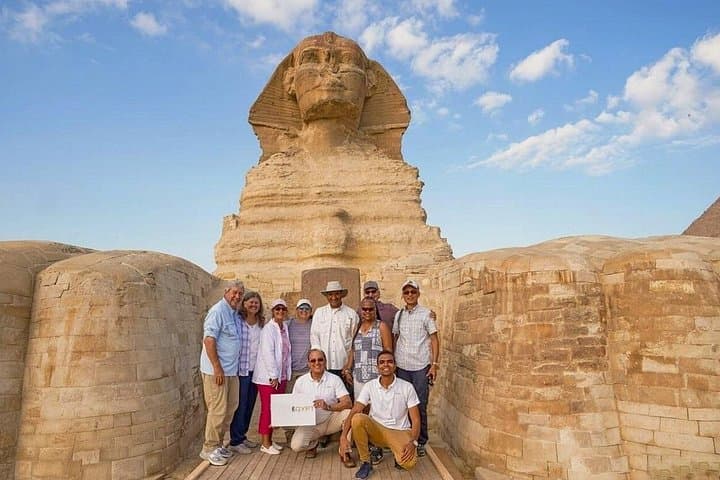
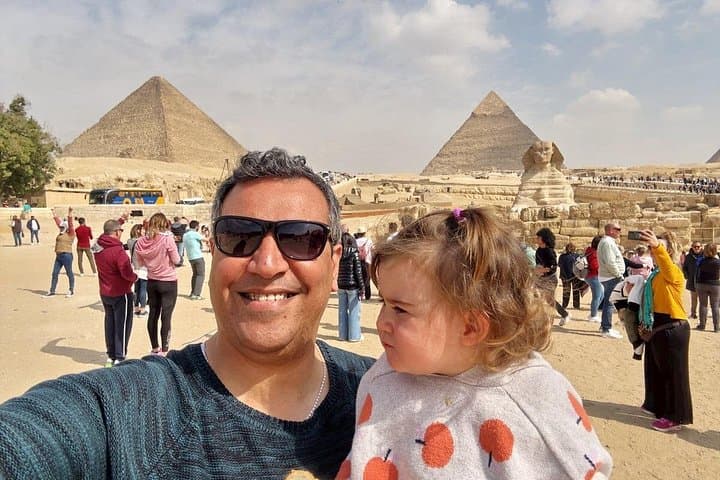
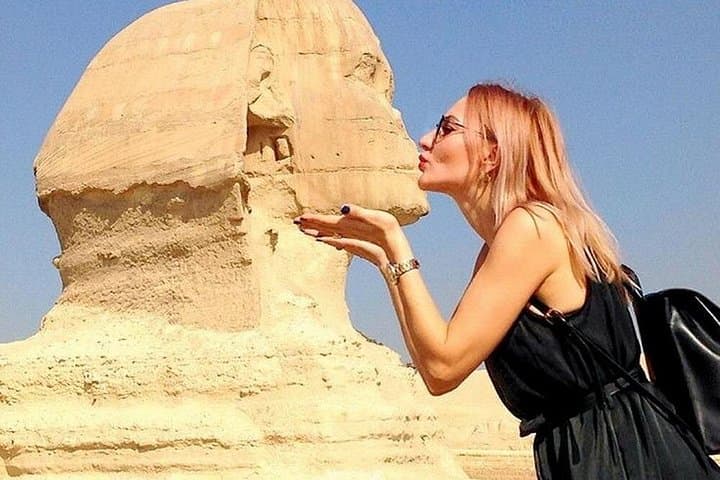
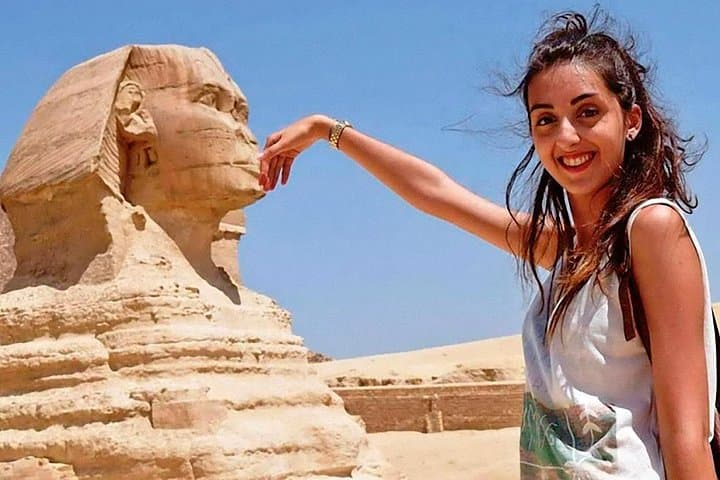
You arrive on the Giza Plateau as the sun slices across ochre stone, the desert wind pushing cool grains across your boots while the three pyramids stand like machines of memory. A private Egyptologist meets you at an air-conditioned vehicle and the day unfolds with measured stops: wide-angle views, close-up masonry, and the Sphinx’s weathered face turning toward the Nile valley.
You arrive on the Giza Plateau as the sun slices across ochre stone, the desert wind pushing cool grains across your boots while the three pyramids stand like machines of memory. A private Egyptologist meets you at an air-conditioned vehicle and the day unfolds with measured stops: wide-angle views, close-up masonry, and the Sphinx’s weathered face turning toward the Nile valley.
The pyramids—Khufu, Khafre and Menkaure—date to Egypt’s Old Kingdom, roughly 4,500 years ago, built with stone, skilled labor and astronomical alignment that still puzzles engineers. Geologically, the plateau is limestone bedrock; erosion and restoration reveal layers of quarrying and human hands. Culturally, the site remains active: local Bedouin-led camel handlers offer short rides, and the adjoining Solar Boat Museum preserves the ceremonial craft of a pharaoh.
Practical guidance: expect 4–6 hours on a mostly flat but uneven plateau with loose sand; wear breathable shoes, sunscreen and a wide-brim hat. Bring small bills for tips and quick purchases at the nearby market. Photography is allowed, but climbing monuments is strictly prohibited and monitored. If you have mobility concerns, wheelchair access is possible at key viewpoints and your private guide can tailor stops.
Timing matters—early morning or late afternoon brings softer light and fewer crowds. Keep water close, move deliberately through the sun, and let the place speak: the stones hold a patient weight, the wind seems to measure out the centuries.