THE ADVENTURE COLLECTIVE® · Independent discovery and booking for outdoor travel

An eight-hour private loop from Cairo that covers the Giza pyramids, the Sphinx, Saqqara’s Step Pyramid and ancient Memphis. Expect uneven limestone, desert wind, and an immersive primer on Egypt’s Old Kingdom.
An eight-hour private loop from Cairo that covers the Giza pyramids, the Sphinx, Saqqara’s Step Pyramid and ancient Memphis. Expect uneven limestone, desert wind, and an immersive primer on Egypt’s Old Kingdom.
You step from an air-conditioned vehicle into a wash of dry heat; the plateau’s stones stare back like an old city that refuses to forget. The three great pyramids—Khufu, Khafre and Menkaure—rise from the sand with scale that shrugs off distance, while the Sphinx watches traffic and tourists with the patience of carved limestone. A short drive south, Saqqara’s Step Pyramid of Djoser announces the shift from monumental block to architectural experiment, the first stone building to rewrite funerary architecture.
Verified experiences and guided adventures in the surrounding area.
Operated by Hesham Egypt tour guide · Giza, Giza Governorate
You step from an air-conditioned vehicle into a wash of dry heat; the plateau’s stones stare back like an old city that refuses to forget. The three great pyramids—Khufu, Khafre and Menkaure—rise from the sand with scale that shrugs off distance, while the Sphinx watches traffic and tourists with the patience of carved limestone. A short drive south, Saqqara’s Step Pyramid of Djoser announces the shift from monumental block to architectural experiment, the first stone building to rewrite funerary architecture.
This loop links sites that anchor Egypt’s long arc: Giza’s Old Kingdom tomb complexes, Saqqara’s early dynastic cemeteries and Memphis, the ancient capital founded around 3200 BCE. Geologically, the limestone plateau around Giza is a sculpted remnant of ancient seas; wind and time have softened edges and exposed layers of human work. Culturally, expect vendors, local guides who speak in rapid, knowledgeable cadences, and a living urban backdrop that presses right up against antiquity.
Practical guidance: wear sturdy, closed shoes for uneven limestone and loose sand, carry at least 2 liters of water per person, and plan for an 8-hour day with moderate walking. Admission fees to monuments are commonly extra—confirm with your operator—and mornings or late afternoons offer milder light for photos and cooler temperatures. Respect ropes and signage: preservation is active and fragile. With sensible pacing, this private full-day tour delivers both the sweep of iconic monuments and quieter corners—the carved reliefs, the mudbrick remains of Memphis—that reward a curious eye.
No; standard private tours frequently exclude monument entrance fees and special-site permits—confirm with the operator and bring cash or a card if allowed.
Camel rides near the Giza plateau are often offered on-site for an extra fee and are typically optional; confirm if you want one when booking.
Yes; this private tour includes pickup and drop-off from Cairo/Giza hotels and may offer port pickup—specify your pickup point when booking.
Lightweight, modest clothing that covers shoulders and knees is recommended; breathable fabrics are best for heat while observing local norms.
Hesham Egypt tour guide operates guided outdoor trips and adventures with an emphasis on safety, stewardship, and memorable experiences.



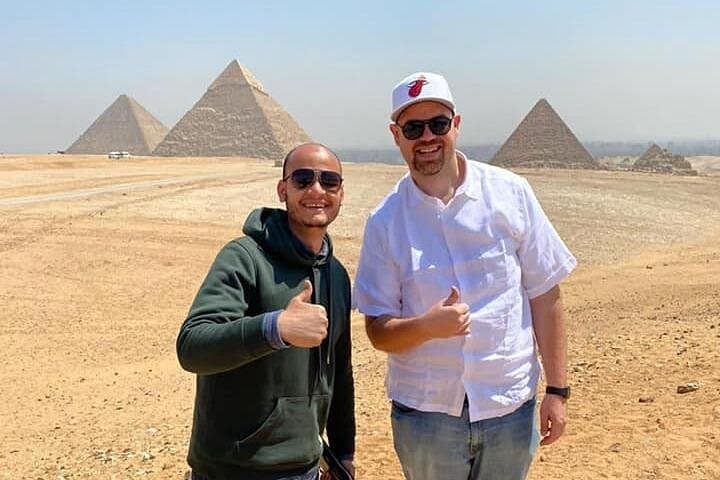
You step from an air-conditioned vehicle into a wash of dry heat; the plateau’s stones stare back like an old city that refuses to forget. The three great pyramids—Khufu, Khafre and Menkaure—rise from the sand with scale that shrugs off distance, while the Sphinx watches traffic and tourists with the patience of carved limestone. A short drive south, Saqqara’s Step Pyramid of Djoser announces the shift from monumental block to architectural experiment, the first stone building to rewrite funerary architecture.
You step from an air-conditioned vehicle into a wash of dry heat; the plateau’s stones stare back like an old city that refuses to forget. The three great pyramids—Khufu, Khafre and Menkaure—rise from the sand with scale that shrugs off distance, while the Sphinx watches traffic and tourists with the patience of carved limestone. A short drive south, Saqqara’s Step Pyramid of Djoser announces the shift from monumental block to architectural experiment, the first stone building to rewrite funerary architecture.
This loop links sites that anchor Egypt’s long arc: Giza’s Old Kingdom tomb complexes, Saqqara’s early dynastic cemeteries and Memphis, the ancient capital founded around 3200 BCE. Geologically, the limestone plateau around Giza is a sculpted remnant of ancient seas; wind and time have softened edges and exposed layers of human work. Culturally, expect vendors, local guides who speak in rapid, knowledgeable cadences, and a living urban backdrop that presses right up against antiquity.
Practical guidance: wear sturdy, closed shoes for uneven limestone and loose sand, carry at least 2 liters of water per person, and plan for an 8-hour day with moderate walking. Admission fees to monuments are commonly extra—confirm with your operator—and mornings or late afternoons offer milder light for photos and cooler temperatures. Respect ropes and signage: preservation is active and fragile. With sensible pacing, this private full-day tour delivers both the sweep of iconic monuments and quieter corners—the carved reliefs, the mudbrick remains of Memphis—that reward a curious eye.