THE ADVENTURE COLLECTIVE® · Independent discovery and booking for outdoor travel

Spend a private full day at Giza: view the Great Pyramids, take a one-hour camel ride, explore the Egyptian Museum’s pharaonic collection and wander Khan el-Khalili bazaar with an Egyptologist guide. This practical, all-inclusive tour covers transport, lunch and entry fees.
Spend a private full day at Giza: view the Great Pyramids, take a one-hour camel ride, explore the Egyptian Museum’s pharaonic collection and wander Khan el-Khalili bazaar with an Egyptologist guide. This practical, all-inclusive tour covers transport, lunch and entry fees.
The sun climbs over the desert rim and the Pyramids of Giza appear—monolithic, sun-baked blocks cutting a clear silhouette against Cairo’s skyline. You arrive by private vehicle; dust and city hum fall away as a guide leads you onto the plateau and a string of camels bobs across the sand, each animal sway offering a new angle of Khufu, Khafre and Menkaure.
Verified experiences and guided adventures in the surrounding area.
Operated by Egypt Tours Excursions · Giza, Cairo Governorate
The sun climbs over the desert rim and the Pyramids of Giza appear—monolithic, sun-baked blocks cutting a clear silhouette against Cairo’s skyline. You arrive by private vehicle; dust and city hum fall away as a guide leads you onto the plateau and a string of camels bobs across the sand, each animal sway offering a new angle of Khufu, Khafre and Menkaure.
These monuments date to the Fourth Dynasty (around 2600–2500 BCE), built on limestone bedrock that has resisted millennia of wind and urban growth. Nearby, the Sphinx—carved from the same plateau—keeps watch over the valley temple where ancient rituals took place. Later, the Egyptian Museum in Tahrir holds five millennia of artifacts, from funerary masks to Tutankhamen’s treasures, a compact primer on pharaonic civilization.
Culture here mixes living city life with layered antiquity: vendors at Khan el-Khalili sell copperware and spices while local flavors and the Nile’s presence thread the day together.
Practical guidance: this is a full-day, private tour (about 9 hours) that combines short walks with vehicle transfers and a one-hour camel ride. Wear sturdy closed-toe shoes for sandy terrain and museum floors, sun protection and breathable layers for sudden temperature shifts. Carry cash for bazaar purchases and tips, and bring a small bottle of water for walking—more will be provided in the vehicle. Photography is allowed at most sites but avoid climbing monuments. Pace yourself: quench heat quickly, move slowly around the plateau and let the guide point out conservation-sensitive areas.
Yes—entrance fees to the Giza Plateau sites and the Egyptian Museum are included in the tour price.
Yes—the one-hour camel ride is guided and suitable for first-time riders; inform your guide of any mobility concerns before mounting.
Photography is generally allowed in many halls but restricted in select exhibits; follow signage and staff instructions on camera use.
Yes—private pick up and return from hotels in Cairo and Giza are included in the itinerary.
Egypt Tours Excursions operates guided outdoor trips and adventures with an emphasis on safety, stewardship, and memorable experiences.
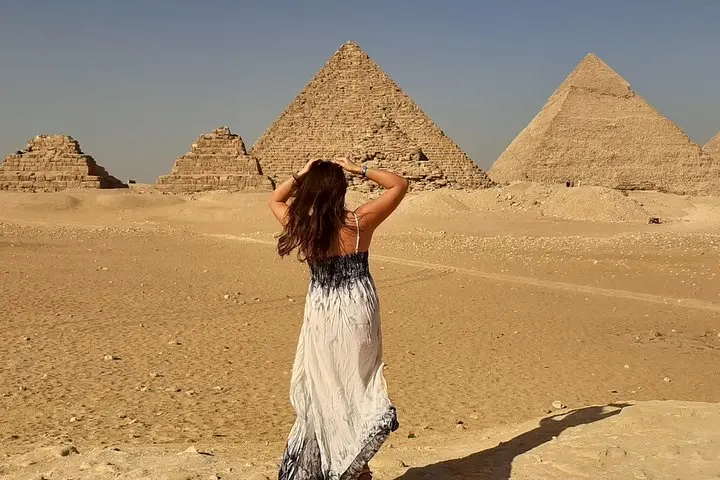
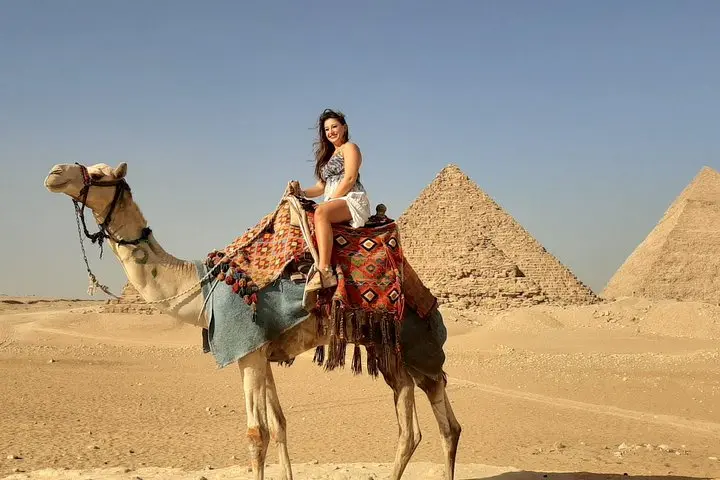
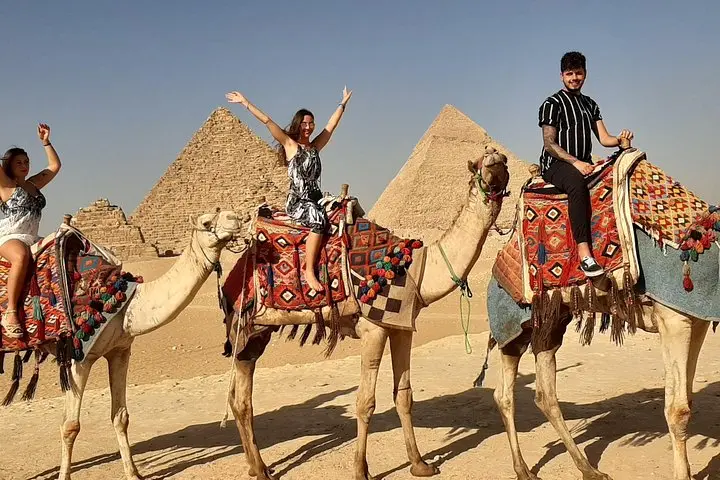
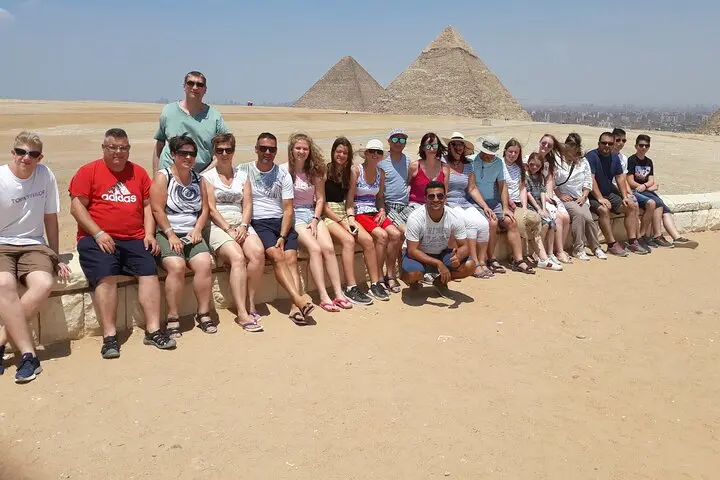
The sun climbs over the desert rim and the Pyramids of Giza appear—monolithic, sun-baked blocks cutting a clear silhouette against Cairo’s skyline. You arrive by private vehicle; dust and city hum fall away as a guide leads you onto the plateau and a string of camels bobs across the sand, each animal sway offering a new angle of Khufu, Khafre and Menkaure.
The sun climbs over the desert rim and the Pyramids of Giza appear—monolithic, sun-baked blocks cutting a clear silhouette against Cairo’s skyline. You arrive by private vehicle; dust and city hum fall away as a guide leads you onto the plateau and a string of camels bobs across the sand, each animal sway offering a new angle of Khufu, Khafre and Menkaure.
These monuments date to the Fourth Dynasty (around 2600–2500 BCE), built on limestone bedrock that has resisted millennia of wind and urban growth. Nearby, the Sphinx—carved from the same plateau—keeps watch over the valley temple where ancient rituals took place. Later, the Egyptian Museum in Tahrir holds five millennia of artifacts, from funerary masks to Tutankhamen’s treasures, a compact primer on pharaonic civilization.
Culture here mixes living city life with layered antiquity: vendors at Khan el-Khalili sell copperware and spices while local flavors and the Nile’s presence thread the day together.
Practical guidance: this is a full-day, private tour (about 9 hours) that combines short walks with vehicle transfers and a one-hour camel ride. Wear sturdy closed-toe shoes for sandy terrain and museum floors, sun protection and breathable layers for sudden temperature shifts. Carry cash for bazaar purchases and tips, and bring a small bottle of water for walking—more will be provided in the vehicle. Photography is allowed at most sites but avoid climbing monuments. Pace yourself: quench heat quickly, move slowly around the plateau and let the guide point out conservation-sensitive areas.