THE ADVENTURE COLLECTIVE® · Independent discovery and booking for outdoor travel

A private, full-day Cairo experience that combines the Giza Pyramids and Sphinx with the Egyptian Museum’s treasures, capped by the bustling lanes of Khan El-Khalili bazaar. Expect expert narration, an included lunch, and close-up views of ancient Egypt’s highlights.
A private, full-day Cairo experience that combines the Giza Pyramids and Sphinx with the Egyptian Museum’s treasures, capped by the bustling lanes of Khan El-Khalili bazaar. Expect expert narration, an included lunch, and close-up views of ancient Egypt’s highlights.
Sunlight shears across the Giza plateau as you step from an air-conditioned minivan into wind-flicked sand; the Great Pyramid rises like an engineered mountain, its blocks throwing staccato shadows. The Sphinx watches the road to Cairo, and nearby vendors arrange papyrus scrolls and citrus-scented tea as if on cue.
Verified experiences and guided adventures in the surrounding area.
Operated by Aly of Egypt Tours · Cairo, Cairo Governorate
Sunlight shears across the Giza plateau as you step from an air-conditioned minivan into wind-flicked sand; the Great Pyramid rises like an engineered mountain, its blocks throwing staccato shadows. The Sphinx watches the road to Cairo, and nearby vendors arrange papyrus scrolls and citrus-scented tea as if on cue.
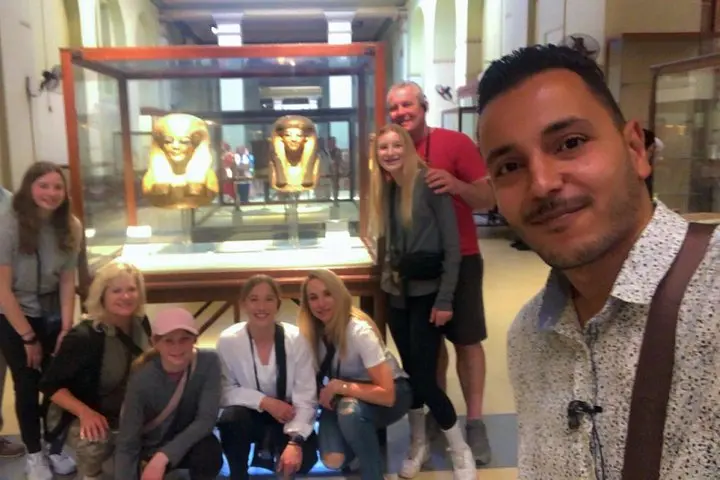
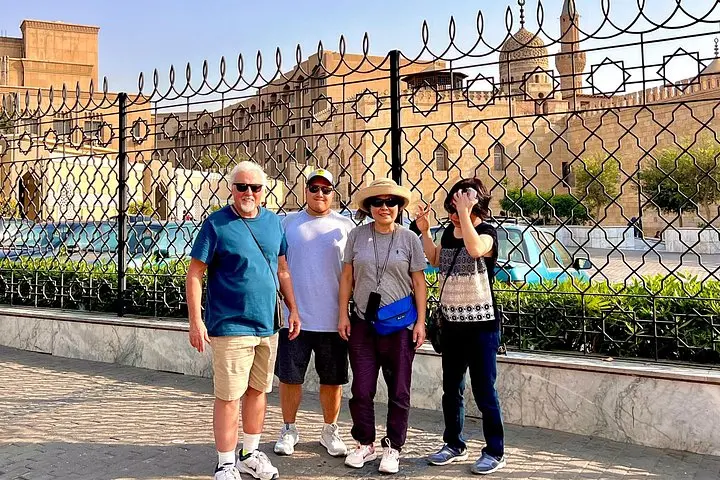
This private, full-day tour pairs two millennia of material history with the living pulse of the city. The pyramids—built in the Fourth Dynasty for Khufu, Khafre and Menkaure—sit on a limestone cap that records ancient shorelines and Nile-driven sedimentation. The Egyptian Museum in Tahrir houses both delicate funerary goldwork and Tutankhamun’s famous trove; the objects are the slow, detailed handwriting of a civilization obsessed with afterlife architecture. Khan El-Khalili’s alleys tell a different story: Ottoman-era commerce layered with modern hawkers, metalworkers and coffeehouses where locals trade news.
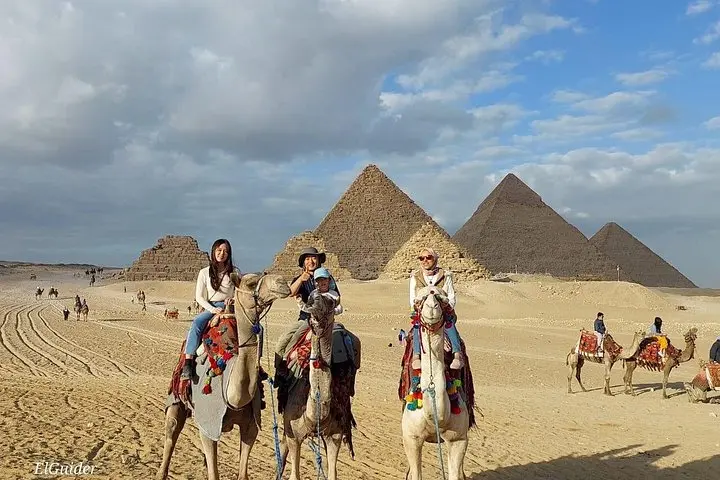
Your licensed Egyptologist guides the day: an optional camel ride at Giza, a live papyrus demonstration, and lunch at a local restaurant. Expect city traffic, variable museum lighting, and close-up views of artifacts; photography rules apply inside the museum. Practical tips: wear closed walking shoes for uneven stone and compacted sand, carry a refillable water bottle, and bring sun protection and modest clothing for mosque or museum entry. Allow time for bargaining in the bazaar and budget small local tips for drivers and guides. The route is friendly to most travelers, but those with spine or heart issues should consult the tour operator beforehand.
Standard tour price often excludes official museum and pyramid site entrance fees; confirm with the operator—your Egyptologist will explain ticket costs and camera fees at the museum.
Camel rides are optional and typically cost extra on-site; the guide can arrange one and advise on safety and fair pricing.
The tour runs about nine hours with hotel pickup and drop-off in Cairo or Giza provided in a private air-conditioned minivan.
The itinerary involves uneven terrain at Giza and multiple stairs inside the museum; travelers with spinal, heart, or pregnancy concerns are advised to consult the operator before booking.
Aly of Egypt Tours operates guided outdoor trips and adventures with an emphasis on safety, stewardship, and memorable experiences.
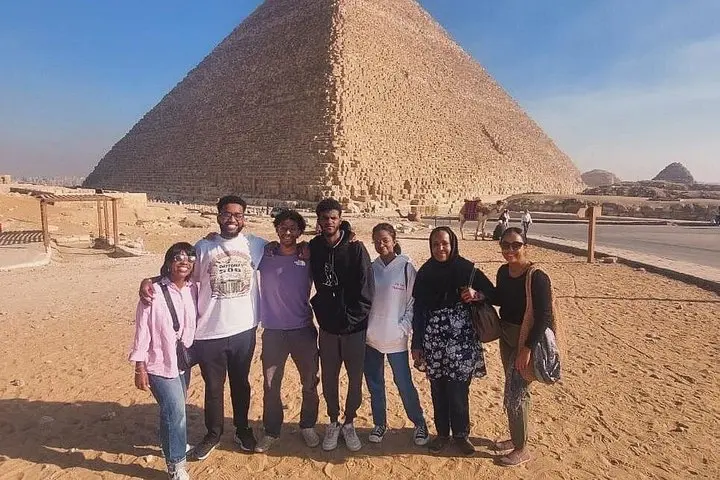
Sunlight shears across the Giza plateau as you step from an air-conditioned minivan into wind-flicked sand; the Great Pyramid rises like an engineered mountain, its blocks throwing staccato shadows. The Sphinx watches the road to Cairo, and nearby vendors arrange papyrus scrolls and citrus-scented tea as if on cue.
Sunlight shears across the Giza plateau as you step from an air-conditioned minivan into wind-flicked sand; the Great Pyramid rises like an engineered mountain, its blocks throwing staccato shadows. The Sphinx watches the road to Cairo, and nearby vendors arrange papyrus scrolls and citrus-scented tea as if on cue.
This private, full-day tour pairs two millennia of material history with the living pulse of the city. The pyramids—built in the Fourth Dynasty for Khufu, Khafre and Menkaure—sit on a limestone cap that records ancient shorelines and Nile-driven sedimentation. The Egyptian Museum in Tahrir houses both delicate funerary goldwork and Tutankhamun’s famous trove; the objects are the slow, detailed handwriting of a civilization obsessed with afterlife architecture. Khan El-Khalili’s alleys tell a different story: Ottoman-era commerce layered with modern hawkers, metalworkers and coffeehouses where locals trade news.
Your licensed Egyptologist guides the day: an optional camel ride at Giza, a live papyrus demonstration, and lunch at a local restaurant. Expect city traffic, variable museum lighting, and close-up views of artifacts; photography rules apply inside the museum. Practical tips: wear closed walking shoes for uneven stone and compacted sand, carry a refillable water bottle, and bring sun protection and modest clothing for mosque or museum entry. Allow time for bargaining in the bazaar and budget small local tips for drivers and guides. The route is friendly to most travelers, but those with spine or heart issues should consult the tour operator beforehand.