THE ADVENTURE COLLECTIVE® · Independent discovery and booking for outdoor travel

Spend a private day in Cappadocia with a licensed guide, driver, and minivan—customize your route through Göreme’s rock churches, Pasabag’s fairy chimneys, Kaymaklı’s underground city, and a traditional pottery demo. Ideal for families and travelers who want flexibility and local insight.
Spend a private day in Cappadocia with a licensed guide, driver, and minivan—customize your route through Göreme’s rock churches, Pasabag’s fairy chimneys, Kaymaklı’s underground city, and a traditional pottery demo. Ideal for families and travelers who want flexibility and local insight.
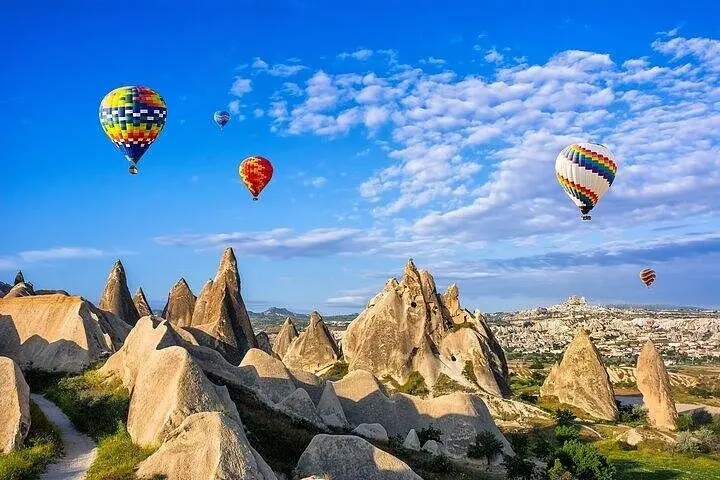
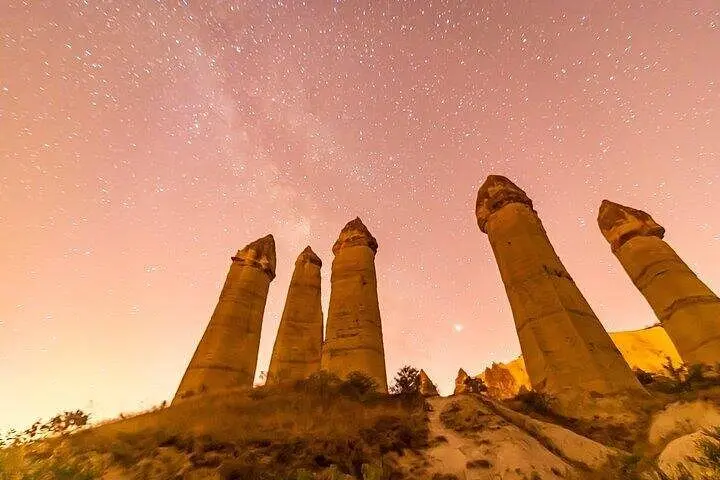
The van eases onto a dusty track just as the sun finds the rim of the valley, and a row of stone spires—fairy chimneys—throws long, clean shadows across golden tuff. Your guide points out a chimney with a three-headed cap, calls it a monk’s hood, and suggests the order of the day: a church with frescoes, a valley that looks like an otherworldly sculpture garden, a pottery wheel where clay lifts like dough, and an underground city where daylight is a rumor.
Verified experiences and guided adventures in the surrounding area.
Operated by Bergin Tours · Ürgüp, Nevşehir
The van eases onto a dusty track just as the sun finds the rim of the valley, and a row of stone spires—fairy chimneys—throws long, clean shadows across golden tuff. Your guide points out a chimney with a three-headed cap, calls it a monk’s hood, and suggests the order of the day: a church with frescoes, a valley that looks like an otherworldly sculpture garden, a pottery wheel where clay lifts like dough, and an underground city where daylight is a rumor.
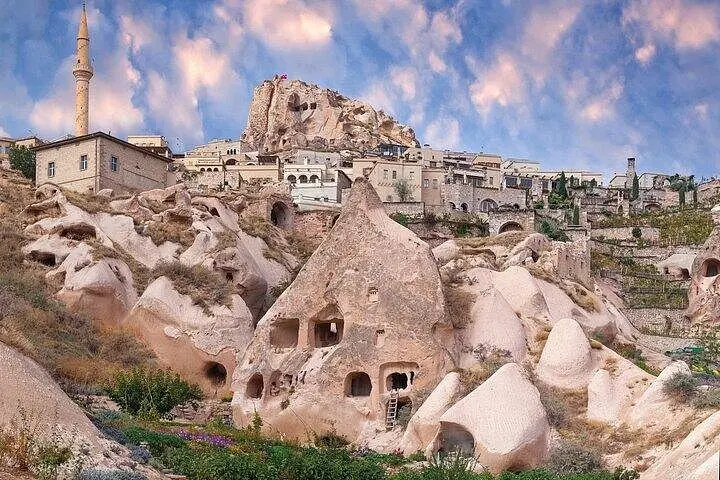
Cappadocia’s landscape is the product of fire and slow patience. Millennia of volcanic ash from Mount Erciyes and Mount Hasan compacted into soft tuff, then wind and rain carved chimneys, cones, and valleys. Humans responded: early Christians hollowed out sanctuaries and painted them in bright pigments, while entire communities tunneled downward to escape invaders. The result is a region where geology and human history are stitched together in the same rock.
A private minivan and licensed guide let you move at your tempo—linger at the Göreme Open Air Museum to study ninth‑century frescoes, have lunch in a family-run café, then trail a potter in Avanos as they coax local clay into bowls. The itinerary commonly includes Pasabag (Monks Valley) with its mushroom caps, Kaymaklı Underground City’s labyrinthine levels, Pigeon Valley for a short walk, and a stop in a carpet, onyx, or leather workshop for anyone curious about local crafts.
Because this is a private tour, customization is the hook: photography stops at sunrise or sunset, extra time in a bakery for Turkish tea, or skipping a site in favor of a quiet ridge. Entrance fees for major sites are not always included—Göreme Open Air Museum is about €20 and Kaymaklı roughly €13—so budget cash or card.
Practical planning is simple. The full day runs about 6–8 hours with hotel pickup in the Cappadocia towns; the terrain alternates between short, uneven walks and flat roads accessible by van. Wear sturdy shoes for tuff and uneven steps, carry 1–2 liters of water, and bring layered clothing—the temperature swings are real between sunlit ridges and cool cave interiors. If you want the floating balloons in your photos, schedule this day around a morning when balloons launch, but remember the balloons are run by independent operators and may fly before your tour begins.
A private guide transforms Cappadocia from a set of postcard images into a narrative: geology paired with human adaptation, a landscape that both shapes and shelters culture. For a first‑time visitor who wants history, hands‑on craft, and the freedom to choose the rhythm of discovery, this is the easiest way to make the most of a single day in a singular place.
Yes—hotel pickup and drop‑off within Cappadocia towns is included; confirm your exact pickup time when you book.
Major site entrance fees are typically not included; Göreme Open Air Museum is about €20 and Kaymaklı Underground City about €13—your guide can pay and collect if you prefer.
This is a private tour, so you can customize the route with your guide to spend more time at certain sites or add local experiences.
Underground cities have low ceilings and narrow passages; if you are claustrophobic, tell your guide—there are alternatives such as additional valley walks or pottery demos.
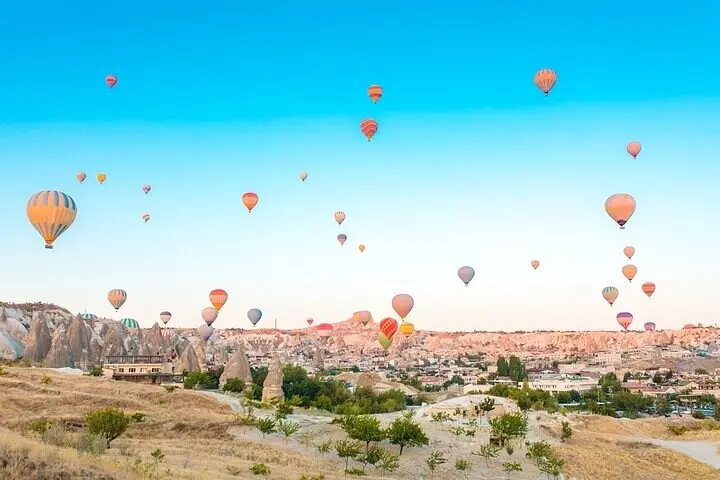
Balloon flights are common at sunrise; your tour can include viewpoints for balloon photos but balloon operations are independent and their schedule is weather dependent.
Yes—the tour is private and labeled physically easy, with options for infant seats and the ability to set a pace suitable for children.
Bergin Tours operates guided outdoor trips and adventures with an emphasis on safety, stewardship, and memorable experiences.
The van eases onto a dusty track just as the sun finds the rim of the valley, and a row of stone spires—fairy chimneys—throws long, clean shadows across golden tuff. Your guide points out a chimney with a three-headed cap, calls it a monk’s hood, and suggests the order of the day: a church with frescoes, a valley that looks like an otherworldly sculpture garden, a pottery wheel where clay lifts like dough, and an underground city where daylight is a rumor.
The van eases onto a dusty track just as the sun finds the rim of the valley, and a row of stone spires—fairy chimneys—throws long, clean shadows across golden tuff. Your guide points out a chimney with a three-headed cap, calls it a monk’s hood, and suggests the order of the day: a church with frescoes, a valley that looks like an otherworldly sculpture garden, a pottery wheel where clay lifts like dough, and an underground city where daylight is a rumor.
Cappadocia’s landscape is the product of fire and slow patience. Millennia of volcanic ash from Mount Erciyes and Mount Hasan compacted into soft tuff, then wind and rain carved chimneys, cones, and valleys. Humans responded: early Christians hollowed out sanctuaries and painted them in bright pigments, while entire communities tunneled downward to escape invaders. The result is a region where geology and human history are stitched together in the same rock.
A private minivan and licensed guide let you move at your tempo—linger at the Göreme Open Air Museum to study ninth‑century frescoes, have lunch in a family-run café, then trail a potter in Avanos as they coax local clay into bowls. The itinerary commonly includes Pasabag (Monks Valley) with its mushroom caps, Kaymaklı Underground City’s labyrinthine levels, Pigeon Valley for a short walk, and a stop in a carpet, onyx, or leather workshop for anyone curious about local crafts.
Because this is a private tour, customization is the hook: photography stops at sunrise or sunset, extra time in a bakery for Turkish tea, or skipping a site in favor of a quiet ridge. Entrance fees for major sites are not always included—Göreme Open Air Museum is about €20 and Kaymaklı roughly €13—so budget cash or card.
Practical planning is simple. The full day runs about 6–8 hours with hotel pickup in the Cappadocia towns; the terrain alternates between short, uneven walks and flat roads accessible by van. Wear sturdy shoes for tuff and uneven steps, carry 1–2 liters of water, and bring layered clothing—the temperature swings are real between sunlit ridges and cool cave interiors. If you want the floating balloons in your photos, schedule this day around a morning when balloons launch, but remember the balloons are run by independent operators and may fly before your tour begins.
A private guide transforms Cappadocia from a set of postcard images into a narrative: geology paired with human adaptation, a landscape that both shapes and shelters culture. For a first‑time visitor who wants history, hands‑on craft, and the freedom to choose the rhythm of discovery, this is the easiest way to make the most of a single day in a singular place.