THE ADVENTURE COLLECTIVE® · Independent discovery and booking for outdoor travel

Walk among the Great Pyramids and the Sphinx on a private half-day guided tour from Cairo. Learn Old Kingdom history, traverse the limestone plateau, and get panoramic photo stops with practical tips for timing and what to bring.
Walk among the Great Pyramids and the Sphinx on a private half-day guided tour from Cairo. Learn Old Kingdom history, traverse the limestone plateau, and get panoramic photo stops with practical tips for timing and what to bring.
On the limestone edge of the Nile Valley the Giza Plateau opens into a plain where three colossal pyramids rise in hard, geometric silence. Visitors step out of air-conditioned vehicles into sun and sand; the Great Pyramid towers above, its angled blocks throwing sharp shadows while the Sphinx stares east, unblinking.
Verified experiences and guided adventures in the surrounding area.
Operated by EMO TOURS EGYPT · Giza, Cairo Governorate
On the limestone edge of the Nile Valley the Giza Plateau opens into a plain where three colossal pyramids rise in hard, geometric silence. Visitors step out of air-conditioned vehicles into sun and sand; the Great Pyramid towers above, its angled blocks throwing sharp shadows while the Sphinx stares east, unblinking.
These structures date to Egypt’s Fourth Dynasty—Khufu, Khafre and Menkaure—and were erected from local Eocene limestone and quarried mortar. The plateau itself is a raised bench of compacted fossiliferous stone; wind and grit have worn mortar lines into soft ridges that reveal ancient tool marks. Around the monuments a living culture persists: camel handlers, small shops selling papyrus and perfume, and guides translating hieroglyphs into stories for modern travelers.
Expect a private 6–7 hour outing with hotel pickup, guided walks across uneven limestone, panoramic photo stops and visits to valley temples and the Sphinx. Interior pyramid entry requires a separate ticket and involves narrow, steep passages not suitable for everyone. Guides usually explain solar boats, workers’ villages and the site’s UNESCO status while pointing out best light for photos.
Practical guidance: wear sturdy closed-toe shoes, carry at least 1–2 liters of water, use sun protection and schedule morning or late-afternoon visits to avoid peak heat. Keep to signed paths, carry small bills for tips and local purchases, and follow your guide to protect fragile archaeology and ensure a smooth visit.
The tour includes standard entry fees for the Giza Plateau area, but interior pyramid access (into Khufu, etc.) is typically a separate ticket not covered unless specified.
The private tour runs about 6–7 hours (360–420 minutes) and includes hotel pickup and drop-off in Cairo or Giza by private A/C vehicle.
The plateau has uneven limestone surfaces and some steps; the tour is mostly walk-and-stop and is not recommended for people with serious spinal, heart, or pregnancy-related restrictions.
Early morning or late afternoon offers cooler temperatures, softer light for photos and usually fewer tour buses on the plateau.
EMO TOURS EGYPT operates guided outdoor trips and adventures with an emphasis on safety, stewardship, and memorable experiences.
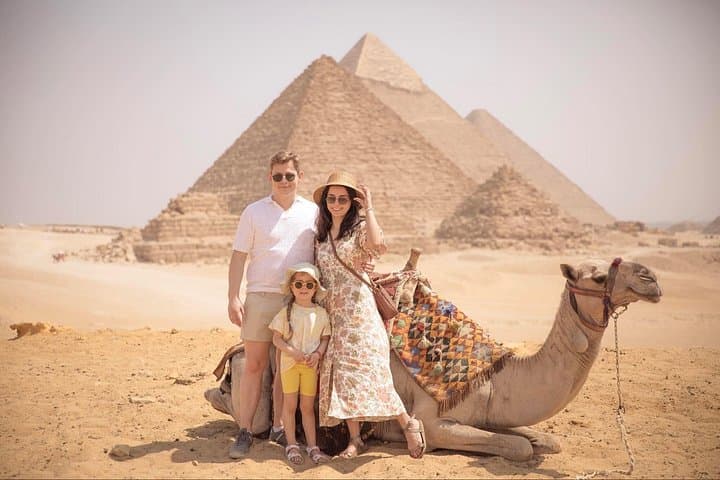


On the limestone edge of the Nile Valley the Giza Plateau opens into a plain where three colossal pyramids rise in hard, geometric silence. Visitors step out of air-conditioned vehicles into sun and sand; the Great Pyramid towers above, its angled blocks throwing sharp shadows while the Sphinx stares east, unblinking.
On the limestone edge of the Nile Valley the Giza Plateau opens into a plain where three colossal pyramids rise in hard, geometric silence. Visitors step out of air-conditioned vehicles into sun and sand; the Great Pyramid towers above, its angled blocks throwing sharp shadows while the Sphinx stares east, unblinking.
These structures date to Egypt’s Fourth Dynasty—Khufu, Khafre and Menkaure—and were erected from local Eocene limestone and quarried mortar. The plateau itself is a raised bench of compacted fossiliferous stone; wind and grit have worn mortar lines into soft ridges that reveal ancient tool marks. Around the monuments a living culture persists: camel handlers, small shops selling papyrus and perfume, and guides translating hieroglyphs into stories for modern travelers.
Expect a private 6–7 hour outing with hotel pickup, guided walks across uneven limestone, panoramic photo stops and visits to valley temples and the Sphinx. Interior pyramid entry requires a separate ticket and involves narrow, steep passages not suitable for everyone. Guides usually explain solar boats, workers’ villages and the site’s UNESCO status while pointing out best light for photos.
Practical guidance: wear sturdy closed-toe shoes, carry at least 1–2 liters of water, use sun protection and schedule morning or late-afternoon visits to avoid peak heat. Keep to signed paths, carry small bills for tips and local purchases, and follow your guide to protect fragile archaeology and ensure a smooth visit.