THE ADVENTURE COLLECTIVE® · Independent discovery and booking for outdoor travel

Explore Chartres Cathedral with a private guide who reveals the meaning behind its stained glass, Gothic structure, and central labyrinth. This two-hour tour mixes architectural detail with cultural context to make the medieval cathedral come alive.
Explore Chartres Cathedral with a private guide who reveals the meaning behind its stained glass, Gothic structure, and central labyrinth. This two-hour tour mixes architectural detail with cultural context to make the medieval cathedral come alive.
A cold morning light spills through deep-blue lancet windows as you stand before Chartres Cathedral; the portico hums with footsteps and the cathedral’s stone cools your palm. Your guide gestures upward toward a rose window and, in a quiet voice, draws your attention to the way light shapes the nave — color becoming narrative.
Verified experiences and guided adventures in the surrounding area.
Operated by Visites guidées de la cathédrale de Chartres- Véronique guide conférencière · Chartres, Eure-et-Loir
A cold morning light spills through deep-blue lancet windows as you stand before Chartres Cathedral; the portico hums with footsteps and the cathedral’s stone cools your palm. Your guide gestures upward toward a rose window and, in a quiet voice, draws your attention to the way light shapes the nave — color becoming narrative.
Built largely in the early 13th century on earlier sacred ground, Chartres is one of Europe’s best-preserved Gothic cathedrals. Its limestone walls record centuries of quarrying and repair; its flying buttresses were engineering answers to vaulting ambitions. The cathedral’s 2,600 m² of medieval stained glass remains the largest intact collection from the period, and the labyrinth set into the nave floor carries a layered history of pilgrimage, ritual, and symbolism.
Beyond architecture, the town of Chartres retains a compact medieval center: cobbled streets, the Musée des Beaux-Arts, and the eccentric Maison Picassiette a short walk away. The cathedral’s role as a pilgrimage destination shaped local craft and markets for generations.
Practical guidance: tours run about two hours and begin at the cathedral entrance (your guide will carry a green pouch). Expect a lot of standing, close-up views of statuary and glass, and some narrow passages. Dress respectfully—knees and shoulders covered for comfort and local custom—and bring a small umbrella in spring and fall. Photography is usually permitted without flash; large backpacks are discouraged. If mobility is limited, notify your guide in advance; the principal spaces are accessible but some viewpoints require steps.
A private guide will unpack medieval iconography and the labyrinth’s meaning, turning centuries of stone and light into clear, memorable context.
Cathedral entry is generally free, but guided tours may be charged; private tours provide commentary though some restricted areas or special exhibitions may have separate fees.
The tour is wheelchair accessible for the main nave and transept; inform the operator when booking so the guide can adapt the route and assist with access points.
Photography without flash is usually permitted in public areas—avoid flash near glass and be considerate during services or other visitors.
The labyrinth is embedded in the nave floor and viewable at close range; access onto the labyrinth itself is rare and depends on cathedral regulations and events.
Visites guidées de la cathédrale de Chartres- Véronique guide conférencière operates guided outdoor trips and adventures with an emphasis on safety, stewardship, and memorable experiences.
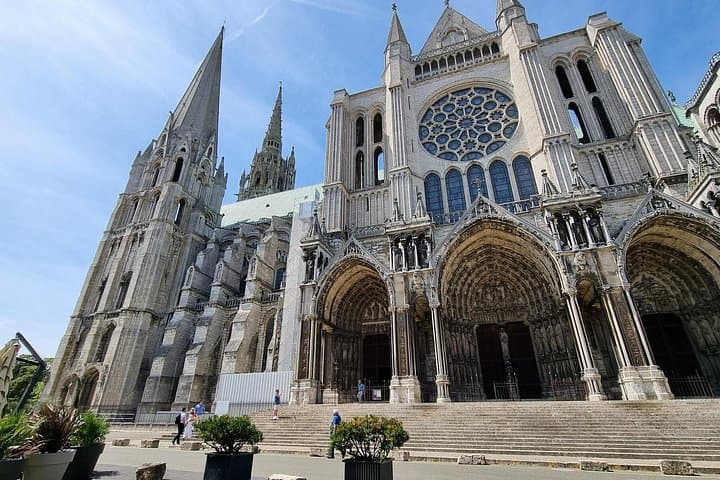
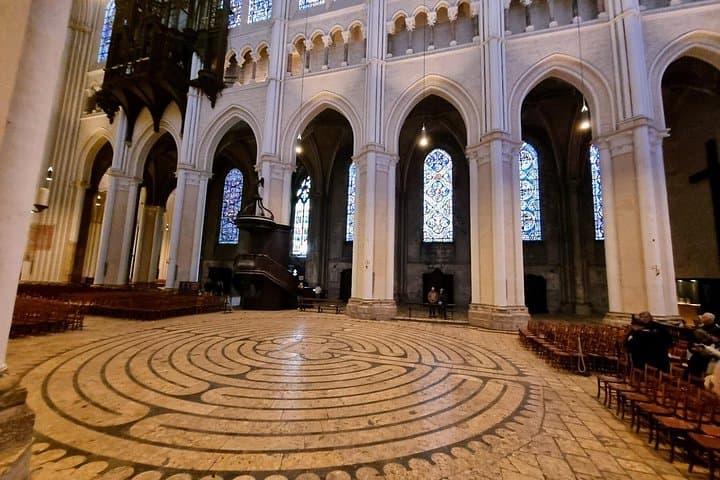

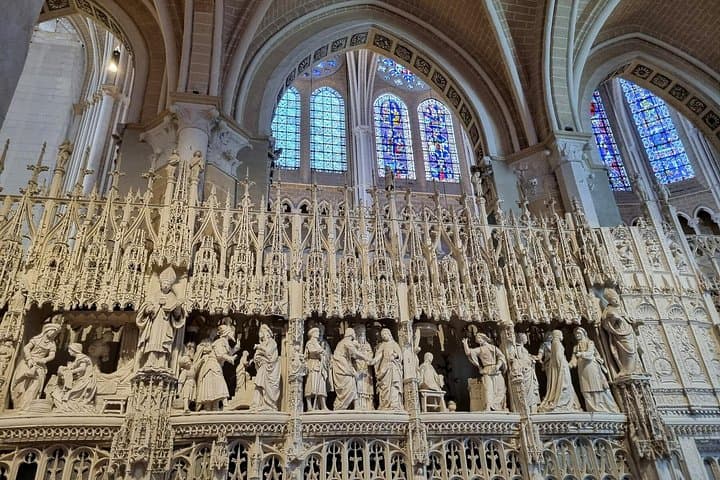
A cold morning light spills through deep-blue lancet windows as you stand before Chartres Cathedral; the portico hums with footsteps and the cathedral’s stone cools your palm. Your guide gestures upward toward a rose window and, in a quiet voice, draws your attention to the way light shapes the nave — color becoming narrative.
A cold morning light spills through deep-blue lancet windows as you stand before Chartres Cathedral; the portico hums with footsteps and the cathedral’s stone cools your palm. Your guide gestures upward toward a rose window and, in a quiet voice, draws your attention to the way light shapes the nave — color becoming narrative.
Built largely in the early 13th century on earlier sacred ground, Chartres is one of Europe’s best-preserved Gothic cathedrals. Its limestone walls record centuries of quarrying and repair; its flying buttresses were engineering answers to vaulting ambitions. The cathedral’s 2,600 m² of medieval stained glass remains the largest intact collection from the period, and the labyrinth set into the nave floor carries a layered history of pilgrimage, ritual, and symbolism.
Beyond architecture, the town of Chartres retains a compact medieval center: cobbled streets, the Musée des Beaux-Arts, and the eccentric Maison Picassiette a short walk away. The cathedral’s role as a pilgrimage destination shaped local craft and markets for generations.
Practical guidance: tours run about two hours and begin at the cathedral entrance (your guide will carry a green pouch). Expect a lot of standing, close-up views of statuary and glass, and some narrow passages. Dress respectfully—knees and shoulders covered for comfort and local custom—and bring a small umbrella in spring and fall. Photography is usually permitted without flash; large backpacks are discouraged. If mobility is limited, notify your guide in advance; the principal spaces are accessible but some viewpoints require steps.
A private guide will unpack medieval iconography and the labyrinth’s meaning, turning centuries of stone and light into clear, memorable context.