THE ADVENTURE COLLECTIVE® · Independent discovery and booking for outdoor travel

Explore the Valley of the Queens on a private, 3–4 hour guided tour from Luxor. Visit well-preserved royal tombs, learn funerary customs from a local Egyptologist, and finish with photos at the Colossi of Memnon.
Explore the Valley of the Queens on a private, 3–4 hour guided tour from Luxor. Visit well-preserved royal tombs, learn funerary customs from a local Egyptologist, and finish with photos at the Colossi of Memnon.
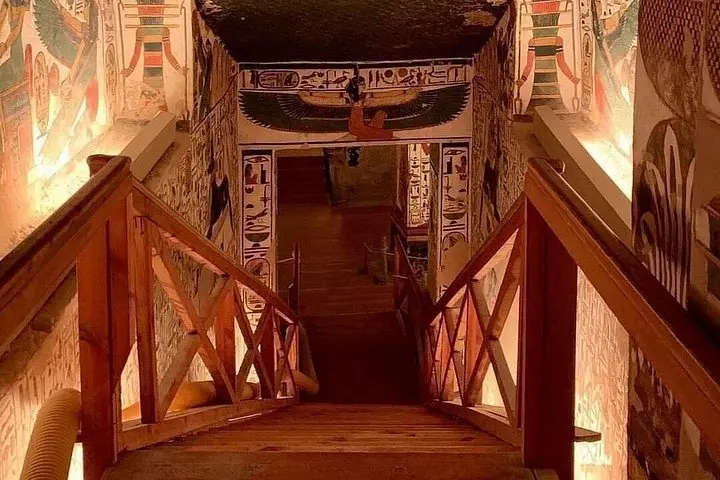
Morning light cuts across the West Bank as the guide leads guests from an air-conditioned vehicle into a narrow desert gorge. Sand warms the soles; the valley exhales a dry, ancient calm. Painted hieroglyphs glow in the angled sun, and the carved walls seem to lean in, intent on the stories they keep.
Verified experiences and guided adventures in the surrounding area.
Operated by Eyes of Egypt · Luxor, Luxor Governorate
Morning light cuts across the West Bank as the guide leads guests from an air-conditioned vehicle into a narrow desert gorge. Sand warms the soles; the valley exhales a dry, ancient calm. Painted hieroglyphs glow in the angled sun, and the carved walls seem to lean in, intent on the stories they keep.
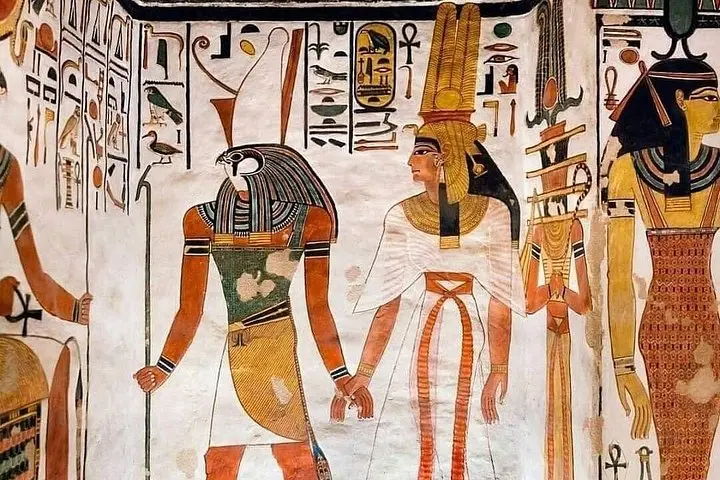
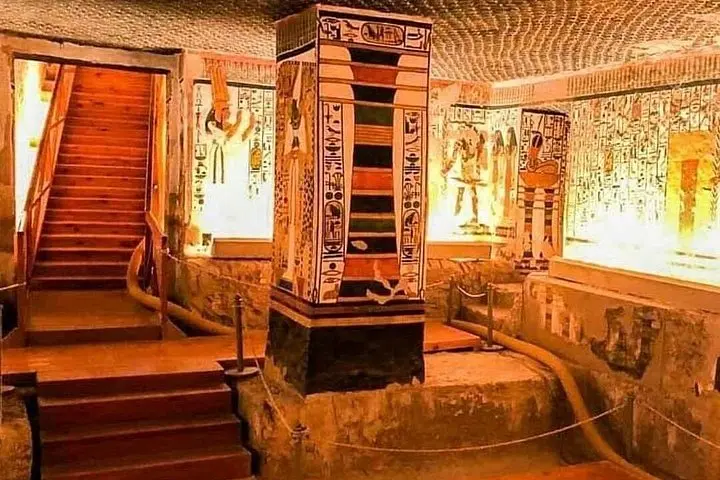
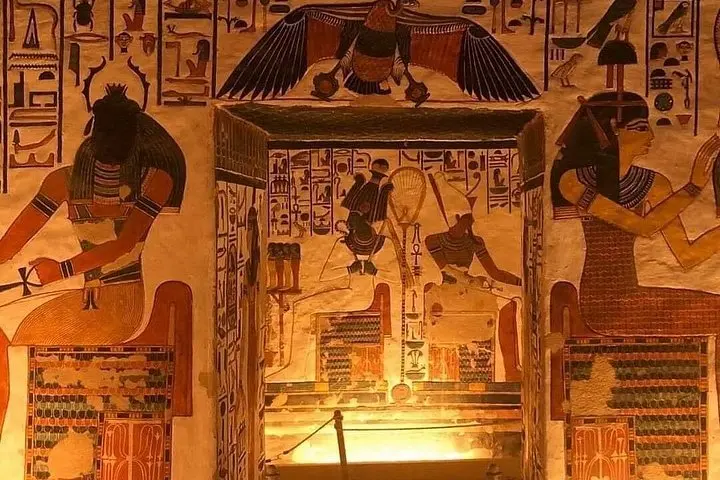
The Valley of the Queens served as the burial ground for royal women of Egypt’s New Kingdom (c. 1550–1070 BCE). Geologically the valley is a limestone hollow carved by wind and ancient ephemeral streams; the soft stone permitted intricate relief work that has survived millennia. Culturally, these tombs reveal funerary rites, celestial symbolism, and the political roles of queens and princesses through vibrant scenes of the afterlife.
This private tour—lasting roughly 3–4 hours with transfers from Luxor—focuses on accessible, lesser-crowded tombs (Nefertari’s tomb remains closed for restoration). Alongside the Valley, the itinerary includes a stop at the brooding Colossi of Memnon, once the gateway to Amenhotep III’s mortuary temple.
Practical guidance: expect uneven stone floors, low light inside chambers, and strict conservation rules (no flash photography in tombs). Bring at least 1 liter of water, a sun hat, sturdy closed-toe shoes, and a camera with neutral-density settings for interior shots. Tours are led by local Egyptologists who provide historical context and the flexibility to focus on art, funerary theology, or family-friendly storytelling.
Timing your visit for early morning reduces heat and brings softer light to the reliefs; late afternoon visits catch the Colossi at golden hour. Respect barriers and follow your guide—these tombs are fragile, and careful behavior keeps them open for future visitors.
Yes—entry to the Valley of the Queens is included in the tour price (note individual tomb access can be limited by site rules).
No—Nefertari's tomb is currently closed for restoration; the guide will take you to other richly decorated tombs instead.
Transport and some viewing areas are accessible, but interior tombs have uneven floors and low passages that limit full accessibility.
Yes—the itinerary includes a short guided stop at the Colossi of Memnon for photos and context about Amenhotep III’s mortuary complex.
Eyes of Egypt operates guided outdoor trips and adventures with an emphasis on safety, stewardship, and memorable experiences.
Morning light cuts across the West Bank as the guide leads guests from an air-conditioned vehicle into a narrow desert gorge. Sand warms the soles; the valley exhales a dry, ancient calm. Painted hieroglyphs glow in the angled sun, and the carved walls seem to lean in, intent on the stories they keep.
Morning light cuts across the West Bank as the guide leads guests from an air-conditioned vehicle into a narrow desert gorge. Sand warms the soles; the valley exhales a dry, ancient calm. Painted hieroglyphs glow in the angled sun, and the carved walls seem to lean in, intent on the stories they keep.
The Valley of the Queens served as the burial ground for royal women of Egypt’s New Kingdom (c. 1550–1070 BCE). Geologically the valley is a limestone hollow carved by wind and ancient ephemeral streams; the soft stone permitted intricate relief work that has survived millennia. Culturally, these tombs reveal funerary rites, celestial symbolism, and the political roles of queens and princesses through vibrant scenes of the afterlife.
This private tour—lasting roughly 3–4 hours with transfers from Luxor—focuses on accessible, lesser-crowded tombs (Nefertari’s tomb remains closed for restoration). Alongside the Valley, the itinerary includes a stop at the brooding Colossi of Memnon, once the gateway to Amenhotep III’s mortuary temple.
Practical guidance: expect uneven stone floors, low light inside chambers, and strict conservation rules (no flash photography in tombs). Bring at least 1 liter of water, a sun hat, sturdy closed-toe shoes, and a camera with neutral-density settings for interior shots. Tours are led by local Egyptologists who provide historical context and the flexibility to focus on art, funerary theology, or family-friendly storytelling.
Timing your visit for early morning reduces heat and brings softer light to the reliefs; late afternoon visits catch the Colossi at golden hour. Respect barriers and follow your guide—these tombs are fragile, and careful behavior keeps them open for future visitors.