THE ADVENTURE COLLECTIVE® · Independent discovery and booking for outdoor travel

Spend a day walking the core of Silla history: Bulguksa’s stone pagodas, Seokguram’s cliffside Buddha, and the ancient Cheomseongdae observatory. This private day tour pairs cultural depth with manageable hiking and transport logistics.
Spend a day walking the core of Silla history: Bulguksa’s stone pagodas, Seokguram’s cliffside Buddha, and the ancient Cheomseongdae observatory. This private day tour pairs cultural depth with manageable hiking and transport logistics.
On a crisp morning in Gyeongju, the tour vehicle eases away from low stone walls and rice fields, climbing toward the granite shoulders of Tohamsan where a carved grotto and a classical temple wait. The day unfolds as a compact loop of the Silla kingdom's most enduring sites: the layered roofs and stone pagodas of Bulguksa, the contemplative stone Buddha of Seokguram, and the cylindrical stones of Cheomseongdae that still mark the sky.
Verified experiences and guided adventures in the surrounding area.
Operated by 리모투어 · Gyeongju, North Gyeongsang
On a crisp morning in Gyeongju, the tour vehicle eases away from low stone walls and rice fields, climbing toward the granite shoulders of Tohamsan where a carved grotto and a classical temple wait. The day unfolds as a compact loop of the Silla kingdom's most enduring sites: the layered roofs and stone pagodas of Bulguksa, the contemplative stone Buddha of Seokguram, and the cylindrical stones of Cheomseongdae that still mark the sky.
Bulguksa, rebuilt over centuries, presents seven national treasures and a living history of Korean Buddhist architecture; Seokguram sits higher on the mountain, its chamber facing the East Sea and reached either by a 3 km forest trail or a car road. Cheomseongdae, built in the seventh century, offers a quick, tactile lesson in royal astronomy—365 stones, 27 layers—and a reminder of Gyeongju’s role as Silla's capital.
Geology is on display in the granite outcrops and the stone masonry that resists both wind and time, while local culture is visible in altars, temple bells, and small makgeolli houses near Hwangnam-dong.
Practical guidance: expect an 8–10 hour private day with moderate walking and several short stair sections; the Seokguram trail is uneven and can be muddy in wet seasons. Bring layered clothing, potable water, and cash for modest entrance fees or souvenirs. Photography rules and preservation measures are enforced at heritage sites, so follow guide instructions. A private guide and air-conditioned vehicle make the route efficient for a single day of concentrated history and landscape.
Admission is typically not included—bring cash or card for temple and museum fees as noted by your operator.
By trail it's about 3 km one-way through forested terrain with some elevation gain; allow 60–90 minutes depending on pace.
Infant seats are available in the vehicle, but note that stairs and trail sections may be difficult for very young children.
This product lists all sales final—confirm details at booking, as refunds are not available for cancellations.
리모투어 operates guided outdoor trips and adventures with an emphasis on safety, stewardship, and memorable experiences.
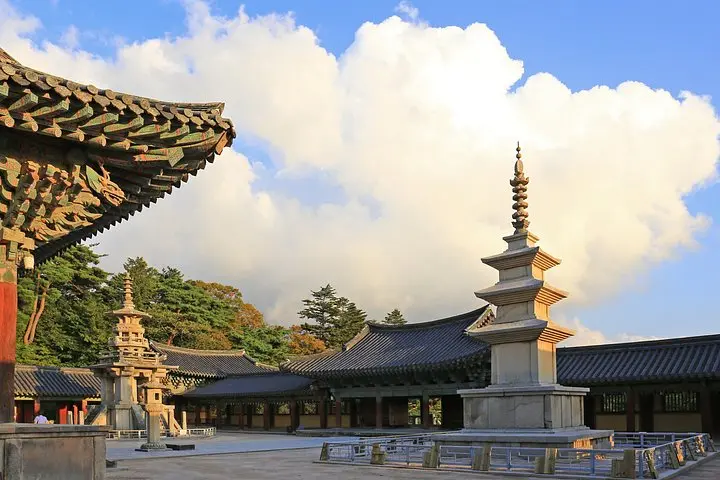
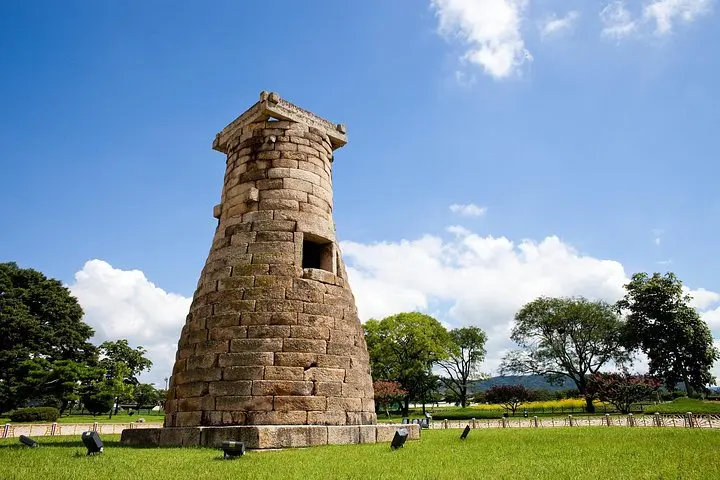
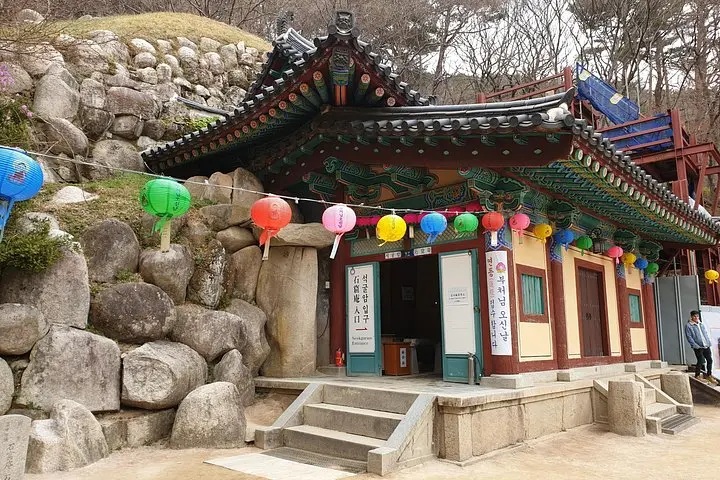
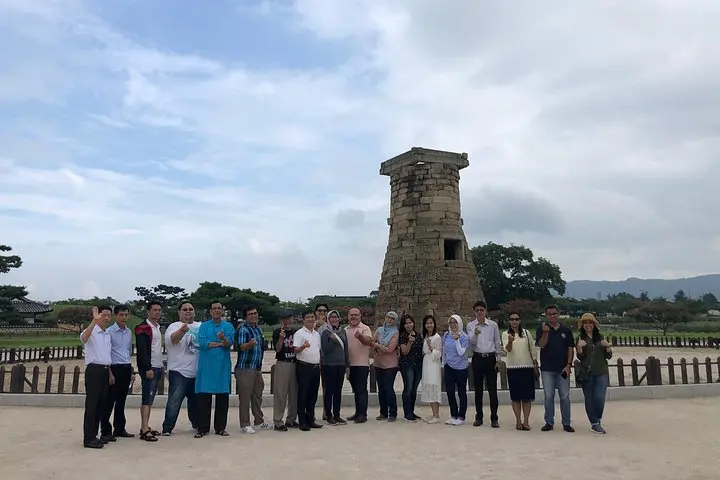
On a crisp morning in Gyeongju, the tour vehicle eases away from low stone walls and rice fields, climbing toward the granite shoulders of Tohamsan where a carved grotto and a classical temple wait. The day unfolds as a compact loop of the Silla kingdom's most enduring sites: the layered roofs and stone pagodas of Bulguksa, the contemplative stone Buddha of Seokguram, and the cylindrical stones of Cheomseongdae that still mark the sky.
On a crisp morning in Gyeongju, the tour vehicle eases away from low stone walls and rice fields, climbing toward the granite shoulders of Tohamsan where a carved grotto and a classical temple wait. The day unfolds as a compact loop of the Silla kingdom's most enduring sites: the layered roofs and stone pagodas of Bulguksa, the contemplative stone Buddha of Seokguram, and the cylindrical stones of Cheomseongdae that still mark the sky.
Bulguksa, rebuilt over centuries, presents seven national treasures and a living history of Korean Buddhist architecture; Seokguram sits higher on the mountain, its chamber facing the East Sea and reached either by a 3 km forest trail or a car road. Cheomseongdae, built in the seventh century, offers a quick, tactile lesson in royal astronomy—365 stones, 27 layers—and a reminder of Gyeongju’s role as Silla's capital.
Geology is on display in the granite outcrops and the stone masonry that resists both wind and time, while local culture is visible in altars, temple bells, and small makgeolli houses near Hwangnam-dong.
Practical guidance: expect an 8–10 hour private day with moderate walking and several short stair sections; the Seokguram trail is uneven and can be muddy in wet seasons. Bring layered clothing, potable water, and cash for modest entrance fees or souvenirs. Photography rules and preservation measures are enforced at heritage sites, so follow guide instructions. A private guide and air-conditioned vehicle make the route efficient for a single day of concentrated history and landscape.