THE ADVENTURE COLLECTIVE® · Independent discovery and booking for outdoor travel

Explore Gyeongju’s Silla-era treasures on a private, licensed-guided tour that pairs Bulguksa’s temple courtyards with the serene Seokguram grotto and royal tumuli. Expect compact hikes, stone steps, and focused cultural insight.
Explore Gyeongju’s Silla-era treasures on a private, licensed-guided tour that pairs Bulguksa’s temple courtyards with the serene Seokguram grotto and royal tumuli. Expect compact hikes, stone steps, and focused cultural insight.
A low-slung morning mist lifts off the rice paddies and the road to Bulguksa opens like a chapter from the Silla era. On a private tour, the first steps are across weathered stone courtyards where carved pagodas and lacquered wooden halls keep count of centuries. The guide's voice—measured, informed—places each roof tile and statue in a human timeline: kings, monks, artisans.
Verified experiences and guided adventures in the surrounding area.
Operated by KOREA DISCOVERY TOUR · Gyeongju, North Gyeongsang Province
A low-slung morning mist lifts off the rice paddies and the road to Bulguksa opens like a chapter from the Silla era. On a private tour, the first steps are across weathered stone courtyards where carved pagodas and lacquered wooden halls keep count of centuries. The guide's voice—measured, informed—places each roof tile and statue in a human timeline: kings, monks, artisans.
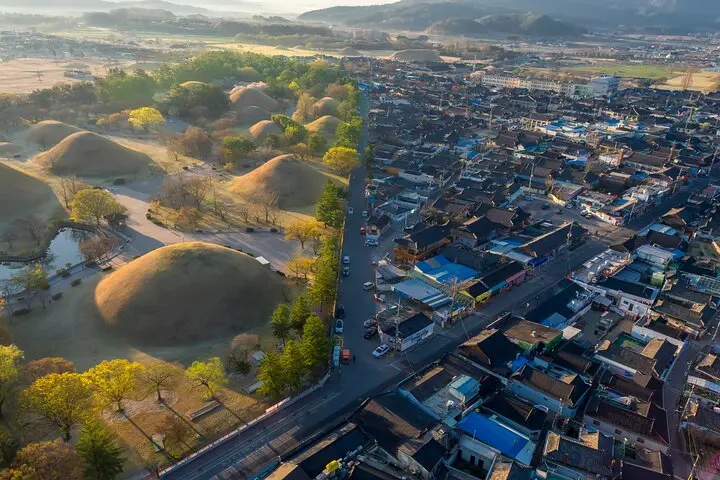
Gyeongju was the capital of Silla (57 BC–935 AD). Bulguksa Temple and Seokguram Grotto—both UNESCO World Heritage sites—capture the era’s religious devotion and stonecraft. Nearby, Daereungwon’s grassy burial mounds, Cheomseongdae observatory’s 365-block cylinder, and the artifacts in Gyeongju National Museum map royal life, astronomy, and ritual. Geologically, the granite and volcanic outcrops sculpt the shrine sites; the grotto’s granite chamber diffuses light to the seated Buddha, a quiet interplay of stone and shadow.
Expect gentle walking on uneven stone pathways, a short uphill approach to Seokguram, and park-like strolls among tumuli. The private vehicle handles transfers—pickup/drop options from Gyeongju or Busan—so logistics are straightforward for a day of concentrated cultural hiking.
Practical guidance: start early to avoid crowds and midday heat, wear grippy shoes for stone steps, bring water and small local currency for museum or snack purchases, and follow temple etiquette (quiet voices, modest dress). With a licensed English-speaking guide, the day becomes not just a checklist of sites but a layered story of art, faith, and astronomy framed by Korea’s eastern hills.
Admissions are typically not included—check booking details and bring cash or card for entry fees.
Yes, the private tour offers flexible pickup/drop-off options between Gyeongju and Busan—confirm when booking.
Transportation and many sites are wheelchair accessible, but Seokguram requires a hike and steps that may limit access for some mobility devices.
Duration is variable—expect approximately 4 to 9 hours depending on selected stops and pacing.
KOREA DISCOVERY TOUR operates guided outdoor trips and adventures with an emphasis on safety, stewardship, and memorable experiences.
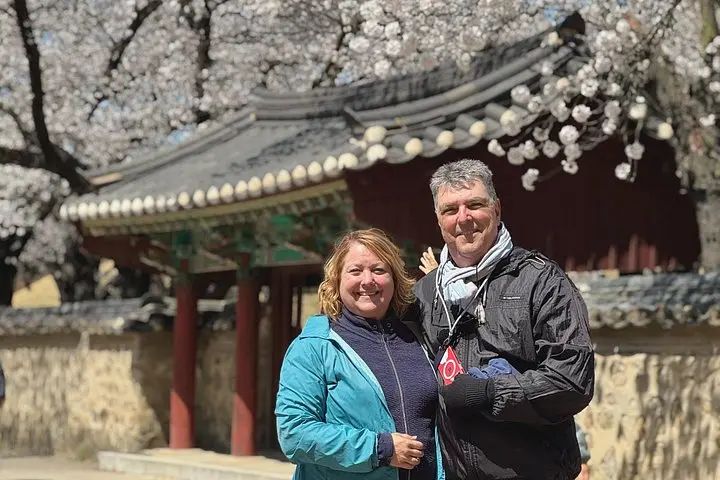
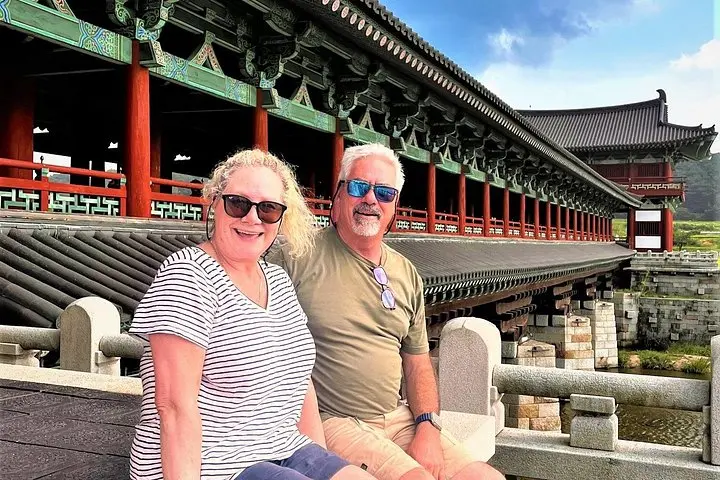
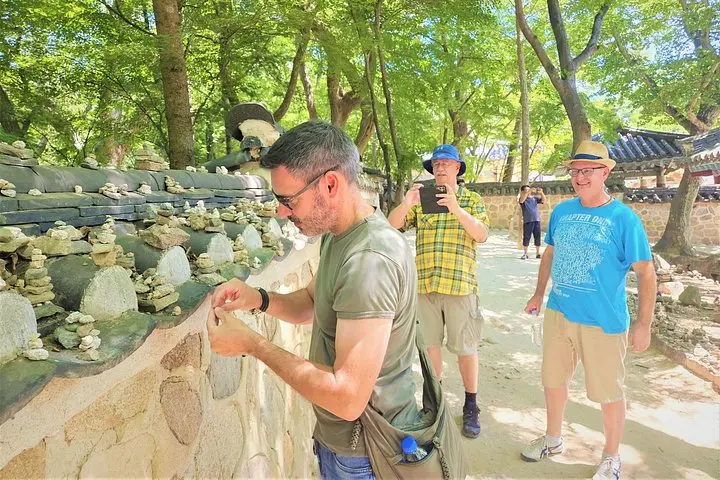
A low-slung morning mist lifts off the rice paddies and the road to Bulguksa opens like a chapter from the Silla era. On a private tour, the first steps are across weathered stone courtyards where carved pagodas and lacquered wooden halls keep count of centuries. The guide's voice—measured, informed—places each roof tile and statue in a human timeline: kings, monks, artisans.
A low-slung morning mist lifts off the rice paddies and the road to Bulguksa opens like a chapter from the Silla era. On a private tour, the first steps are across weathered stone courtyards where carved pagodas and lacquered wooden halls keep count of centuries. The guide's voice—measured, informed—places each roof tile and statue in a human timeline: kings, monks, artisans.
Gyeongju was the capital of Silla (57 BC–935 AD). Bulguksa Temple and Seokguram Grotto—both UNESCO World Heritage sites—capture the era’s religious devotion and stonecraft. Nearby, Daereungwon’s grassy burial mounds, Cheomseongdae observatory’s 365-block cylinder, and the artifacts in Gyeongju National Museum map royal life, astronomy, and ritual. Geologically, the granite and volcanic outcrops sculpt the shrine sites; the grotto’s granite chamber diffuses light to the seated Buddha, a quiet interplay of stone and shadow.
Expect gentle walking on uneven stone pathways, a short uphill approach to Seokguram, and park-like strolls among tumuli. The private vehicle handles transfers—pickup/drop options from Gyeongju or Busan—so logistics are straightforward for a day of concentrated cultural hiking.
Practical guidance: start early to avoid crowds and midday heat, wear grippy shoes for stone steps, bring water and small local currency for museum or snack purchases, and follow temple etiquette (quiet voices, modest dress). With a licensed English-speaking guide, the day becomes not just a checklist of sites but a layered story of art, faith, and astronomy framed by Korea’s eastern hills.