THE ADVENTURE COLLECTIVE® · Independent discovery and booking for outdoor travel

Swap Tokyo’s concrete for mountain air: a private, English-speaking driver delivers a customizable 9‑hour loop through Hakone’s volcanic landscapes, lakeside shrines and the Gotemba Premium Outlets. Ideal for travelers who want the sights without public-transport logistics.
Swap Tokyo’s concrete for mountain air: a private, English-speaking driver delivers a customizable 9‑hour loop through Hakone’s volcanic landscapes, lakeside shrines and the Gotemba Premium Outlets. Ideal for travelers who want the sights without public-transport logistics.
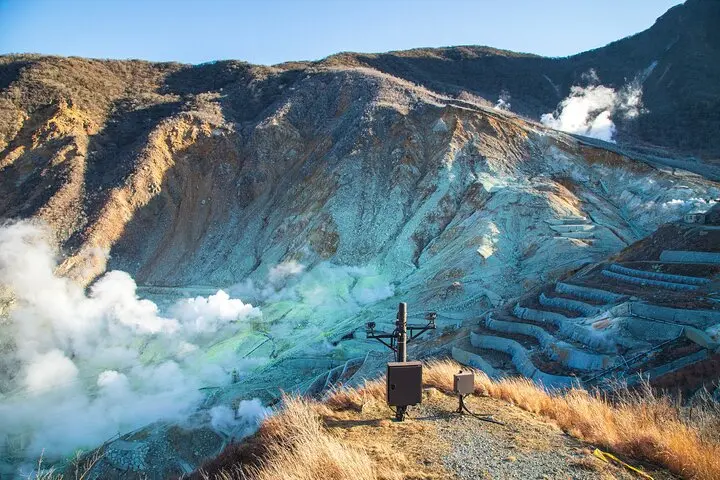
Morning light flattens the Tokyo skyline as your driver slips out of the city and onto the Odawara road. Asphalt gives way to pine-speckled hills, and by the time the car climbs into Hakone the air has the clean bite of altitude. Steam curls in the distance above Owakudani — white plumes punctuate a moonscape of black rock and sulfur vents — while the bulk of Mount Fuji often watches the route in silence, its snowcap cutting a precise silhouette when the sky is clear.
Verified experiences and guided adventures in the surrounding area.
Operated by Japan Guide Agency · Hakone, Kanagawa
Morning light flattens the Tokyo skyline as your driver slips out of the city and onto the Odawara road. Asphalt gives way to pine-speckled hills, and by the time the car climbs into Hakone the air has the clean bite of altitude. Steam curls in the distance above Owakudani — white plumes punctuate a moonscape of black rock and sulfur vents — while the bulk of Mount Fuji often watches the route in silence, its snowcap cutting a precise silhouette when the sky is clear.
Hakone’s story is written in fire and water. The region sits on the complex volcanic system of Mount Hakone; the caldera that became Lake Ashinoko formed about 3,000 years ago after a major eruption. During the Edo period locals called Owakudani the “Valley of Hell” for good reason: vents and fumaroles still vent gas and warmth into the air. Centuries of onsen culture grew around that geothermal energy — hot springs were once essential rest stops for daimyō and travelers making the old Tōkaidō route.
The tour folds contemporary Japan into that geology: a ropeway ride to peer down at sulfurous vents and out across the lake, a quiet visit to Hakone-jinja Shrine where a red torii gate floats at the lake’s edge, and a stop at Gotemba Premium Outlets at the base of Fuji for duty-free shopping. Art lovers can add the Hakone Open-Air Museum or the POLA Museum; those options, and the sequence of stops, are flexible within your day. Practicalities are simple: the package is a private vehicle with an English-speaking driver, not a licensed guide, and accommodates up to seven passengers.
What makes this an efficient option is the door-to-door convenience. You avoid train transfers and lugging bags between stations; instead you trade flexibility for a straightforward nine-hour loop from Tokyo. Expect about 9 hours total, moderate local driving, and short walks at most sites — the only significant on-foot option is the Owakudani nature trail (advance booking and an 800-yen entrance fee may apply). Traffic can lengthen the day, especially on holiday weekends, so an early start is smart.
Packing and planning: bring your passport for tax-free shopping at Gotemba, dress in layers (Hakone’s microclimate shifts fast), and wear comfortable shoes for short trails and temple steps. If seeing Mount Fuji matters, aim for winter or early spring mornings when visibility is best. Keep in mind the driver can provide local logistics and phone support during the tour but will not deliver guided historical commentary. For independent travelers who want curated choices without the transit hassle, this route stitches volcanic drama, cultural calm, and retail therapy into a single, manageable day out of Tokyo.
No — the booking provides an English‑speaking driver (not a government‑licensed guide). The driver handles navigation, logistics and pickup/dropoff.
Yes — the tour is customizable; you can typically select 3–4 sites from the listed itinerary depending on time and traffic.
The tour runs about 9 hours (540 minutes). Pickup is available from hotels in Tokyo or a prearranged meeting point; plan to be ready 10 minutes before pickup.
Admissions and ropeway fares are not included by default; check specific add‑ons and bring cash or card for any entrance fees.
Many areas and the vehicle types listed are wheelchair accessible, but access can vary by site — notify the operator in advance so they can accommodate you.
Late autumn through early spring offers the clearest skies and best chance for unobstructed views of Mount Fuji, especially on early mornings.
Japan Guide Agency operates guided outdoor trips and adventures with an emphasis on safety, stewardship, and memorable experiences.
Morning light flattens the Tokyo skyline as your driver slips out of the city and onto the Odawara road. Asphalt gives way to pine-speckled hills, and by the time the car climbs into Hakone the air has the clean bite of altitude. Steam curls in the distance above Owakudani — white plumes punctuate a moonscape of black rock and sulfur vents — while the bulk of Mount Fuji often watches the route in silence, its snowcap cutting a precise silhouette when the sky is clear.
Morning light flattens the Tokyo skyline as your driver slips out of the city and onto the Odawara road. Asphalt gives way to pine-speckled hills, and by the time the car climbs into Hakone the air has the clean bite of altitude. Steam curls in the distance above Owakudani — white plumes punctuate a moonscape of black rock and sulfur vents — while the bulk of Mount Fuji often watches the route in silence, its snowcap cutting a precise silhouette when the sky is clear.
Hakone’s story is written in fire and water. The region sits on the complex volcanic system of Mount Hakone; the caldera that became Lake Ashinoko formed about 3,000 years ago after a major eruption. During the Edo period locals called Owakudani the “Valley of Hell” for good reason: vents and fumaroles still vent gas and warmth into the air. Centuries of onsen culture grew around that geothermal energy — hot springs were once essential rest stops for daimyō and travelers making the old Tōkaidō route.
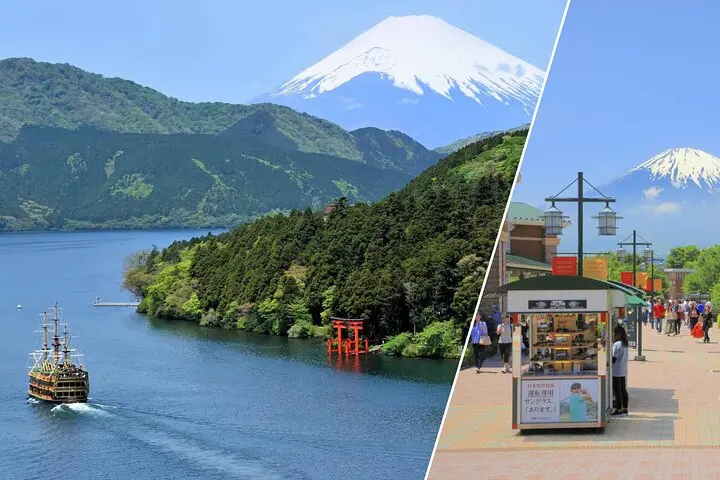
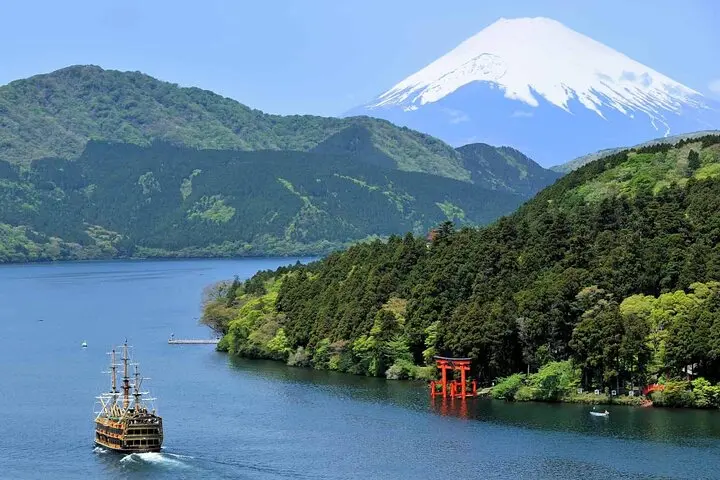
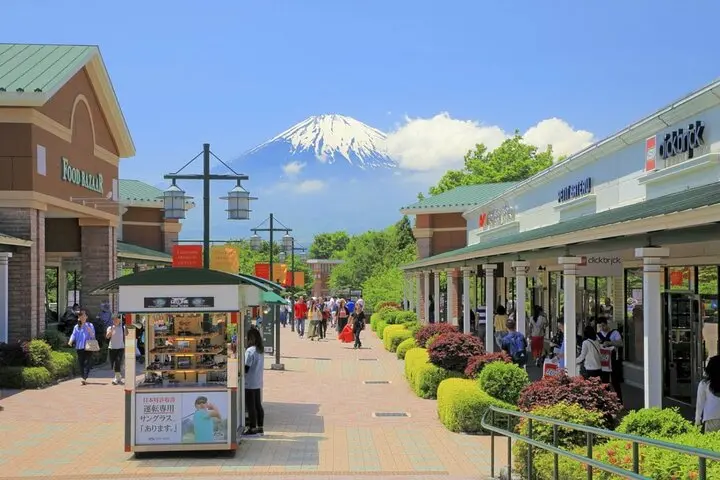
The tour folds contemporary Japan into that geology: a ropeway ride to peer down at sulfurous vents and out across the lake, a quiet visit to Hakone-jinja Shrine where a red torii gate floats at the lake’s edge, and a stop at Gotemba Premium Outlets at the base of Fuji for duty-free shopping. Art lovers can add the Hakone Open-Air Museum or the POLA Museum; those options, and the sequence of stops, are flexible within your day. Practicalities are simple: the package is a private vehicle with an English-speaking driver, not a licensed guide, and accommodates up to seven passengers.
What makes this an efficient option is the door-to-door convenience. You avoid train transfers and lugging bags between stations; instead you trade flexibility for a straightforward nine-hour loop from Tokyo. Expect about 9 hours total, moderate local driving, and short walks at most sites — the only significant on-foot option is the Owakudani nature trail (advance booking and an 800-yen entrance fee may apply). Traffic can lengthen the day, especially on holiday weekends, so an early start is smart.
Packing and planning: bring your passport for tax-free shopping at Gotemba, dress in layers (Hakone’s microclimate shifts fast), and wear comfortable shoes for short trails and temple steps. If seeing Mount Fuji matters, aim for winter or early spring mornings when visibility is best. Keep in mind the driver can provide local logistics and phone support during the tour but will not deliver guided historical commentary. For independent travelers who want curated choices without the transit hassle, this route stitches volcanic drama, cultural calm, and retail therapy into a single, manageable day out of Tokyo.