THE ADVENTURE COLLECTIVE® · Independent discovery and booking for outdoor travel

Explore two of Cairo’s leading museums with an Egyptologist guide and private hotel transfer. This half-day pairing focuses on pharaonic masterpieces at the Egyptian Museum and a chronological cultural sweep at the National Museum of Egyptian Civilization.
Explore two of Cairo’s leading museums with an Egyptologist guide and private hotel transfer. This half-day pairing focuses on pharaonic masterpieces at the Egyptian Museum and a chronological cultural sweep at the National Museum of Egyptian Civilization.
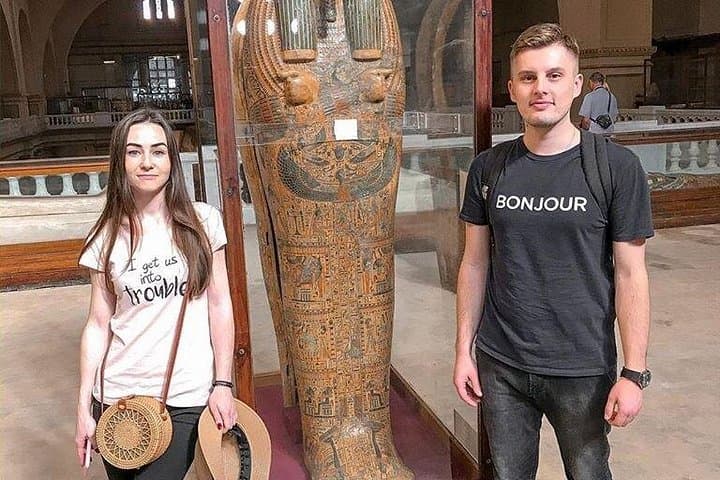
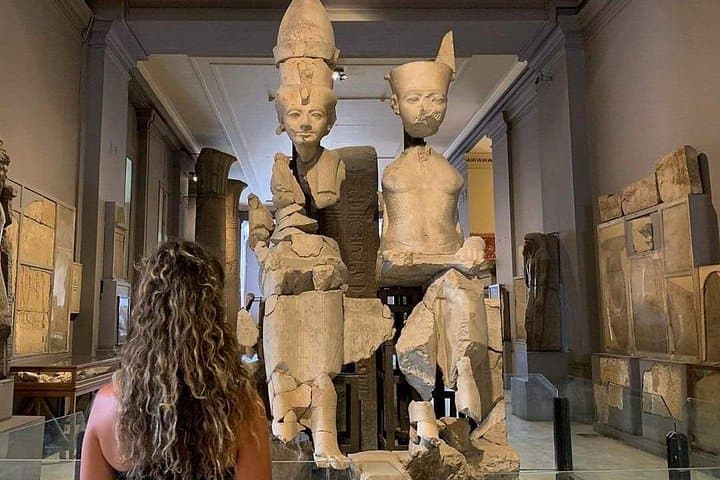
Morning light spills over Cairo’s wide boulevards as a private car threads through the city toward Tahrir Square. Inside the Egyptian Museum, glass cases hum with centuries: gold glints from Tutankhamun’s funerary mask, animal mummies line narrow shelves, and labels translate ancient lives into the present.
Verified experiences and guided adventures in the surrounding area.
Operated by Egypt Super Tours · Cairo, Cairo
Morning light spills over Cairo’s wide boulevards as a private car threads through the city toward Tahrir Square. Inside the Egyptian Museum, glass cases hum with centuries: gold glints from Tutankhamun’s funerary mask, animal mummies line narrow shelves, and labels translate ancient lives into the present.
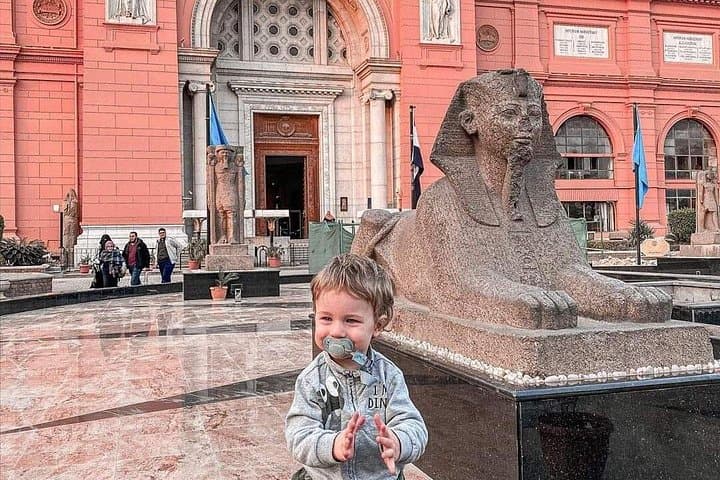
The day pairs two complementary stories. The 1901 Cairo Museum — a Beaux-Arts building conceived by Marcel Dourgnon and built by Italian contractors — concentrates pharaonic masterpieces and cupboards of artifacts that reveal burial practice and royal craft. A short drive away the National Museum of Egyptian Civilization lays out a sweeping timeline, from Predynastic pottery and the world’s oldest known prosthetic toe to Coptic and Islamic-period objects that trace living tradition into modern Egypt.
Cairo’s geology is plain in the background: the Nile’s floodplain carved the city’s layers, and the museums collect human response to that riverine landscape across millennia. Local guides — Egyptologists by training — stitch stories to objects, explaining how craft, religion and trade shaped what you see.
Practical notes: this private tour includes hotel pickup and air-conditioned transport but not entrance tickets, which are payable on-site. Wheelchair access and stroller-friendly routes are available at both museums, though some galleries have uneven floors. Plan for roughly two hours per museum, bring a charged phone for photos (check each museum’s photography policy), wear comfortable shoes and allow time for security checks. Visiting early reduces crowds and makes the collection feel like a conversation rather than a crowd-sourced snapshot.
No — the tour price covers guide and transport; museum admission fees are payable on-site and often accepted by card.
Yes — the tour includes door-to-door pickup and drop-off from hotels in Cairo and Giza.
Both museums offer wheelchair access and stroller-friendly routes, but some galleries may have uneven floors or restricted access—advise your booking of mobility needs.
Photography policies vary by exhibit; flash and tripods are commonly restricted—confirm specifics with your guide on arrival.
Egypt Super Tours operates guided outdoor trips and adventures with an emphasis on safety, stewardship, and memorable experiences.

Morning light spills over Cairo’s wide boulevards as a private car threads through the city toward Tahrir Square. Inside the Egyptian Museum, glass cases hum with centuries: gold glints from Tutankhamun’s funerary mask, animal mummies line narrow shelves, and labels translate ancient lives into the present.
Morning light spills over Cairo’s wide boulevards as a private car threads through the city toward Tahrir Square. Inside the Egyptian Museum, glass cases hum with centuries: gold glints from Tutankhamun’s funerary mask, animal mummies line narrow shelves, and labels translate ancient lives into the present.
The day pairs two complementary stories. The 1901 Cairo Museum — a Beaux-Arts building conceived by Marcel Dourgnon and built by Italian contractors — concentrates pharaonic masterpieces and cupboards of artifacts that reveal burial practice and royal craft. A short drive away the National Museum of Egyptian Civilization lays out a sweeping timeline, from Predynastic pottery and the world’s oldest known prosthetic toe to Coptic and Islamic-period objects that trace living tradition into modern Egypt.
Cairo’s geology is plain in the background: the Nile’s floodplain carved the city’s layers, and the museums collect human response to that riverine landscape across millennia. Local guides — Egyptologists by training — stitch stories to objects, explaining how craft, religion and trade shaped what you see.
Practical notes: this private tour includes hotel pickup and air-conditioned transport but not entrance tickets, which are payable on-site. Wheelchair access and stroller-friendly routes are available at both museums, though some galleries have uneven floors. Plan for roughly two hours per museum, bring a charged phone for photos (check each museum’s photography policy), wear comfortable shoes and allow time for security checks. Visiting early reduces crowds and makes the collection feel like a conversation rather than a crowd-sourced snapshot.