THE ADVENTURE COLLECTIVE® · Independent discovery and booking for outdoor travel

See the Great Pyramid, Khafre, Menkaure and the Sphinx on a private half-day tour with tickets, guide, and an included camel ride. Ideal for travelers who want focused history and seamless logistics in a short window.
See the Great Pyramid, Khafre, Menkaure and the Sphinx on a private half-day tour with tickets, guide, and an included camel ride. Ideal for travelers who want focused history and seamless logistics in a short window.
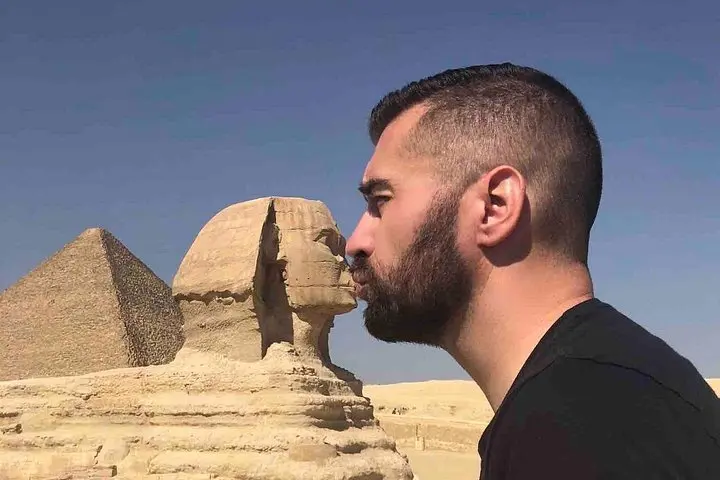
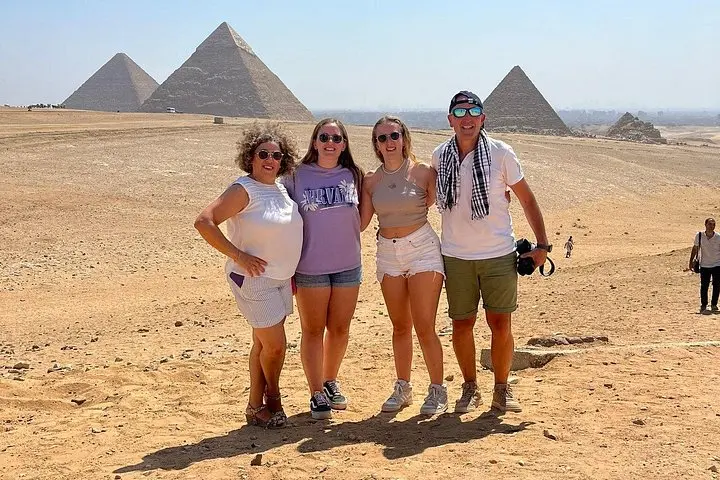
Morning light cleaves the horizon over the Giza Plateau and the stones take on an ochre edge as the city wakes below. You step from an air-conditioned vehicle onto hard-packed desert where wind and sun immediately set the rhythm—sand pushing at your ankles, the Great Pyramid standing like an ancient map for a day's route. A private guide directs the pace: up close to Khufu's angled faces, across the space between Khafre and Menkaure, and finally to the squat, enigmatic profile of the Sphinx.
Verified experiences and guided adventures in the surrounding area.
Operated by Vivatrek · Giza, Cairo Governorate
Morning light cleaves the horizon over the Giza Plateau and the stones take on an ochre edge as the city wakes below. You step from an air-conditioned vehicle onto hard-packed desert where wind and sun immediately set the rhythm—sand pushing at your ankles, the Great Pyramid standing like an ancient map for a day's route. A private guide directs the pace: up close to Khufu's angled faces, across the space between Khafre and Menkaure, and finally to the squat, enigmatic profile of the Sphinx.
This short tour moves fast but is rich in context. The pyramids are markers of Old Kingdom engineering—limestone, granite chambers, and alignment with celestial points—and the Sphinx ties funerary architecture to royal cults and solar symbolism. The plateau's geology is predominantly Eocene limestone, the same bedrock quarried by pharaonic builders; you’ll notice tool marks and desert patina on exposed blocks.
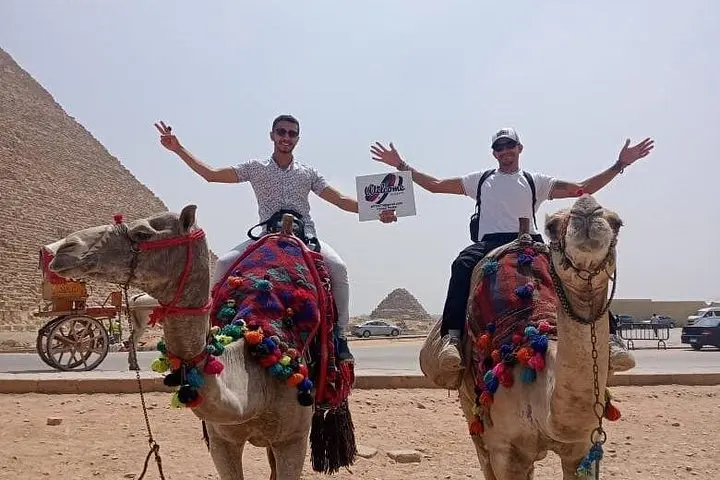
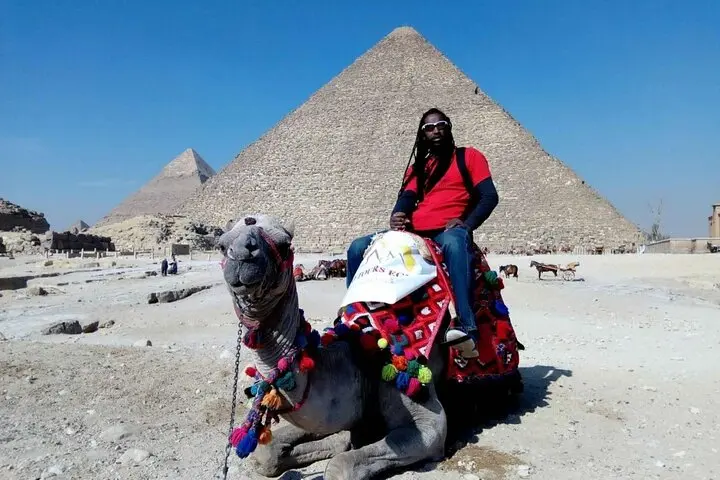
Culturally, modern Giza is a working urban edge to a monumental past: vendors, papyrus workshops, and perfume shops occupy alleys at the plateau’s base. Expect a scripted shopping stop and an included camel ride that offers a low, swaying view of the complex.
Practical guidance: this is a five-hour private excursion with hotel pickup in Cairo/Giza, moderate walking over uneven surfaces, and no steep climbs. Bring sun protection, refillable water, and comfortable closed shoes. Time your visit for early morning or late afternoon to avoid peak heat, and allow extra time for security checkpoints. With tickets and transport handled, the experience is about focus—observation, explanation, and the slow, tactile history of stone.
Yes—admission to the Giza Pyramids Complex and the Great Sphinx are included in the tour price.
Camel rides are typically short photo-friendly circuits on the plateau and last about 10–20 minutes depending on the operator.
Infants and small children can use strollers; however, terrain near monuments can be uneven and may require lifting the stroller short distances.
The tour provides a professional multilingual guide; English, Spanish, and Turkish are listed as available languages.
Vivatrek operates guided outdoor trips and adventures with an emphasis on safety, stewardship, and memorable experiences.
Morning light cleaves the horizon over the Giza Plateau and the stones take on an ochre edge as the city wakes below. You step from an air-conditioned vehicle onto hard-packed desert where wind and sun immediately set the rhythm—sand pushing at your ankles, the Great Pyramid standing like an ancient map for a day's route. A private guide directs the pace: up close to Khufu's angled faces, across the space between Khafre and Menkaure, and finally to the squat, enigmatic profile of the Sphinx.
Morning light cleaves the horizon over the Giza Plateau and the stones take on an ochre edge as the city wakes below. You step from an air-conditioned vehicle onto hard-packed desert where wind and sun immediately set the rhythm—sand pushing at your ankles, the Great Pyramid standing like an ancient map for a day's route. A private guide directs the pace: up close to Khufu's angled faces, across the space between Khafre and Menkaure, and finally to the squat, enigmatic profile of the Sphinx.
This short tour moves fast but is rich in context. The pyramids are markers of Old Kingdom engineering—limestone, granite chambers, and alignment with celestial points—and the Sphinx ties funerary architecture to royal cults and solar symbolism. The plateau's geology is predominantly Eocene limestone, the same bedrock quarried by pharaonic builders; you’ll notice tool marks and desert patina on exposed blocks.
Culturally, modern Giza is a working urban edge to a monumental past: vendors, papyrus workshops, and perfume shops occupy alleys at the plateau’s base. Expect a scripted shopping stop and an included camel ride that offers a low, swaying view of the complex.
Practical guidance: this is a five-hour private excursion with hotel pickup in Cairo/Giza, moderate walking over uneven surfaces, and no steep climbs. Bring sun protection, refillable water, and comfortable closed shoes. Time your visit for early morning or late afternoon to avoid peak heat, and allow extra time for security checkpoints. With tickets and transport handled, the experience is about focus—observation, explanation, and the slow, tactile history of stone.