THE ADVENTURE COLLECTIVE® · Independent discovery and booking for outdoor travel

Explore Karnak’s columned halls and Luxor’s processional courts on a private half-day East Bank tour. A scholarly guide brings pharaonic architecture and local color to life while practical tips prepare you for the walk.
Explore Karnak’s columned halls and Luxor’s processional courts on a private half-day East Bank tour. A scholarly guide brings pharaonic architecture and local color to life while practical tips prepare you for the walk.
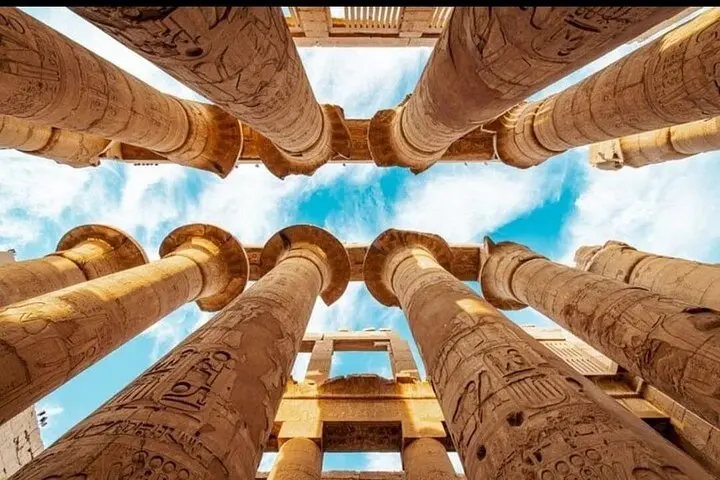
Morning light slices across sandstone columns as a private vehicle eases through Luxor’s East Bank, depositing visitors at the threshold of two of Egypt’s most public works of religion and power.
Verified experiences and guided adventures in the surrounding area.
Operated by I Can Travel · Luxor, Luxor Governorate
Morning light slices across sandstone columns as a private vehicle eases through Luxor’s East Bank, depositing visitors at the threshold of two of Egypt’s most public works of religion and power.
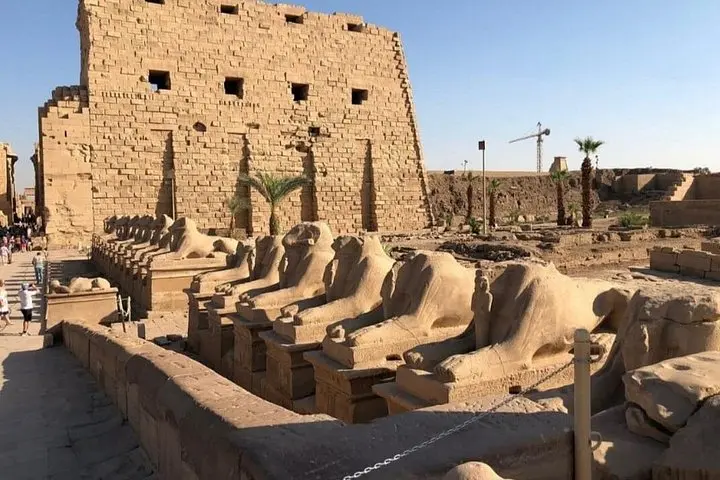
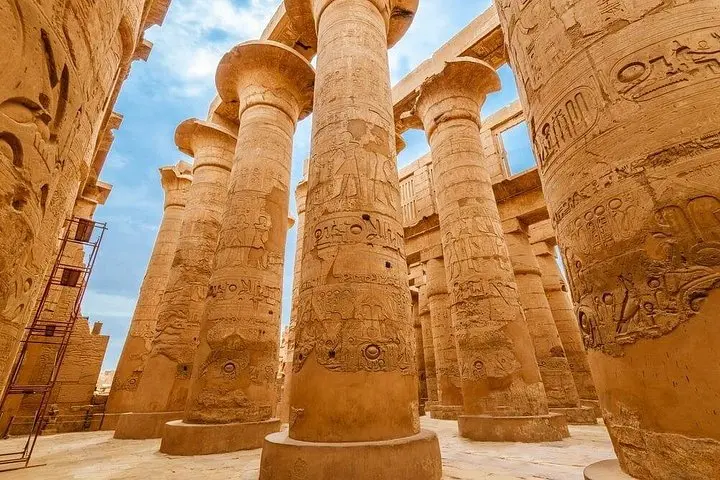
At Karnak, a forest of colossal columns and intact obelisks rises like carved memory; your Egyptologist guide stitches architectural detail to myth—Amun-Re’s rise, the layered expansions of pharaohs, and the living rituals that animated the precinct.
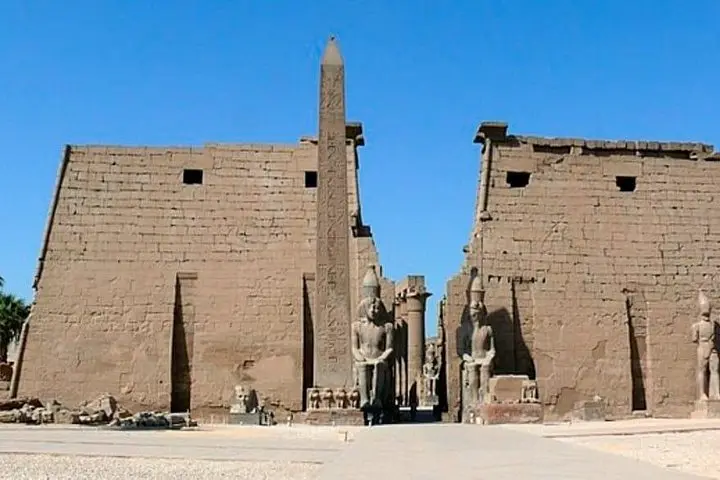
Across the axis, Luxor Temple gives a more intimate encounter: processional ramps, a colonnaded court begun under Amenhotep III and reworked by Ramses II, and surfaces that still hold the pressure of pilgrimage and politics. Geologically, the monuments are local sandstone and Nile-laid silt, their warm ochre tones brightening late in the afternoon while salts from the river and tourism stress conservation efforts.
Culturally, the East Bank remains a working neighborhood—vendors, devotion, and the Nile’s slow current shaping daily life. Hidden corners like the Sacred Lake at Karnak and small chapels off the main axes offer quieter moments away from the main plazas.
Practically: expect 4–5 hours of mostly flat walking on packed earth and stone with some uneven thresholds. Admission fees are typically separate; bring cash or card for tickets and tips. Sun protection, comfortable walking shoes, and a refillable water bottle make the visit manageable and more pleasant. Mobility access is relatively good for main routes, but uneven stones can be slick; take steady steps and follow your guide’s suggested routes to maximize time and minimize crowds.
Most private half-day bookings do not include archaeological site admission—confirm with the operator or plan to purchase tickets at the entrance.
Many main routes at Karnak and Luxor have level or ramped access, and the tour lists wheelchair-accessible options; notify the operator at booking to arrange suitable transport and routing.
Typical on-site time is about three hours split between Karnak (roughly 2–3 hours) and Luxor Temple (about 1 hour) within a 4–5 hour door-to-door tour window.
Tipping is customary; a modest amount per person is appropriate if the guide enhances your understanding and experience.
I Can Travel operates guided outdoor trips and adventures with an emphasis on safety, stewardship, and memorable experiences.
Morning light slices across sandstone columns as a private vehicle eases through Luxor’s East Bank, depositing visitors at the threshold of two of Egypt’s most public works of religion and power.
Morning light slices across sandstone columns as a private vehicle eases through Luxor’s East Bank, depositing visitors at the threshold of two of Egypt’s most public works of religion and power.
At Karnak, a forest of colossal columns and intact obelisks rises like carved memory; your Egyptologist guide stitches architectural detail to myth—Amun-Re’s rise, the layered expansions of pharaohs, and the living rituals that animated the precinct.
Across the axis, Luxor Temple gives a more intimate encounter: processional ramps, a colonnaded court begun under Amenhotep III and reworked by Ramses II, and surfaces that still hold the pressure of pilgrimage and politics. Geologically, the monuments are local sandstone and Nile-laid silt, their warm ochre tones brightening late in the afternoon while salts from the river and tourism stress conservation efforts.
Culturally, the East Bank remains a working neighborhood—vendors, devotion, and the Nile’s slow current shaping daily life. Hidden corners like the Sacred Lake at Karnak and small chapels off the main axes offer quieter moments away from the main plazas.
Practically: expect 4–5 hours of mostly flat walking on packed earth and stone with some uneven thresholds. Admission fees are typically separate; bring cash or card for tickets and tips. Sun protection, comfortable walking shoes, and a refillable water bottle make the visit manageable and more pleasant. Mobility access is relatively good for main routes, but uneven stones can be slick; take steady steps and follow your guide’s suggested routes to maximize time and minimize crowds.