THE ADVENTURE COLLECTIVE® · Independent discovery and booking for outdoor travel

Spend four focused hours exploring Angkor Thom’s highlights—Bayon’s tower faces, Baphuon’s causeway and the royal terraces—guided by local expertise. This private half-day tour balances photographic stops with cultural context for first-time and returning visitors alike.
Spend four focused hours exploring Angkor Thom’s highlights—Bayon’s tower faces, Baphuon’s causeway and the royal terraces—guided by local expertise. This private half-day tour balances photographic stops with cultural context for first-time and returning visitors alike.
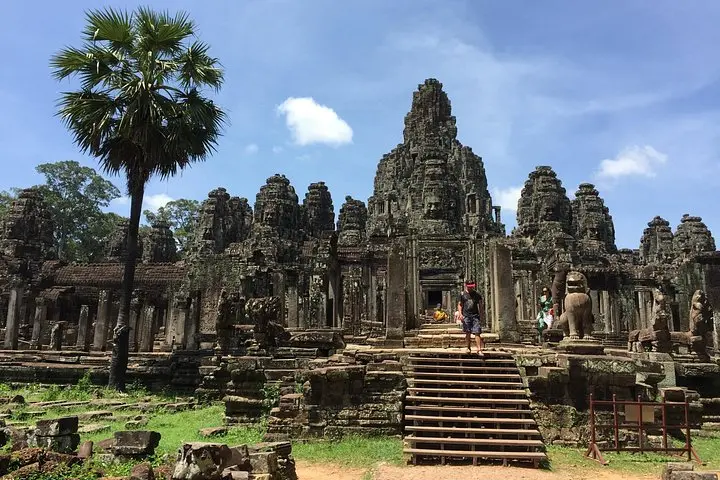
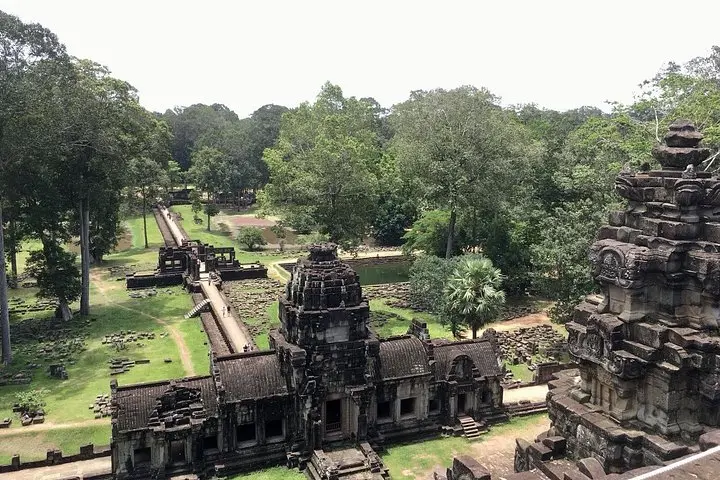
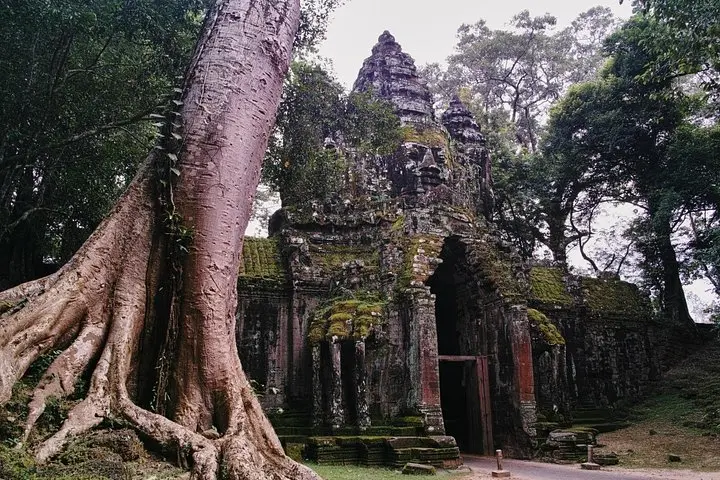
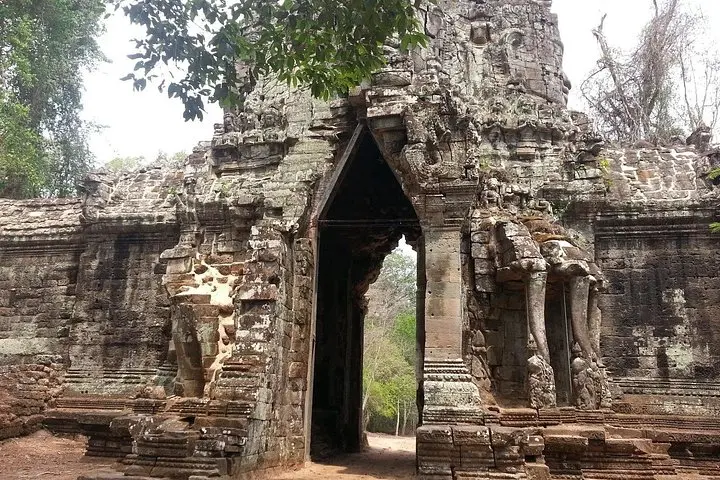
The guide steps off the shaded causeway and into a courtyard where stone faces peer down through heat-hazed air. Morning light scours the bas-reliefs; in the afternoon the towers throw long, slow shadows. A private half-day through Angkor Thom concentrates the capital’s highlights—Bayon’s iconic smiling faces, Baphuon’s reconstructed mass, the Esplanade’s long terraces and the quieter nooks like Preah Palilay—so travelers get the breadth of the site without the marathon.
Verified experiences and guided adventures in the surrounding area.
Operated by Private Tour Guide-Cambodia · Siem Reap, Siem Reap Province
The guide steps off the shaded causeway and into a courtyard where stone faces peer down through heat-hazed air. Morning light scours the bas-reliefs; in the afternoon the towers throw long, slow shadows. A private half-day through Angkor Thom concentrates the capital’s highlights—Bayon’s iconic smiling faces, Baphuon’s reconstructed mass, the Esplanade’s long terraces and the quieter nooks like Preah Palilay—so travelers get the breadth of the site without the marathon.
Angkor Thom was the last great capital of the Khmer Empire, its laterite walls and wide moat still defining a 3x3km city footprint. Bayon sits at the historic center; its 216 carved faces and tight gallery reliefs reveal political and religious shifts from Hindu to Mahayana Buddhist patronage. The Baphuon’s layered structure and Phimeanakas’ jungle shade tell of building campaigns from the 10th–12th centuries and centuries of restoration, including major reconstruction in the late 20th century.
Practicalities govern a successful half day: tours run about 4–5 hours and typically include hotel pickup, private transport and a local guide who points out photo angles and interprets iconography. Angkor Archaeological Park passes are required at the ticket center and are not always included with private tours—carry ID and a printed or digital pass. Wear comfortable walking shoes for uneven laterite and sandstone steps, bring sun protection and at least 1L of water, and plan your visit for cooler morning light or the golden late afternoon. Respect temple dress codes—shoulders and knees covered—and move deliberately around fragile carvings. With a measured pace, a half-day tour delivers concentrated history, dramatic stonework and a clear sense of why Angkor remains a living landscape of empire and repair.
Most private half-day tours do not include the official Angkor Park pass; purchase your pass at the ticket center near the park entrance or confirm inclusion with your operator.
Some areas and the tour’s transport may be wheelchair accessible, but steep steps and uneven surfaces limit access to many inner temple zones—check with your operator for specific accommodations.
Conservative clothing that covers shoulders and knees is required inside many monuments—light, breathable fabrics work best in the heat.
Typical departures are morning (around 08:00) or afternoon (around 14:00); a half-day itinerary runs roughly 4–5 hours including hotel transfer times.
Private Tour Guide-Cambodia operates guided outdoor trips and adventures with an emphasis on safety, stewardship, and memorable experiences.
The guide steps off the shaded causeway and into a courtyard where stone faces peer down through heat-hazed air. Morning light scours the bas-reliefs; in the afternoon the towers throw long, slow shadows. A private half-day through Angkor Thom concentrates the capital’s highlights—Bayon’s iconic smiling faces, Baphuon’s reconstructed mass, the Esplanade’s long terraces and the quieter nooks like Preah Palilay—so travelers get the breadth of the site without the marathon.
The guide steps off the shaded causeway and into a courtyard where stone faces peer down through heat-hazed air. Morning light scours the bas-reliefs; in the afternoon the towers throw long, slow shadows. A private half-day through Angkor Thom concentrates the capital’s highlights—Bayon’s iconic smiling faces, Baphuon’s reconstructed mass, the Esplanade’s long terraces and the quieter nooks like Preah Palilay—so travelers get the breadth of the site without the marathon.
Angkor Thom was the last great capital of the Khmer Empire, its laterite walls and wide moat still defining a 3x3km city footprint. Bayon sits at the historic center; its 216 carved faces and tight gallery reliefs reveal political and religious shifts from Hindu to Mahayana Buddhist patronage. The Baphuon’s layered structure and Phimeanakas’ jungle shade tell of building campaigns from the 10th–12th centuries and centuries of restoration, including major reconstruction in the late 20th century.
Practicalities govern a successful half day: tours run about 4–5 hours and typically include hotel pickup, private transport and a local guide who points out photo angles and interprets iconography. Angkor Archaeological Park passes are required at the ticket center and are not always included with private tours—carry ID and a printed or digital pass. Wear comfortable walking shoes for uneven laterite and sandstone steps, bring sun protection and at least 1L of water, and plan your visit for cooler morning light or the golden late afternoon. Respect temple dress codes—shoulders and knees covered—and move deliberately around fragile carvings. With a measured pace, a half-day tour delivers concentrated history, dramatic stonework and a clear sense of why Angkor remains a living landscape of empire and repair.