THE ADVENTURE COLLECTIVE® · Independent discovery and booking for outdoor travel

Explore Angkor Wat with a private half-day tour that times out the crowds and focuses on the temple’s galleries, lotus pond views, and central sanctuary. This tour is ideal for travelers wanting depth without an early sunrise start.
Explore Angkor Wat with a private half-day tour that times out the crowds and focuses on the temple’s galleries, lotus pond views, and central sanctuary. This tour is ideal for travelers wanting depth without an early sunrise start.
Morning light slides across basalt pools and the lotus pond as you approach Angkor Wat’s east causeway. Columns remnant to centuries stand like patient witnesses; the central towers pierce the tropical sky and the moat keeps the temple’s reflection steady enough to fool a hurried eye.
Verified experiences and guided adventures in the surrounding area.
Operated by Private Tour Guide-Cambodia · Siem Reap, Siem Reap
Morning light slides across basalt pools and the lotus pond as you approach Angkor Wat’s east causeway. Columns remnant to centuries stand like patient witnesses; the central towers pierce the tropical sky and the moat keeps the temple’s reflection steady enough to fool a hurried eye.
Built in the early 12th century by King Suryavarman II, Angkor Wat began as a state temple dedicated to Vishnu and later became an active Buddhist site. The complex sits on uplifted, soft sandstone beds; sculptors carved galleries that narrate Hindu epics in dense bas-relief. Local guides often point out how shifting water tables and tropical rains have shaped restoration priorities—stone joints swell in wet seasons and contract in dry.
Culturally, Angkor Wat remains an icon of national identity; it appears on Cambodia’s flag and is protected within the Angkor Archaeological Park. Expect long galleries of narrative reliefs, quiet library pavilions, and lotus-fringed reflections that change with the hour.
Practical guidance: the private half-day format (roughly 3–4 hours) gives time for the main galleries, central sanctuary approaches, and photography without sunrise crowds. Admission to the site is not included; buy an Angkor Pass at the ticket center. Bakan (central towers) access is limited—children under 12 are not permitted, and the towers close on important Buddhist observances. Wear lightweight, respectful clothing (shoulders and knees covered), bring sun protection, and expect uneven, sometimes slippery stone underfoot. Hydrate and move steadily—this is a cultural walk more than a climb, but humidity and exposure make preparation essential.
No — the Angkor Pass is purchased separately at the official ticket center and is required to enter the complex.
Children under 12 are generally not permitted to climb the Bakan towers; access can also be restricted on certain religious days.
The tour lists wheelchair-accessible transportation and pathways in some areas, but many inner galleries and steps are not fully accessible—check specifics with the operator before booking.
This private half-day option departs after sunrise crowds (8:00 AM or 2:00 PM departures) and aims to reduce congestion while keeping cooler light for photography.
Private Tour Guide-Cambodia operates guided outdoor trips and adventures with an emphasis on safety, stewardship, and memorable experiences.
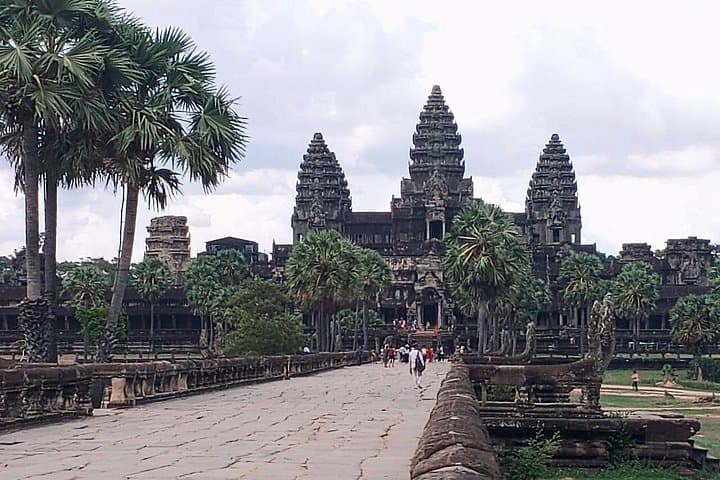
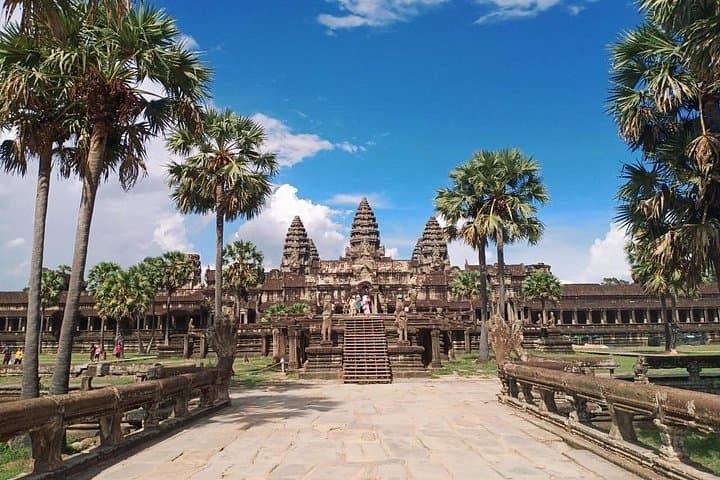
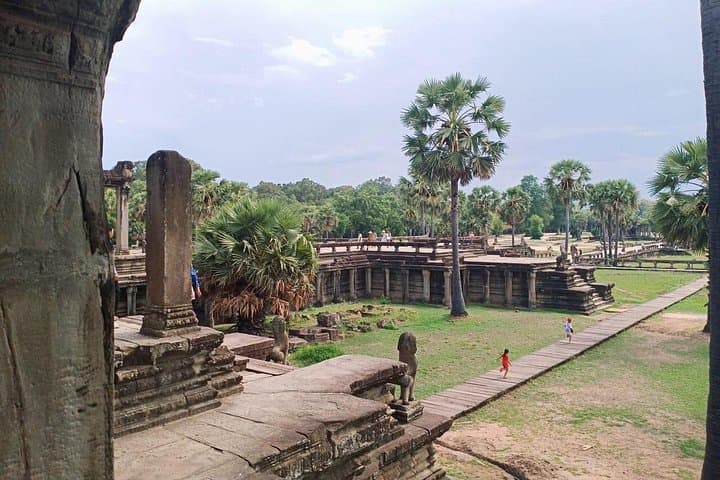
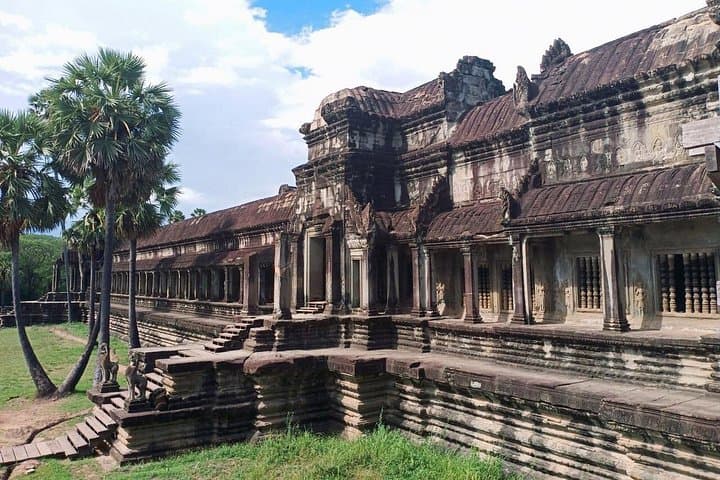
Morning light slides across basalt pools and the lotus pond as you approach Angkor Wat’s east causeway. Columns remnant to centuries stand like patient witnesses; the central towers pierce the tropical sky and the moat keeps the temple’s reflection steady enough to fool a hurried eye.
Morning light slides across basalt pools and the lotus pond as you approach Angkor Wat’s east causeway. Columns remnant to centuries stand like patient witnesses; the central towers pierce the tropical sky and the moat keeps the temple’s reflection steady enough to fool a hurried eye.
Built in the early 12th century by King Suryavarman II, Angkor Wat began as a state temple dedicated to Vishnu and later became an active Buddhist site. The complex sits on uplifted, soft sandstone beds; sculptors carved galleries that narrate Hindu epics in dense bas-relief. Local guides often point out how shifting water tables and tropical rains have shaped restoration priorities—stone joints swell in wet seasons and contract in dry.
Culturally, Angkor Wat remains an icon of national identity; it appears on Cambodia’s flag and is protected within the Angkor Archaeological Park. Expect long galleries of narrative reliefs, quiet library pavilions, and lotus-fringed reflections that change with the hour.
Practical guidance: the private half-day format (roughly 3–4 hours) gives time for the main galleries, central sanctuary approaches, and photography without sunrise crowds. Admission to the site is not included; buy an Angkor Pass at the ticket center. Bakan (central towers) access is limited—children under 12 are not permitted, and the towers close on important Buddhist observances. Wear lightweight, respectful clothing (shoulders and knees covered), bring sun protection, and expect uneven, sometimes slippery stone underfoot. Hydrate and move steadily—this is a cultural walk more than a climb, but humidity and exposure make preparation essential.