THE ADVENTURE COLLECTIVE® · Independent discovery and booking for outdoor travel

A private half-day from Luxor to Dendera brings you up close to the Temple of Hathor and the celebrated Dendera Zodiac. Expect a short drive, an expert Egyptologist guide, and a focused visit to Roman-era decorations and Ptolemaic architecture.
A private half-day from Luxor to Dendera brings you up close to the Temple of Hathor and the celebrated Dendera Zodiac. Expect a short drive, an expert Egyptologist guide, and a focused visit to Roman-era decorations and Ptolemaic architecture.
You arrive before the temple doors fully warm to the sun; the road from Luxor opens a landscape of palm-lined Nile banks and flat, ochre fields. The modern A/C van lets the heat wait while an Egyptologist guide sets the scene: stone columns that once rang with music, carved reliefs that still point to human stories. The air smells faintly of dust and crushed thyme.
Verified experiences and guided adventures in the surrounding area.
Operated by Egypt VIP Tours · Dendera, Qena
You arrive before the temple doors fully warm to the sun; the road from Luxor opens a landscape of palm-lined Nile banks and flat, ochre fields. The modern A/C van lets the heat wait while an Egyptologist guide sets the scene: stone columns that once rang with music, carved reliefs that still point to human stories. The air smells faintly of dust and crushed thyme.
Dendera sits on the east bank of the Nile, its main monument — the Temple of Hathor — largely a Ptolemaic and Roman-era complex built over older foundations. The ceiling’s famed Dendera Zodiac preserves ancient sky-mapping, and reliefs mix pharaonic ritual with Imperial portraits: a visible record of cultural exchange and devotional practice. The complex’s stonework also speaks to regional geology — sedimentary limestone quarried from nearby benches — and a landscape shaped by the Nile’s steady influence.
Practical guidance: expect about a 90-minute drive each way from central Luxor and roughly two hours on-site; entrance fee and camera permit are commonly paid on arrival and are not included with most private transfers. Wear sun-protective clothing and sturdy walking shoes—the temple compound is mostly flat but exposed. Bring cash for tickets, tips, and small vendors; bottled water is offered on many tours but carry extra in summer. If you prefer cooler light, aim for early morning or late afternoon for softer shadows on reliefs and fewer crowds.
A private half-day tour delivers concentrated archaeology and context without the rush—ideal for travelers who want explanation and access, but not a full-day excursion from a Nile cruise.
The transfer is roughly 90 minutes each way, depending on traffic and your pickup location in Luxor.
Admission and camera permits are commonly not included and are paid on arrival; confirm with your provider before travel.
Yes—paths are relatively flat and the visit is low-impact, though shade is limited and temperatures can be high.
Most operators provide pickup from hotels or Nile cruise moorings in Luxor; confirm your exact pickup point when booking.
Egypt VIP Tours operates guided outdoor trips and adventures with an emphasis on safety, stewardship, and memorable experiences.


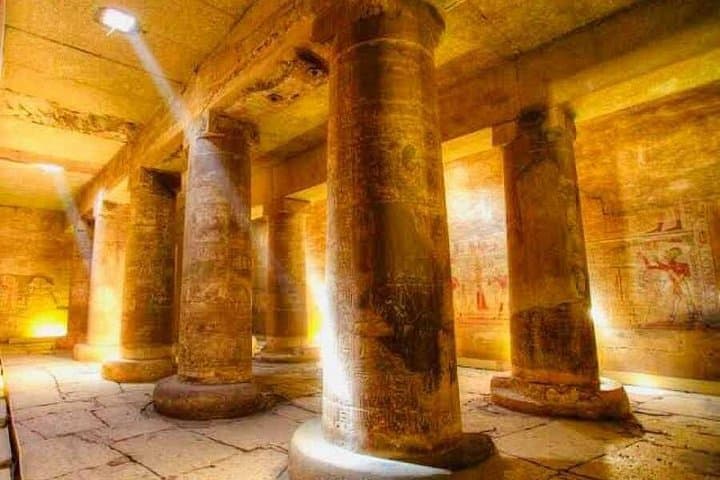
You arrive before the temple doors fully warm to the sun; the road from Luxor opens a landscape of palm-lined Nile banks and flat, ochre fields. The modern A/C van lets the heat wait while an Egyptologist guide sets the scene: stone columns that once rang with music, carved reliefs that still point to human stories. The air smells faintly of dust and crushed thyme.
You arrive before the temple doors fully warm to the sun; the road from Luxor opens a landscape of palm-lined Nile banks and flat, ochre fields. The modern A/C van lets the heat wait while an Egyptologist guide sets the scene: stone columns that once rang with music, carved reliefs that still point to human stories. The air smells faintly of dust and crushed thyme.
Dendera sits on the east bank of the Nile, its main monument — the Temple of Hathor — largely a Ptolemaic and Roman-era complex built over older foundations. The ceiling’s famed Dendera Zodiac preserves ancient sky-mapping, and reliefs mix pharaonic ritual with Imperial portraits: a visible record of cultural exchange and devotional practice. The complex’s stonework also speaks to regional geology — sedimentary limestone quarried from nearby benches — and a landscape shaped by the Nile’s steady influence.
Practical guidance: expect about a 90-minute drive each way from central Luxor and roughly two hours on-site; entrance fee and camera permit are commonly paid on arrival and are not included with most private transfers. Wear sun-protective clothing and sturdy walking shoes—the temple compound is mostly flat but exposed. Bring cash for tickets, tips, and small vendors; bottled water is offered on many tours but carry extra in summer. If you prefer cooler light, aim for early morning or late afternoon for softer shadows on reliefs and fewer crowds.
A private half-day tour delivers concentrated archaeology and context without the rush—ideal for travelers who want explanation and access, but not a full-day excursion from a Nile cruise.