THE ADVENTURE COLLECTIVE® · Independent discovery and booking for outdoor travel

Spend four immersive hours on the Giza Plateau with a private Egyptologist, riding camels across sand-swept apron and entering one pyramid chamber. Practical tips on timing, terrain, and what to expect inside make this an efficient cultural adventure.
Spend four immersive hours on the Giza Plateau with a private Egyptologist, riding camels across sand-swept apron and entering one pyramid chamber. Practical tips on timing, terrain, and what to expect inside make this an efficient cultural adventure.
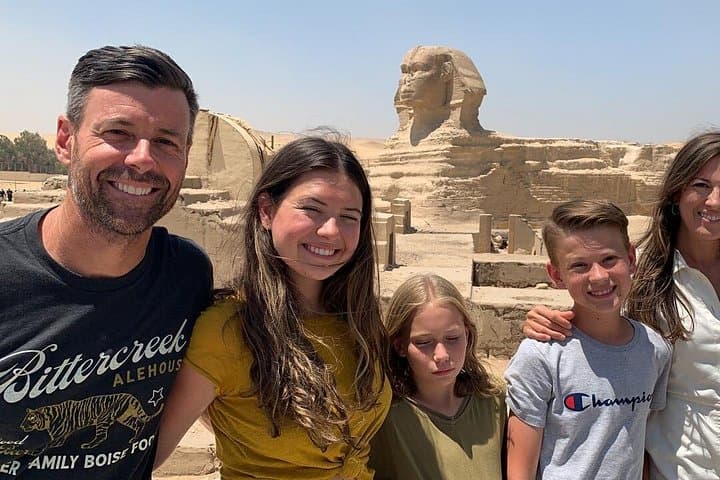
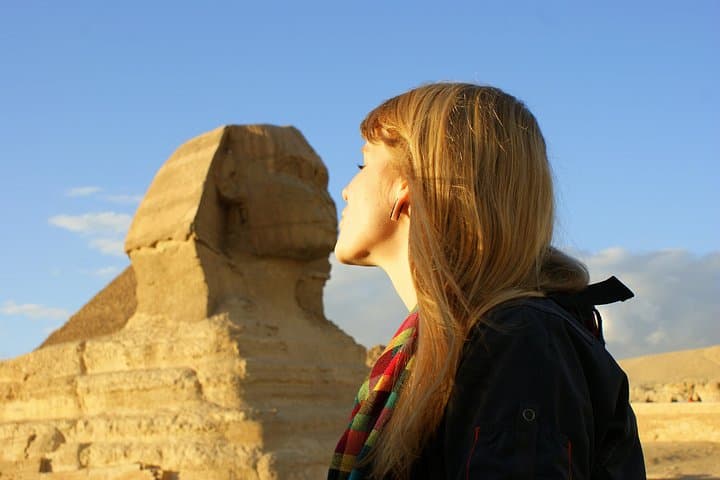
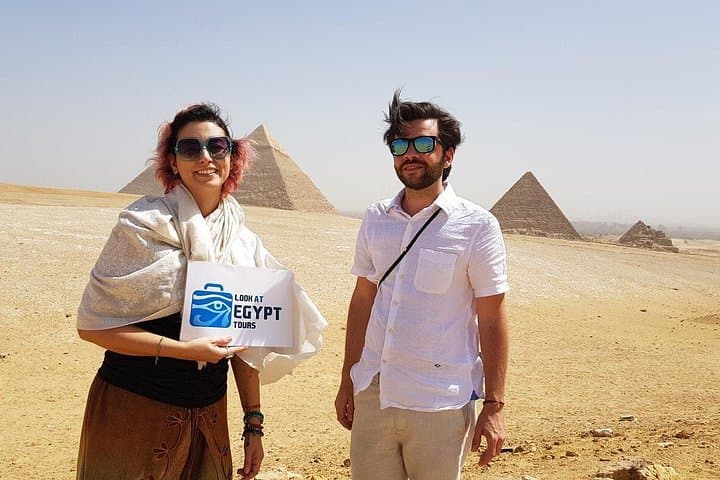
You step from the air-conditioned car onto wind-polished limestone and the plateau opens like a map of human ambition. The Great Pyramid rises, geometric and stubborn, while the Sphinx watches the route travelers have used for millennia. A camel shifts its weight, patient as the desert that shaped this place.
Verified experiences and guided adventures in the surrounding area.
Operated by Look at Egypt Tours · Giza, Giza Governorate
You step from the air-conditioned car onto wind-polished limestone and the plateau opens like a map of human ambition. The Great Pyramid rises, geometric and stubborn, while the Sphinx watches the route travelers have used for millennia. A camel shifts its weight, patient as the desert that shaped this place.
These monuments date to the Old Kingdom, built around 2600–2500 BCE when Khufu’s pyramid reigned as the tallest man-made structure for about 4,500 years. Geologically the Giza Plateau is a limestone bench cut from ancient seabeds; quarry scars and casing blocks still speak to the techniques of pharaonic builders. Culturally, the site remains active—local guides, conservation teams, and resident Bedouin families maintain living ties to the landscape.
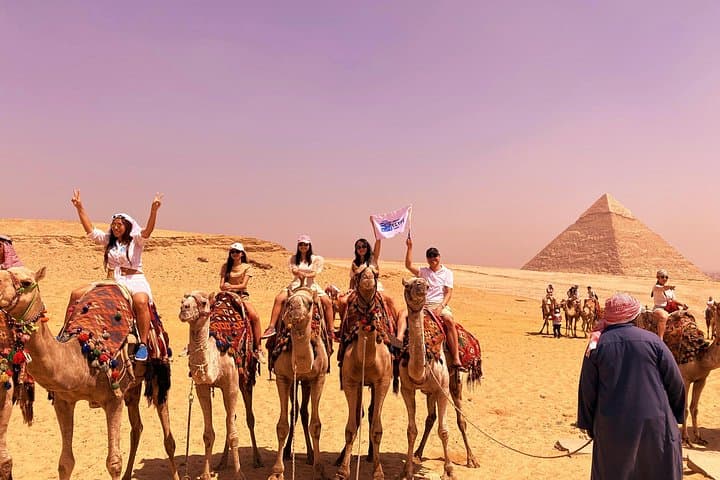
On a half-day private tour you’ll visit the primary pyramids of Khufu, Khafre and Menkaure, view the Sphinx, and typically enter one of the smaller interior chambers (Queen’s or Menkaure Pyramid) with a licensed Egyptologist narrating context and debate. Camel riding across the sandy apron gives a hands-on sense of the desert’s pull, and the Cairo skyline provides a modern counterpoint for photos.
Plan practically: mornings are cooler and offer better light; wear closed-toe shoes for uneven stone; bring sun protection and water. Interiors are narrow and require stooping; those with claustrophobia should skip the internal passages. Hotel pickup and return are usually included, making this compact cultural-archaeological experience accessible within a four-hour window.
This half-day tour typically includes entry into one of the smaller pyramids (Queen’s or Menkaure); entry to the Great Pyramid is limited and may require a separate permit or ticket.
Yes—camel rides on the plateau are part of this private tour; animals are handled by local handlers, but rides involve mounting/dismounting and some swaying, so inform guides of mobility concerns.
Yes—the tour description includes round-trip private transfers from hotels in Cairo or Giza as part of the booking.
Transportation options can be wheelchair accessible, but the plateau and pyramid interiors are uneven and not fully accessible; check specifics with the operator before booking.
Look at Egypt Tours operates guided outdoor trips and adventures with an emphasis on safety, stewardship, and memorable experiences.
You step from the air-conditioned car onto wind-polished limestone and the plateau opens like a map of human ambition. The Great Pyramid rises, geometric and stubborn, while the Sphinx watches the route travelers have used for millennia. A camel shifts its weight, patient as the desert that shaped this place.
You step from the air-conditioned car onto wind-polished limestone and the plateau opens like a map of human ambition. The Great Pyramid rises, geometric and stubborn, while the Sphinx watches the route travelers have used for millennia. A camel shifts its weight, patient as the desert that shaped this place.
These monuments date to the Old Kingdom, built around 2600–2500 BCE when Khufu’s pyramid reigned as the tallest man-made structure for about 4,500 years. Geologically the Giza Plateau is a limestone bench cut from ancient seabeds; quarry scars and casing blocks still speak to the techniques of pharaonic builders. Culturally, the site remains active—local guides, conservation teams, and resident Bedouin families maintain living ties to the landscape.
On a half-day private tour you’ll visit the primary pyramids of Khufu, Khafre and Menkaure, view the Sphinx, and typically enter one of the smaller interior chambers (Queen’s or Menkaure Pyramid) with a licensed Egyptologist narrating context and debate. Camel riding across the sandy apron gives a hands-on sense of the desert’s pull, and the Cairo skyline provides a modern counterpoint for photos.
Plan practically: mornings are cooler and offer better light; wear closed-toe shoes for uneven stone; bring sun protection and water. Interiors are narrow and require stooping; those with claustrophobia should skip the internal passages. Hotel pickup and return are usually included, making this compact cultural-archaeological experience accessible within a four-hour window.