THE ADVENTURE COLLECTIVE® · Independent discovery and booking for outdoor travel

Walk the weathered cliff faces of the Western Thousand-Buddha Grottoes on a private half-day tour from Dunhuang. See compact carved niches, learn the Silk Road history, and get practical tips for navigating fragile cave art.
Walk the weathered cliff faces of the Western Thousand-Buddha Grottoes on a private half-day tour from Dunhuang. See compact carved niches, learn the Silk Road history, and get practical tips for navigating fragile cave art.
Early light throws hard shadows across the cliff face as you step from the van onto compacted desert soil. Wind carries grit and a faint scent of poplar; the cliff itself seems to lean toward the road, a sweep of carved niches cut into ochre sandstone. Your guide gestures to the first hollowed chamber and the carved Buddhas—some almost eroded to soft relief—inviting a closer look at details that survive centuries of sun and sand.
Verified experiences and guided adventures in the surrounding area.
Operated by Silk Road Angel Tours · Dunhuang, Gansu
Early light throws hard shadows across the cliff face as you step from the van onto compacted desert soil. Wind carries grit and a faint scent of poplar; the cliff itself seems to lean toward the road, a sweep of carved niches cut into ochre sandstone. Your guide gestures to the first hollowed chamber and the carved Buddhas—some almost eroded to soft relief—inviting a closer look at details that survive centuries of sun and sand.
The Western Thousand-Buddha Grottoes are a marginal but meaningful sibling to the larger Mogao complex, once a key spiritual and visual waypoint on the western edge of Chinese settlement. Geologically the cliffs are weathered sandstone and conglomerate—fragile where wind and historical river action have hollowed caverns and left imprints of shifting waterlines. Culturally, these caves mark the ebb of Silk Road traffic: petitions to the governor at Yangguan Pass often prefaced pilgrim stops here.
Expect compact walking between roughly five small grotto groups, low passages, and steep steps; about 3–4 hours including transfers. Photography is limited around paintings—no flash—and touching painted surfaces accelerates decay; follow your guide and stay on established paths. Hydrate early, wear closed shoes for uneven rock, and time visits for morning light to read reliefs without backlighting.
Finish the half-day with a short transfer back to Dunhuang, or continue across the dunes to Crescent Lake and Mingsha for a broader taste of the desert’s scale. The experience is intimate: small-scale archaeology framed by a harsh landscape that still seems to dare you to read its stories.
The private half-day tour lasts about 3.5 hours including round-trip transfer from central Dunhuang hotels.
Photography is generally allowed in exterior areas; inside, flash is prohibited and some painted chambers are off-limits—follow your guide’s instructions.
Yes—children can join but must be supervised at all times; infants should sit on laps during vehicle transfers as noted in booking rules.
Yes—passport name, number, expiry and nationality are required at booking and a current valid passport is required on the day.
Silk Road Angel Tours operates guided outdoor trips and adventures with an emphasis on safety, stewardship, and memorable experiences.
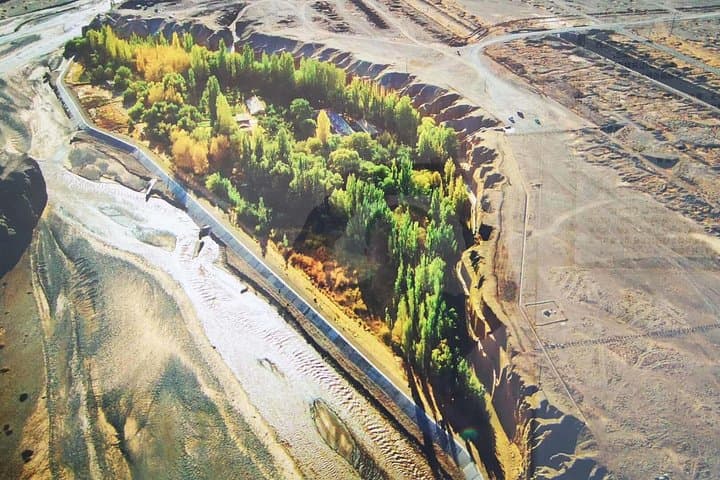


Early light throws hard shadows across the cliff face as you step from the van onto compacted desert soil. Wind carries grit and a faint scent of poplar; the cliff itself seems to lean toward the road, a sweep of carved niches cut into ochre sandstone. Your guide gestures to the first hollowed chamber and the carved Buddhas—some almost eroded to soft relief—inviting a closer look at details that survive centuries of sun and sand.
Early light throws hard shadows across the cliff face as you step from the van onto compacted desert soil. Wind carries grit and a faint scent of poplar; the cliff itself seems to lean toward the road, a sweep of carved niches cut into ochre sandstone. Your guide gestures to the first hollowed chamber and the carved Buddhas—some almost eroded to soft relief—inviting a closer look at details that survive centuries of sun and sand.
The Western Thousand-Buddha Grottoes are a marginal but meaningful sibling to the larger Mogao complex, once a key spiritual and visual waypoint on the western edge of Chinese settlement. Geologically the cliffs are weathered sandstone and conglomerate—fragile where wind and historical river action have hollowed caverns and left imprints of shifting waterlines. Culturally, these caves mark the ebb of Silk Road traffic: petitions to the governor at Yangguan Pass often prefaced pilgrim stops here.
Expect compact walking between roughly five small grotto groups, low passages, and steep steps; about 3–4 hours including transfers. Photography is limited around paintings—no flash—and touching painted surfaces accelerates decay; follow your guide and stay on established paths. Hydrate early, wear closed shoes for uneven rock, and time visits for morning light to read reliefs without backlighting.
Finish the half-day with a short transfer back to Dunhuang, or continue across the dunes to Crescent Lake and Mingsha for a broader taste of the desert’s scale. The experience is intimate: small-scale archaeology framed by a harsh landscape that still seems to dare you to read its stories.