THE ADVENTURE COLLECTIVE® · Independent discovery and booking for outdoor travel

See the Glenfinnan Viaduct, feed Highland ‘Coos’ and follow film locations through Glencoe and Rannoch Moor on a private full-day tour from Edinburgh. Ideal for photography, history and light walkers seeking a cinematic taste of the Highlands.
See the Glenfinnan Viaduct, feed Highland ‘Coos’ and follow film locations through Glencoe and Rannoch Moor on a private full-day tour from Edinburgh. Ideal for photography, history and light walkers seeking a cinematic taste of the Highlands.
The bus eases out of Edinburgh and the lowlands fall away into a widening palette of loch, heath and wind-bent pines. You'll stand on a grassy rise with the viaduct curving below, breath pulled tight by the sight of steam—or by the raw sweep of the valley if the Jacobite train is resting for winter.
Verified experiences and guided adventures in the surrounding area.
Operated by E2G Travel · Edinburgh, Scotland
The bus eases out of Edinburgh and the lowlands fall away into a widening palette of loch, heath and wind-bent pines. You'll stand on a grassy rise with the viaduct curving below, breath pulled tight by the sight of steam—or by the raw sweep of the valley if the Jacobite train is resting for winter.
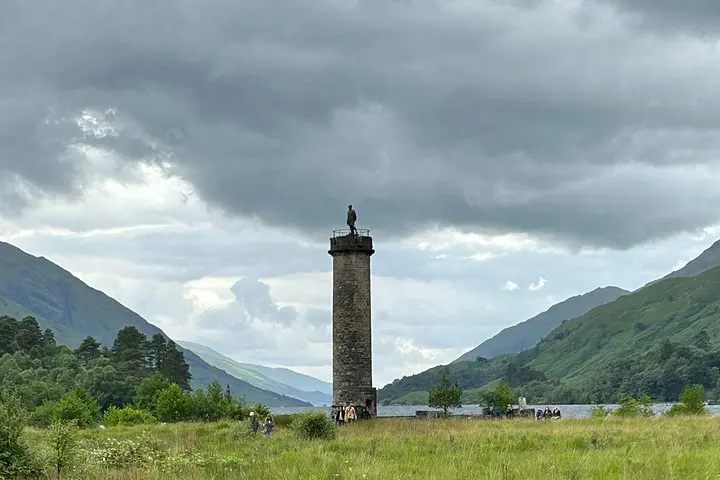
This route threads together layers of history: Victorian railway engineering that gave Scotland one of its most photogenic bridges; the Glenfinnan Monument that marks a Jacobite uprising in 1745; and settlements shaped by Norse, Gaelic and clan histories. Geologically, the Highlands are carved by repeated glaciation—U-shaped valleys, scree slopes and the black peat of Rannoch Moor that still stores millennia of carbon. Culturally the day touches distilleries, clan stories and the modern myth-making of film locations from Doune Castle to scenes shot across Glencoe.
Expect a full day on the road—roughly 10–12 hours—broken by short walks: a 20–30 minute climb to the best viaduct vantage, brief stops at viewpoints and a chance to hand-feed hairy Highland cattle. The Jacobite steam service runs April–October; outside those months the stone arches remain, no less dramatic.
Practical edge: layer up, bring a waterproof, binoculars and a camera with a mid-range zoom. Paths to viewpoints are uneven; sturdy footwear is advised. Respect private land—stay on designated tracks—and treat peatland and wildlife with care: leave no trace and avoid trampling fragile bogs. This tour delivers cinematic moments and real Highland terrain in one long, accessible day.
No—The Jacobite runs roughly April to October and can be substituted by a diesel service or be absent; the viaduct itself is visited year-round.
Expect a 20–30 minute uphill walk from the nearest parking/viewpoint to reach the hill above the viaduct; terrain is uneven but not technical.
Yes, the itinerary includes short stops for restrooms and coffee/snacks, plus bottled water and snacks are provided during the tour.
Yes—infant seats and stroller access are available, but note UK vehicle sizes and space limits when booking for four adults or more.
E2G Travel operates guided outdoor trips and adventures with an emphasis on safety, stewardship, and memorable experiences.
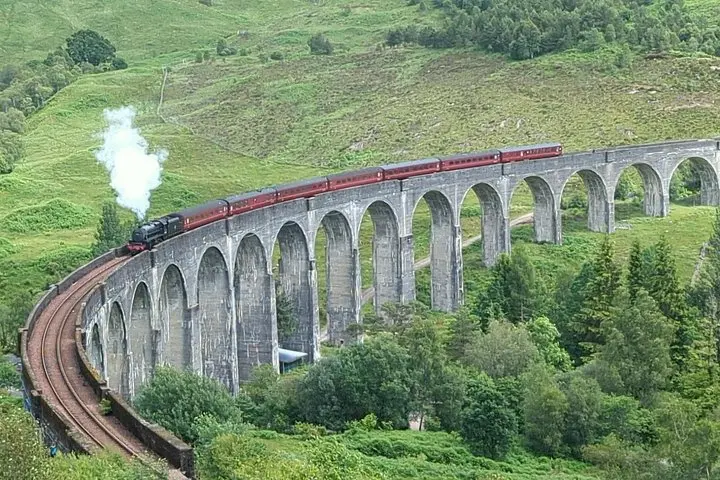
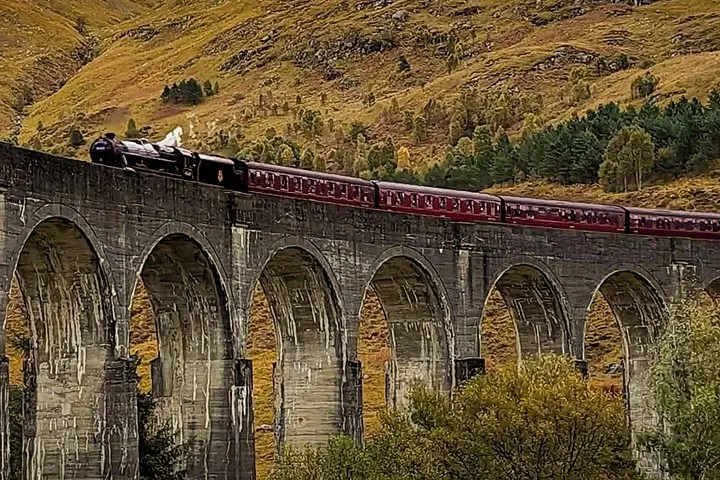
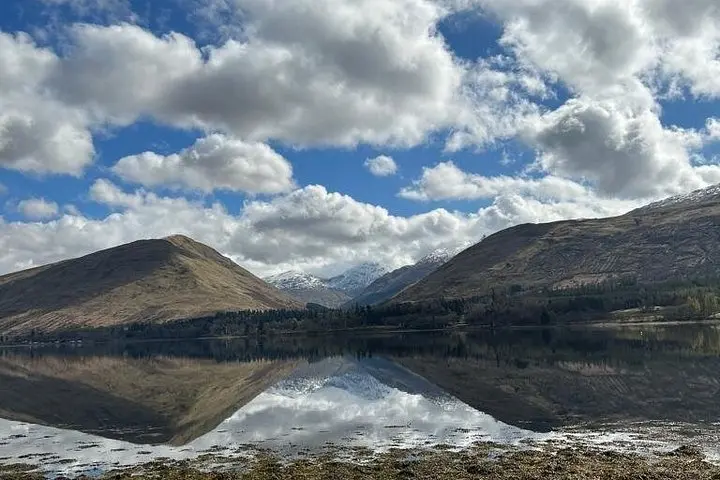
The bus eases out of Edinburgh and the lowlands fall away into a widening palette of loch, heath and wind-bent pines. You'll stand on a grassy rise with the viaduct curving below, breath pulled tight by the sight of steam—or by the raw sweep of the valley if the Jacobite train is resting for winter.
The bus eases out of Edinburgh and the lowlands fall away into a widening palette of loch, heath and wind-bent pines. You'll stand on a grassy rise with the viaduct curving below, breath pulled tight by the sight of steam—or by the raw sweep of the valley if the Jacobite train is resting for winter.
This route threads together layers of history: Victorian railway engineering that gave Scotland one of its most photogenic bridges; the Glenfinnan Monument that marks a Jacobite uprising in 1745; and settlements shaped by Norse, Gaelic and clan histories. Geologically, the Highlands are carved by repeated glaciation—U-shaped valleys, scree slopes and the black peat of Rannoch Moor that still stores millennia of carbon. Culturally the day touches distilleries, clan stories and the modern myth-making of film locations from Doune Castle to scenes shot across Glencoe.
Expect a full day on the road—roughly 10–12 hours—broken by short walks: a 20–30 minute climb to the best viaduct vantage, brief stops at viewpoints and a chance to hand-feed hairy Highland cattle. The Jacobite steam service runs April–October; outside those months the stone arches remain, no less dramatic.
Practical edge: layer up, bring a waterproof, binoculars and a camera with a mid-range zoom. Paths to viewpoints are uneven; sturdy footwear is advised. Respect private land—stay on designated tracks—and treat peatland and wildlife with care: leave no trace and avoid trampling fragile bogs. This tour delivers cinematic moments and real Highland terrain in one long, accessible day.