THE ADVENTURE COLLECTIVE® · Independent discovery and booking for outdoor travel

Rise before dawn in Kathmandu and trade the city’s bustle for a helicopter that climbs into the high Himalaya. Land at Kala Patthar for unmatched views of Everest, with brief cultural touches and photo stops at Gokyo and Everest View Hotel.
Rise before dawn in Kathmandu and trade the city’s bustle for a helicopter that climbs into the high Himalaya. Land at Kala Patthar for unmatched views of Everest, with brief cultural touches and photo stops at Gokyo and Everest View Hotel.
Before dawn the helicopter’s rotor cuts the Kathmandu chill, and the city recedes into a ribbon of lights. You climb toward an alpine canvas: jagged ridgelines sharpen, glaciers unroll like slow rivers, and Everest lifts into view—an uncompromising silhouette that rearranges perspective.
Verified experiences and guided adventures in the surrounding area.
Operated by Himalaya Holiday service Pvt. Ltd.(HHS) · Kathmandu, Bagmati Province
Before dawn the helicopter’s rotor cuts the Kathmandu chill, and the city recedes into a ribbon of lights. You climb toward an alpine canvas: jagged ridgelines sharpen, glaciers unroll like slow rivers, and Everest lifts into view—an uncompromising silhouette that rearranges perspective.
This flight tracks the same airways used by climbers and Sherpa traders for centuries, flying past Lukla’s high runway, over the blue-black sweep of Gokyo Lakes and the creased face of the Khumbu Glacier. Geologically the range is young and restless—Himalayan rock thrust skyward by the India-Asia collision—so expect steep moraines, hanging glaciers and wind-scoured scree. The landing point at Kala Patthar offers the best unobstructed vista of Everest; the Base Camp below sits on ice and debris and doesn’t provide the peak’s classic profile.
Culturally, brief stops bring Sherpa villages into view—prayer flags along ridgelines, mani walls, and the low stone architecture that endures this altitude.
Practicalities: flights depart very early to catch stable morning air; total door-to-door time is about 3–4 hours. Bring a warm, windproof layer—temperatures at landing can be frigid—and a camera with spare batteries (cold saps power). Passports are mandatory; weight limits apply for safety. If you have heart or respiratory issues, consult a doctor—altitude changes are rapid.
Weather can shift suddenly; operators monitor conditions and may reschedule. For a half-day you get an unmatched aerial overview of the highest mountains on Earth—fast, dramatic, and logistically compact.
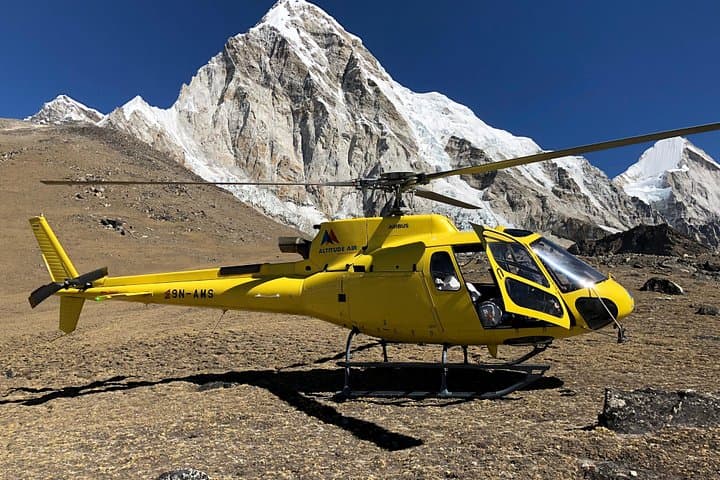
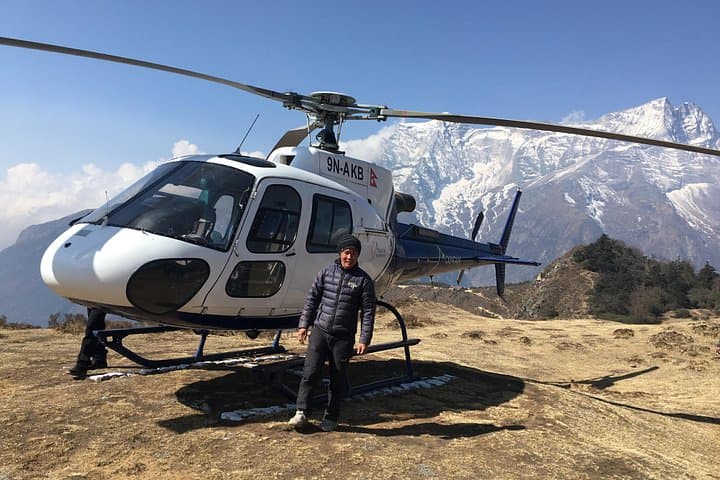
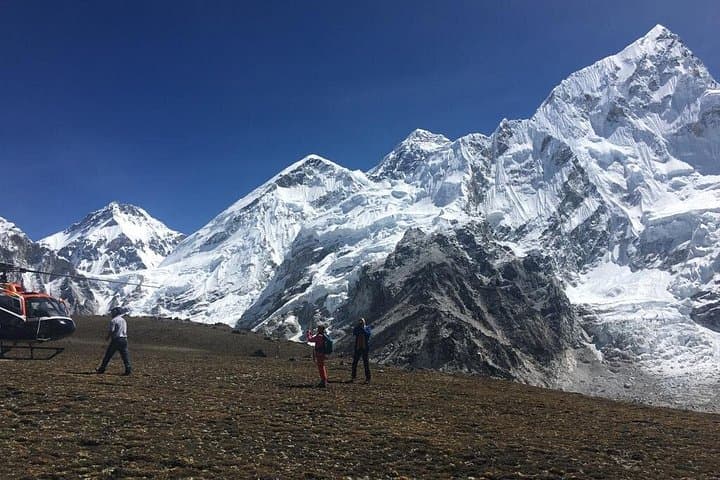
The helicopter lands at Kala Patthar or a nearby high viewpoint for photos; the true Everest Base Camp is primarily on glacier and typically overflown rather than used for safe landings.
Operators advise against this trip for travelers with serious cardiovascular or respiratory issues due to rapid altitude change and limited emergency access; consult your physician first.
Early morning flights (sunrise to mid-morning) offer the most stable air and clearest mountain views; afternoons often bring cloud build-up and turbulence.
A current valid passport is required on the day of travel and will be checked during boarding and landing procedures.
Himalaya Holiday service Pvt. Ltd.(HHS) operates guided outdoor trips and adventures with an emphasis on safety, stewardship, and memorable experiences.
Before dawn the helicopter’s rotor cuts the Kathmandu chill, and the city recedes into a ribbon of lights. You climb toward an alpine canvas: jagged ridgelines sharpen, glaciers unroll like slow rivers, and Everest lifts into view—an uncompromising silhouette that rearranges perspective.
Before dawn the helicopter’s rotor cuts the Kathmandu chill, and the city recedes into a ribbon of lights. You climb toward an alpine canvas: jagged ridgelines sharpen, glaciers unroll like slow rivers, and Everest lifts into view—an uncompromising silhouette that rearranges perspective.
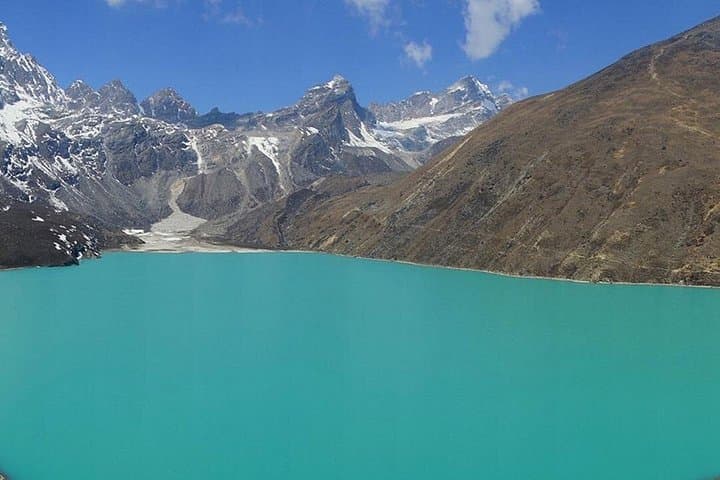
This flight tracks the same airways used by climbers and Sherpa traders for centuries, flying past Lukla’s high runway, over the blue-black sweep of Gokyo Lakes and the creased face of the Khumbu Glacier. Geologically the range is young and restless—Himalayan rock thrust skyward by the India-Asia collision—so expect steep moraines, hanging glaciers and wind-scoured scree. The landing point at Kala Patthar offers the best unobstructed vista of Everest; the Base Camp below sits on ice and debris and doesn’t provide the peak’s classic profile.
Culturally, brief stops bring Sherpa villages into view—prayer flags along ridgelines, mani walls, and the low stone architecture that endures this altitude.
Practicalities: flights depart very early to catch stable morning air; total door-to-door time is about 3–4 hours. Bring a warm, windproof layer—temperatures at landing can be frigid—and a camera with spare batteries (cold saps power). Passports are mandatory; weight limits apply for safety. If you have heart or respiratory issues, consult a doctor—altitude changes are rapid.
Weather can shift suddenly; operators monitor conditions and may reschedule. For a half-day you get an unmatched aerial overview of the highest mountains on Earth—fast, dramatic, and logistically compact.