THE ADVENTURE COLLECTIVE® · Independent discovery and booking for outdoor travel

A private, full-day tour that threads Rapa Nui’s most iconic sites into a single route—Rano Raraku, Ahu Tongariki, Orongo and Anakena—guided by a local expert. Ideal for travelers who want focused context, flexible pacing, and hotel pickup.
A private, full-day tour that threads Rapa Nui’s most iconic sites into a single route—Rano Raraku, Ahu Tongariki, Orongo and Anakena—guided by a local expert. Ideal for travelers who want focused context, flexible pacing, and hotel pickup.
On a wind-scoured ridge above the Pacific, a private vehicle threads between low volcanic hills and the island’s famous stone ancestors. The guide opens a map with practiced hands, and the day becomes a measured loop through Rapa Nui’s strongest scenes: the quarry’s silent faces, the crater rim that drinks the sky, the ahu that watch the shore.
Verified experiences and guided adventures in the surrounding area.
Operated by Aroha · Hanga Roa, Valparaíso Region
On a wind-scoured ridge above the Pacific, a private vehicle threads between low volcanic hills and the island’s famous stone ancestors. The guide opens a map with practiced hands, and the day becomes a measured loop through Rapa Nui’s strongest scenes: the quarry’s silent faces, the crater rim that drinks the sky, the ahu that watch the shore.
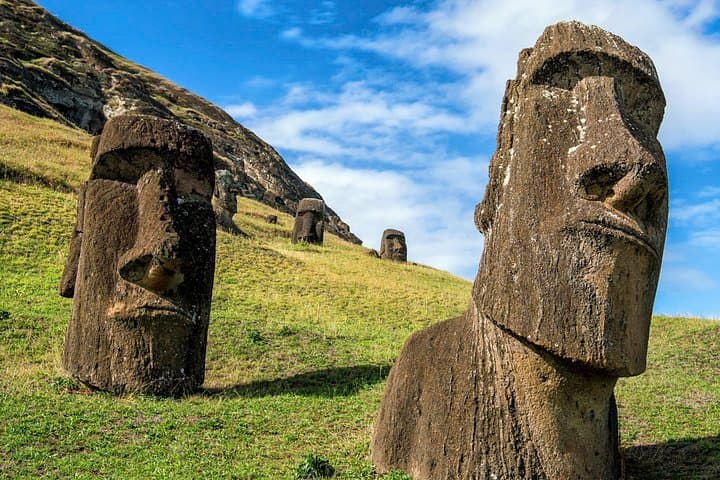
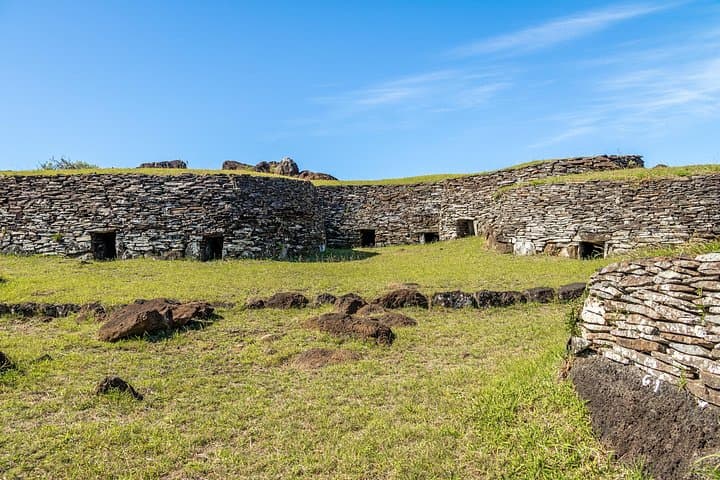
Easter Island was settled by Polynesian voyagers around 1200 AD; its most visible legacy is the moai—carved from the island’s volcanic tuff at Rano Raraku and raised on stone platforms as expressions of lineage and authority. Geology here is blunt and honest: crater lakes, red scoria quarries and basalt cliffs form the raw materials of culture. Orongo’s petroglyphs and the Tangata Manu tradition recall a society that shifted rituals as resources and power changed.
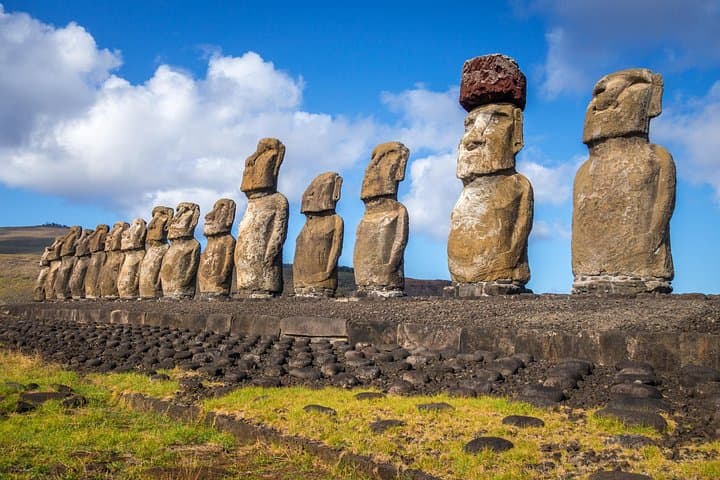
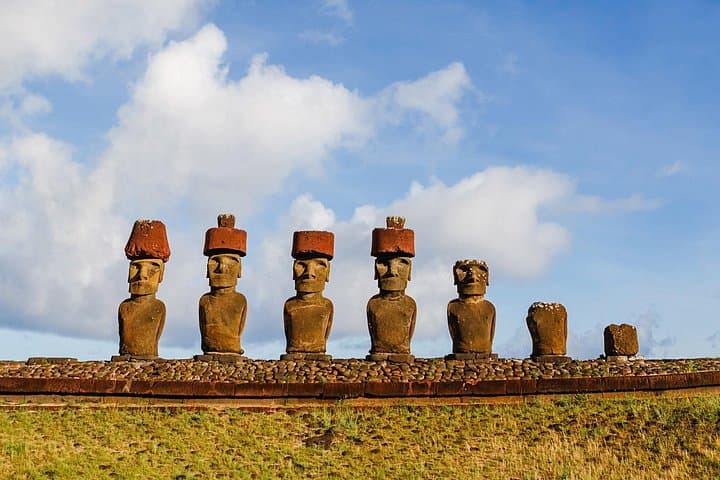
Culturally the day is compacted history—restored ahu at Ahu Tongariki, the ceremonial beach at Anakena, Rano Kau’s endemic plants. Local guides translate glyphs into context and point out subtle markers of clan territories.
Practical guidance: plan for seven hours with multiple short walks (15–90 minutes at each stop). Wear sturdy shoes for uneven volcanic rock, sun protection for intense UV and windproof layers—the Pacific pushes hard here. Bring cash for small purchases in Hanga Roa, and conserve water: bottled water is provided, but a refillable bottle keeps waste down. Respect ropes and signs; stay on paths to protect fragile archaeological deposits. A private tour maximizes flexibility—ask to linger at sunrise light on Tongariki or swap a stop for extra time at Anakena.
Yes—this private tour includes hotel pickup and drop-off within Hanga Roa; specific pickup points are confirmed at booking.
Most archaeological sites on Rapa Nui require an entry ticket; confirm with the operator whether national park fees are covered or need to be paid separately.
The tour is suitable for most fitness levels but includes uneven ground and short hikes; contact the operator before booking to discuss accessibility needs.
Yes—being private, the tour can be adjusted to emphasize specific sites or pacing, subject to opening hours and park regulations.
Aroha operates guided outdoor trips and adventures with an emphasis on safety, stewardship, and memorable experiences.
On a wind-scoured ridge above the Pacific, a private vehicle threads between low volcanic hills and the island’s famous stone ancestors. The guide opens a map with practiced hands, and the day becomes a measured loop through Rapa Nui’s strongest scenes: the quarry’s silent faces, the crater rim that drinks the sky, the ahu that watch the shore.
On a wind-scoured ridge above the Pacific, a private vehicle threads between low volcanic hills and the island’s famous stone ancestors. The guide opens a map with practiced hands, and the day becomes a measured loop through Rapa Nui’s strongest scenes: the quarry’s silent faces, the crater rim that drinks the sky, the ahu that watch the shore.
Easter Island was settled by Polynesian voyagers around 1200 AD; its most visible legacy is the moai—carved from the island’s volcanic tuff at Rano Raraku and raised on stone platforms as expressions of lineage and authority. Geology here is blunt and honest: crater lakes, red scoria quarries and basalt cliffs form the raw materials of culture. Orongo’s petroglyphs and the Tangata Manu tradition recall a society that shifted rituals as resources and power changed.
Culturally the day is compacted history—restored ahu at Ahu Tongariki, the ceremonial beach at Anakena, Rano Kau’s endemic plants. Local guides translate glyphs into context and point out subtle markers of clan territories.
Practical guidance: plan for seven hours with multiple short walks (15–90 minutes at each stop). Wear sturdy shoes for uneven volcanic rock, sun protection for intense UV and windproof layers—the Pacific pushes hard here. Bring cash for small purchases in Hanga Roa, and conserve water: bottled water is provided, but a refillable bottle keeps waste down. Respect ropes and signs; stay on paths to protect fragile archaeological deposits. A private tour maximizes flexibility—ask to linger at sunrise light on Tongariki or swap a stop for extra time at Anakena.