THE ADVENTURE COLLECTIVE® · Independent discovery and booking for outdoor travel

A private 5–6 hour outing that pairs the famous Pedra do Telégrafo photo stop with a quieter swim at Grumari Beach. Expect rough singletrack, granite viewpoints, and a chance to see Rio’s west-coast shore away from tourist crowds.
A private 5–6 hour outing that pairs the famous Pedra do Telégrafo photo stop with a quieter swim at Grumari Beach. Expect rough singletrack, granite viewpoints, and a chance to see Rio’s west-coast shore away from tourist crowds.
You push through a scrubby coastal ridge, the Atlantic wind pinning your hair back as long views open to an empty blue curve of sand. Pedra do Telégrafo perches on the skyline — a squat granite rock that has become famous for an optical-photo trick — while Grumari’s shoreline waits below, waves nudging against rocky points.
Verified experiences and guided adventures in the surrounding area.
Operated by OIR - Aventura · Rio de Janeiro, Rio de Janeiro
You push through a scrubby coastal ridge, the Atlantic wind pinning your hair back as long views open to an empty blue curve of sand. Pedra do Telégrafo perches on the skyline — a squat granite rock that has become famous for an optical-photo trick — while Grumari’s shoreline waits below, waves nudging against rocky points.
The route threads land that was once coastal farmland and charcoal-producing groves, later incorporated into Rio’s protected natural zones as urban expansion pushed west. Geologically, the granite outcrops here are part of the Serra do Mar foothills, worn into blocky tors and slabs that afford dramatic vantage points; sandy coves and dunes formed where longshore currents deposit sediment along the bay.
Local fishing communities and weekend Cariocas shaped the area’s culture: you'll see simple beach kiosks and fishermen’s nets, and a quieter side of Rio away from Copacabana’s bustle. Guides from small operators steward the trails and respect local customs — tipping and polite interaction go a long way.
Practical guidance: expect 5–6 hours of activity with several short steep sections and unpaved singletrack; bring sturdy shoes with grip, at least 2 liters of water, reef-safe sunscreen, and a light wind layer. Timing matters — morning hikes avoid the heat and busy photo-line at the rock. Watch tides if you plan to swim at Grumari; currents can pull at exposed points. Leave no trace, follow your guide’s route, and be prepared for loose stone underfoot.
Moderate: several short steep sections and loose rock require careful footing but no technical climbing; a guide accompanies the group.
Yes — the itinerary includes a beach stop where guests can swim, weather and tides permitting; bring swimwear and a towel.
Guides time stops to allow photos at Pedra do Telégrafo, but early starts reduce queueing and ensure better lighting.
Not recommended for pregnant travelers or those with serious back/heart conditions; children should be fit for several hours of walking and supervised by guardians.
OIR - Aventura operates guided outdoor trips and adventures with an emphasis on safety, stewardship, and memorable experiences.
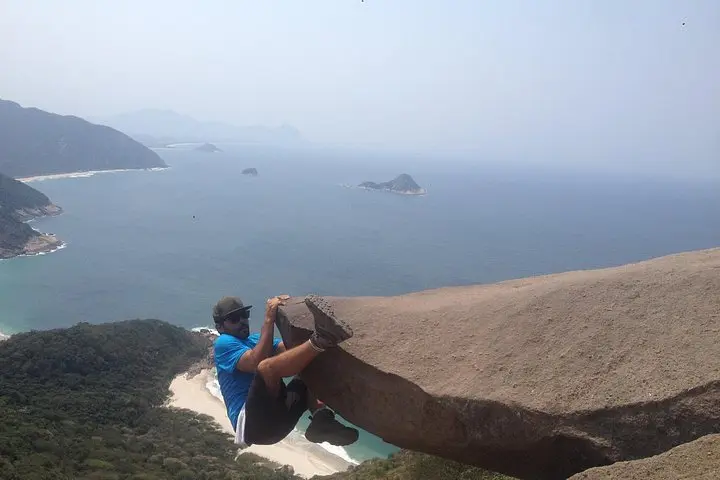
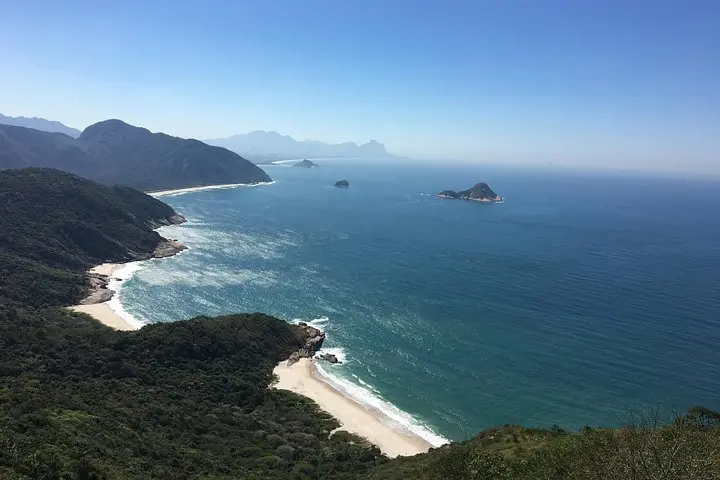
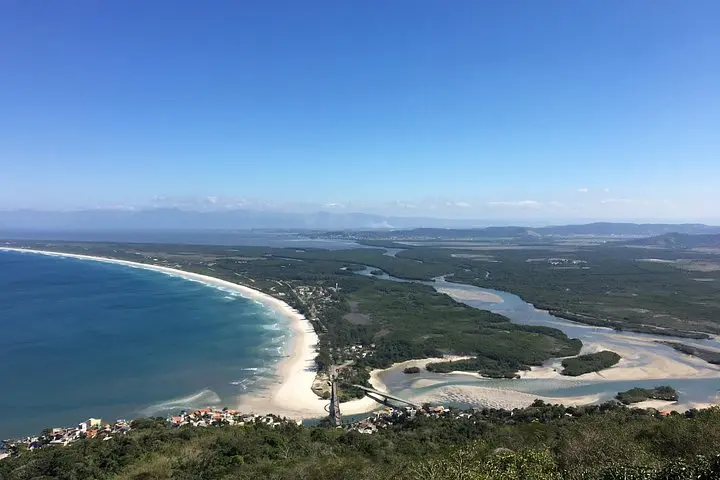
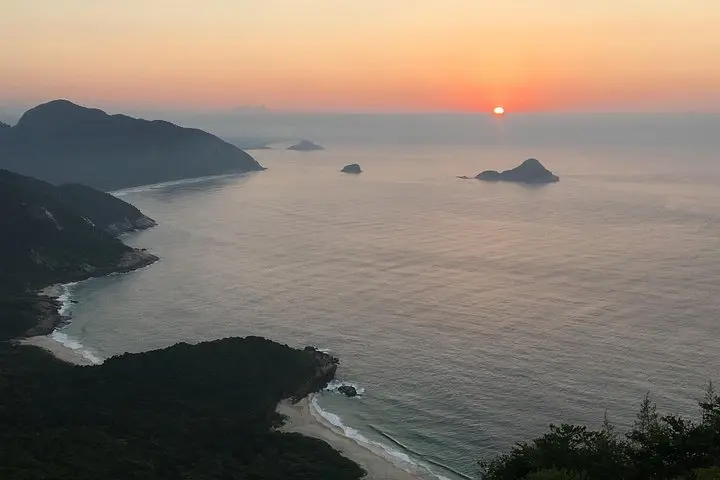
You push through a scrubby coastal ridge, the Atlantic wind pinning your hair back as long views open to an empty blue curve of sand. Pedra do Telégrafo perches on the skyline — a squat granite rock that has become famous for an optical-photo trick — while Grumari’s shoreline waits below, waves nudging against rocky points.
You push through a scrubby coastal ridge, the Atlantic wind pinning your hair back as long views open to an empty blue curve of sand. Pedra do Telégrafo perches on the skyline — a squat granite rock that has become famous for an optical-photo trick — while Grumari’s shoreline waits below, waves nudging against rocky points.
The route threads land that was once coastal farmland and charcoal-producing groves, later incorporated into Rio’s protected natural zones as urban expansion pushed west. Geologically, the granite outcrops here are part of the Serra do Mar foothills, worn into blocky tors and slabs that afford dramatic vantage points; sandy coves and dunes formed where longshore currents deposit sediment along the bay.
Local fishing communities and weekend Cariocas shaped the area’s culture: you'll see simple beach kiosks and fishermen’s nets, and a quieter side of Rio away from Copacabana’s bustle. Guides from small operators steward the trails and respect local customs — tipping and polite interaction go a long way.
Practical guidance: expect 5–6 hours of activity with several short steep sections and unpaved singletrack; bring sturdy shoes with grip, at least 2 liters of water, reef-safe sunscreen, and a light wind layer. Timing matters — morning hikes avoid the heat and busy photo-line at the rock. Watch tides if you plan to swim at Grumari; currents can pull at exposed points. Leave no trace, follow your guide’s route, and be prepared for loose stone underfoot.