THE ADVENTURE COLLECTIVE® · Independent discovery and booking for outdoor travel

Explore Johannesburg’s civic landmarks and the Apartheid Museum on a private five‑hour tour that pairs panoramic city views with hard‑hitting history. Practical tips cover timing, accessibility and what to bring for a thoughtful, well‑paced visit.
Explore Johannesburg’s civic landmarks and the Apartheid Museum on a private five‑hour tour that pairs panoramic city views with hard‑hitting history. Practical tips cover timing, accessibility and what to bring for a thoughtful, well‑paced visit.
You step out of an air‑conditioned minibus onto a wide, sunlit avenue and the city breathes around you: traffic hums, street vendors call, and the architecture—Victorian facades, modernist towers—frames the walk toward the Apartheid Museum. The tour threads together Johannesburg’s civic landmarks: the panoramic Carlton Centre viewpoint, the symbols of law and memory at Constitutional Hill, the narrow lane outside Chancellors House where Mandela once practiced law, and finally the museum whose exhibits chart the mechanics of segregation.
Verified experiences and guided adventures in the surrounding area.
Operated by Swangs Safaris · Johannesburg, Gauteng
You step out of an air‑conditioned minibus onto a wide, sunlit avenue and the city breathes around you: traffic hums, street vendors call, and the architecture—Victorian facades, modernist towers—frames the walk toward the Apartheid Museum. The tour threads together Johannesburg’s civic landmarks: the panoramic Carlton Centre viewpoint, the symbols of law and memory at Constitutional Hill, the narrow lane outside Chancellors House where Mandela once practiced law, and finally the museum whose exhibits chart the mechanics of segregation.
Johannesburg was born from gold rush geology—collapsed reefs and hard rock that shaped its expansion—and its 20th‑century growth created the social and spatial divisions the museum interprets. The Apartheid Museum layers text, artifacts and film to make policy and personal stories feel immediate; Constitutional Hill offers a counterpoint, converting a colonial fort into a living court and public memory site. Guides on private tours often weave legal history, township culture and the role of activism into one narrative, making the city’s contradictions legible.
Practical guidance: allow five hours for a relaxed pace, bring comfortable walking shoes for mixed pavement and staircases, and carry a small bottle of water (provided on board) and sun protection. Photography rules vary by exhibit—follow signage and your guide. If you want fewer crowds, schedule the tour for mid‑morning on a weekday. The route is wheelchair accessible but check with your operator about specific vehicle pickup points. This is a civic‑history outing: expect reflective moments, concrete details, and a clear sense of how place and policy shaped modern South Africa.
The tour runs approximately five hours, including transport and museum time.
Yes: vehicles and attractions on the itinerary report wheelchair accessibility; confirm pickup logistics when booking.
Admission to the Apartheid Museum and Constitutional Hill are included on this private tour as noted in the itinerary.
Children can join; some museum content is sensitive, so consider age‑appropriate preparation and supervision.
Swangs Safaris operates guided outdoor trips and adventures with an emphasis on safety, stewardship, and memorable experiences.
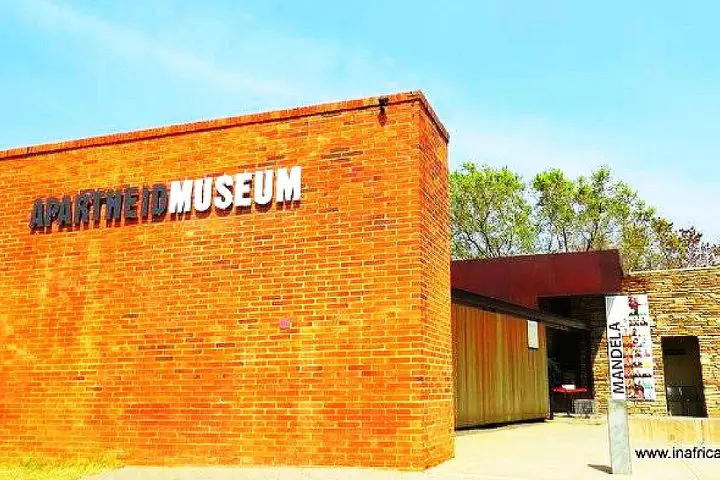
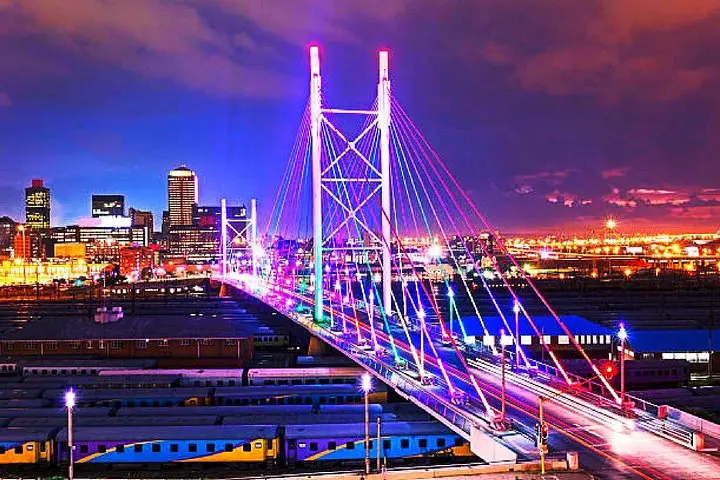
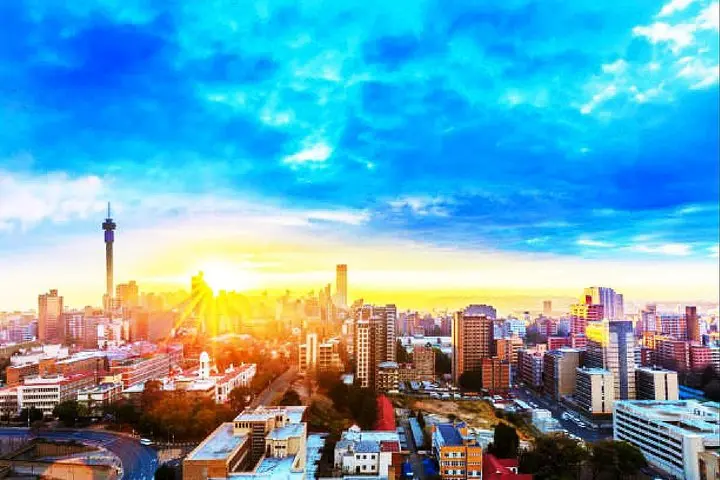
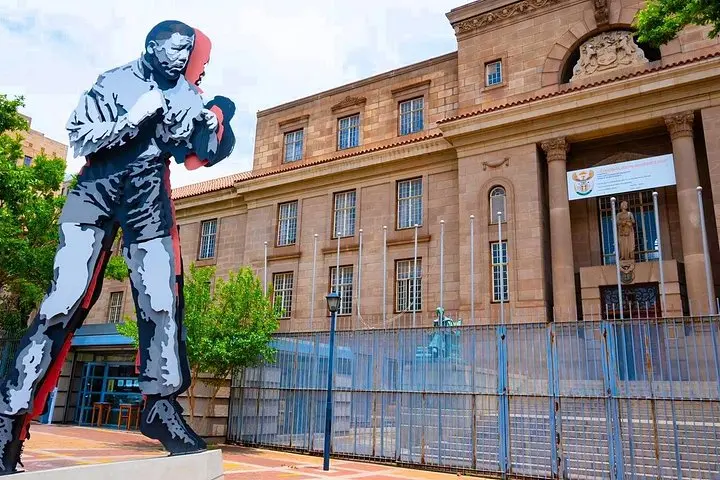
You step out of an air‑conditioned minibus onto a wide, sunlit avenue and the city breathes around you: traffic hums, street vendors call, and the architecture—Victorian facades, modernist towers—frames the walk toward the Apartheid Museum. The tour threads together Johannesburg’s civic landmarks: the panoramic Carlton Centre viewpoint, the symbols of law and memory at Constitutional Hill, the narrow lane outside Chancellors House where Mandela once practiced law, and finally the museum whose exhibits chart the mechanics of segregation.
You step out of an air‑conditioned minibus onto a wide, sunlit avenue and the city breathes around you: traffic hums, street vendors call, and the architecture—Victorian facades, modernist towers—frames the walk toward the Apartheid Museum. The tour threads together Johannesburg’s civic landmarks: the panoramic Carlton Centre viewpoint, the symbols of law and memory at Constitutional Hill, the narrow lane outside Chancellors House where Mandela once practiced law, and finally the museum whose exhibits chart the mechanics of segregation.
Johannesburg was born from gold rush geology—collapsed reefs and hard rock that shaped its expansion—and its 20th‑century growth created the social and spatial divisions the museum interprets. The Apartheid Museum layers text, artifacts and film to make policy and personal stories feel immediate; Constitutional Hill offers a counterpoint, converting a colonial fort into a living court and public memory site. Guides on private tours often weave legal history, township culture and the role of activism into one narrative, making the city’s contradictions legible.
Practical guidance: allow five hours for a relaxed pace, bring comfortable walking shoes for mixed pavement and staircases, and carry a small bottle of water (provided on board) and sun protection. Photography rules vary by exhibit—follow signage and your guide. If you want fewer crowds, schedule the tour for mid‑morning on a weekday. The route is wheelchair accessible but check with your operator about specific vehicle pickup points. This is a civic‑history outing: expect reflective moments, concrete details, and a clear sense of how place and policy shaped modern South Africa.