THE ADVENTURE COLLECTIVE® · Independent discovery and booking for outdoor travel

Explore the carved riverbed of Kbal Spean and the pink sandstone detail of Banteay Srei on a private day tour from Siem Reap. Expect a short uphill walk, rich Khmer history, and practical guidance for timing, tickets, and gear.
Explore the carved riverbed of Kbal Spean and the pink sandstone detail of Banteay Srei on a private day tour from Siem Reap. Expect a short uphill walk, rich Khmer history, and practical guidance for timing, tickets, and gear.
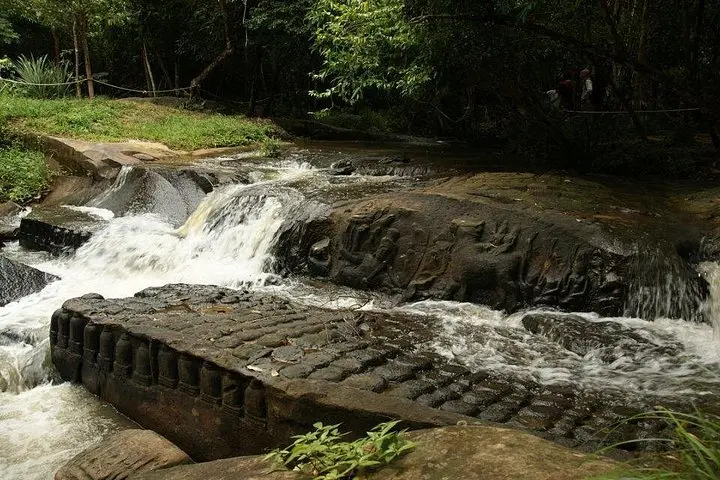
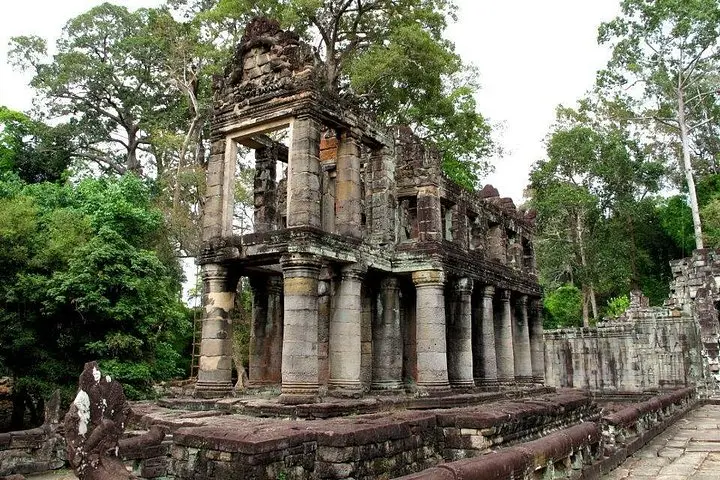
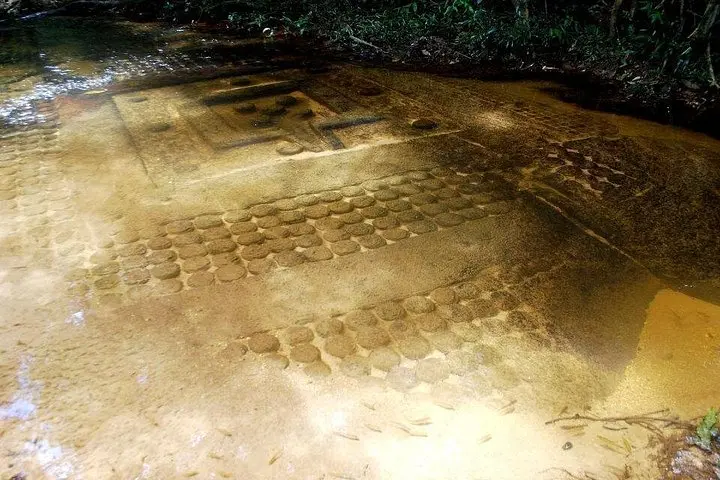
A morning drive out of Siem Reap drops the group into a different rhythm: narrow country roads, emerald rice paddies, and the scent of wet earth as the Angkorian ruins grow near. The tour typically begins at Pre Rup, a compact temple with broad views, then moves uphill to Kbal Spean where a short, steady 2-kilometre climb delivers you to a riverbed carved with hundreds of lingas.
Verified experiences and guided adventures in the surrounding area.
Operated by Asia Voyage Travel · Siem Reap, Siem Reap Province
A morning drive out of Siem Reap drops the group into a different rhythm: narrow country roads, emerald rice paddies, and the scent of wet earth as the Angkorian ruins grow near. The tour typically begins at Pre Rup, a compact temple with broad views, then moves uphill to Kbal Spean where a short, steady 2-kilometre climb delivers you to a riverbed carved with hundreds of lingas.
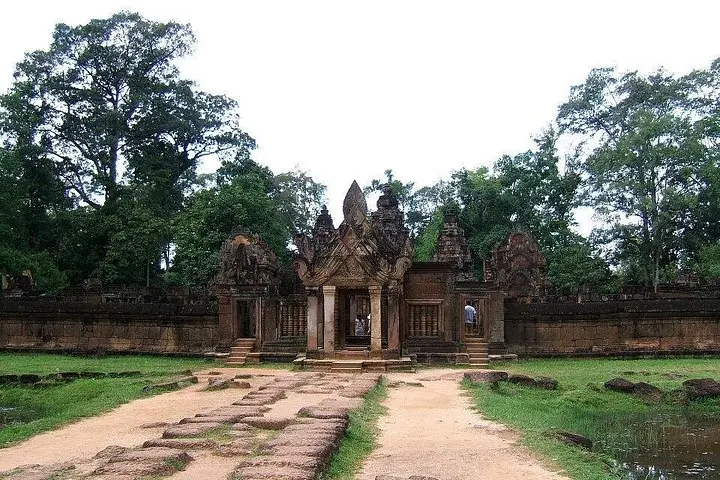
Kbal Spean's river carvings date to the 11th–12th centuries; water runs over shallow sandstone channels that priests once believed charged rituals with sanctity. Banteay Srei, built of deep-pink sandstone farther north, offers some of the most delicate bas-reliefs of the Khmer era—the precision and scale feel personal compared with the larger Angkor monuments.
Geology here is simple: soft sandstone sculpted by craftsmen and smoothed by centuries of monsoon. Culture and history are visible in inscriptions and iconography—Jayavarman-era religious programs, local village life, and the long shadow of Khmer royal patronage.
Practical guidance: expect roughly 8 hours door-to-door with up to 2 km of uphill walking and riverbed steps at Kbal Spean. Entry fees to the Angkor archaeological area are separate—bring them. Start early to beat heat and afternoon showers; wear closed shoes for slippery rock, sun protection, and insect repellent. Guides add context—dates, symbolism, and local stories—that transform carvings into narratives. Carry cash for tickets and small purchases, and respect fragile carvings by keeping a hand's distance. The route balances short hikes, shaded stops, and sculpted history—an accessible day outside Siem Reap for travelers who want culture with a light outdoor element.
No—Angkor Archaeological Park tickets are required separately; your operator can advise where to buy them in Siem Reap.
The hike to the riverbed carvings is about 2 kilometres round-trip with moderate uphill sections and uneven stone.
Yes, it is described as suitable for all fitness levels, but expect some uneven terrain; take it slow and rest frequently if needed.
Possibly—Preah Khan is optional and depends on timing; mention it when booking if you want that detour included.
Asia Voyage Travel operates guided outdoor trips and adventures with an emphasis on safety, stewardship, and memorable experiences.
A morning drive out of Siem Reap drops the group into a different rhythm: narrow country roads, emerald rice paddies, and the scent of wet earth as the Angkorian ruins grow near. The tour typically begins at Pre Rup, a compact temple with broad views, then moves uphill to Kbal Spean where a short, steady 2-kilometre climb delivers you to a riverbed carved with hundreds of lingas.
A morning drive out of Siem Reap drops the group into a different rhythm: narrow country roads, emerald rice paddies, and the scent of wet earth as the Angkorian ruins grow near. The tour typically begins at Pre Rup, a compact temple with broad views, then moves uphill to Kbal Spean where a short, steady 2-kilometre climb delivers you to a riverbed carved with hundreds of lingas.
Kbal Spean's river carvings date to the 11th–12th centuries; water runs over shallow sandstone channels that priests once believed charged rituals with sanctity. Banteay Srei, built of deep-pink sandstone farther north, offers some of the most delicate bas-reliefs of the Khmer era—the precision and scale feel personal compared with the larger Angkor monuments.
Geology here is simple: soft sandstone sculpted by craftsmen and smoothed by centuries of monsoon. Culture and history are visible in inscriptions and iconography—Jayavarman-era religious programs, local village life, and the long shadow of Khmer royal patronage.
Practical guidance: expect roughly 8 hours door-to-door with up to 2 km of uphill walking and riverbed steps at Kbal Spean. Entry fees to the Angkor archaeological area are separate—bring them. Start early to beat heat and afternoon showers; wear closed shoes for slippery rock, sun protection, and insect repellent. Guides add context—dates, symbolism, and local stories—that transform carvings into narratives. Carry cash for tickets and small purchases, and respect fragile carvings by keeping a hand's distance. The route balances short hikes, shaded stops, and sculpted history—an accessible day outside Siem Reap for travelers who want culture with a light outdoor element.