THE ADVENTURE COLLECTIVE® · Independent discovery and booking for outdoor travel

Bring kids face-to-face with ancient giants on a private, child-focused tour of London’s Natural History Museum. A Blue Badge guide brings fossils, bones and the blue whale into sharp, memorable focus while keeping the pace family-friendly.
Bring kids face-to-face with ancient giants on a private, child-focused tour of London’s Natural History Museum. A Blue Badge guide brings fossils, bones and the blue whale into sharp, memorable focus while keeping the pace family-friendly.
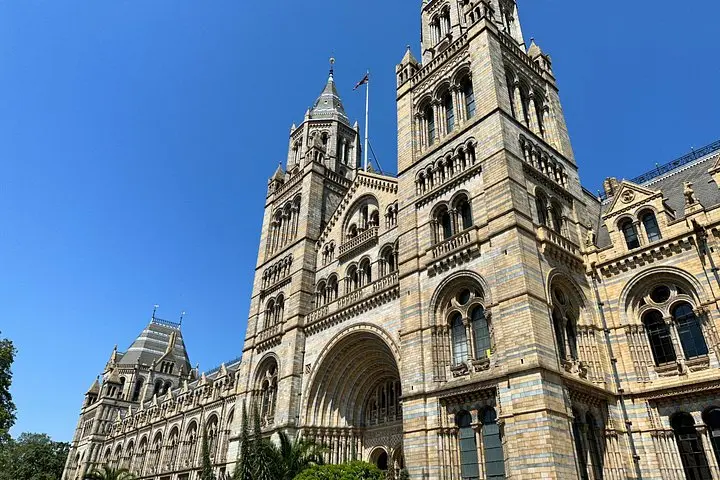
You step through the museum's grand entrance and the Hintze Hall ceiling seems to lower just enough for the blue whale skeleton to command attention; children press closer to the railings, eyes wide at the ribs that once framed oceans.
Verified experiences and guided adventures in the surrounding area.
Operated by London Tours With Kids · London, England
You step through the museum's grand entrance and the Hintze Hall ceiling seems to lower just enough for the blue whale skeleton to command attention; children press closer to the railings, eyes wide at the ribs that once framed oceans.
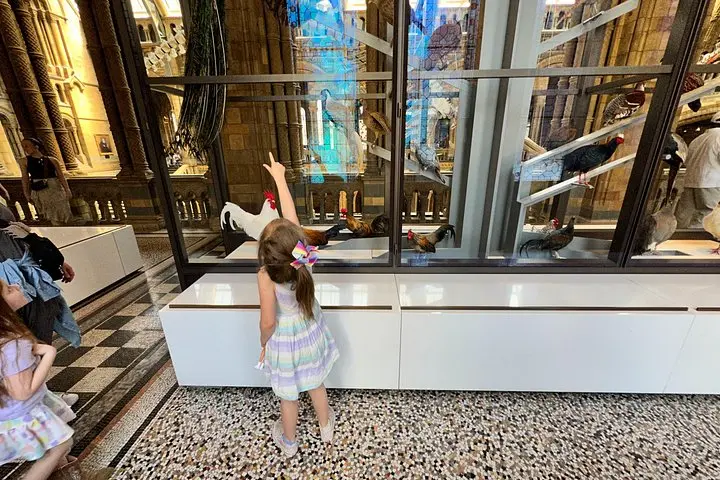
This private, kid-focused tour directs that curiosity toward the museum’s five core collections—paleontology, mineralogy, botany, entomology and zoology—framed by stories your guide tailors for younger visitors. The Natural History Museum opened its current building in the late 19th century, designed by Alfred Waterhouse, and today holds roughly 70 million specimens spanning geology and deep time that track Earth’s changing climate and life.
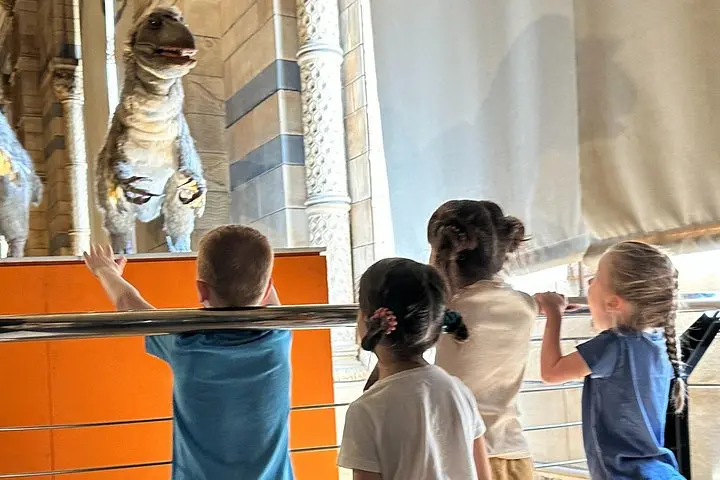
Geology and paleontology are on full display: Jurassic marine reptiles, a towering T. rex display, and the fossilized traces of ancient seas that shaped modern coastlines. The museum is also a working research centre; you’ll pass areas where specimens are studied and conserved, connecting public exhibits with scientific practice.
Practical guidance: allow 2–3 hours for this guided itinerary, arrive 15–20 minutes early for security and to meet your Blue Badge guide, and bring comfortable shoes—there’s a lot of ground to cover on varying floors. The space is stroller- and wheelchair-accessible, with family-friendly restrooms and cafés inside. For families, a private guide keeps the pace and explanations age-appropriate while avoiding crowds.
Finish at the Darwin Centre or the Wildlife Garden if time allows—both offer quieter, hands-on learning that extend the museum’s themes into living and laboratory spaces.
Yes — the guide tailors content for young children, but prams may need folding on busy stairways and elevators are available.
This private tour includes museum admission as part of the booking; check your confirmation for ticket delivery details.
Yes — the building and exhibits are wheelchair-accessible, with lifts and accessible restrooms; inform the operator of accessibility needs when booking.
Strollers are allowed but may be discouraged in crowded spaces; a lightweight stroller that can be folded quickly is useful.
London Tours With Kids operates guided outdoor trips and adventures with an emphasis on safety, stewardship, and memorable experiences.
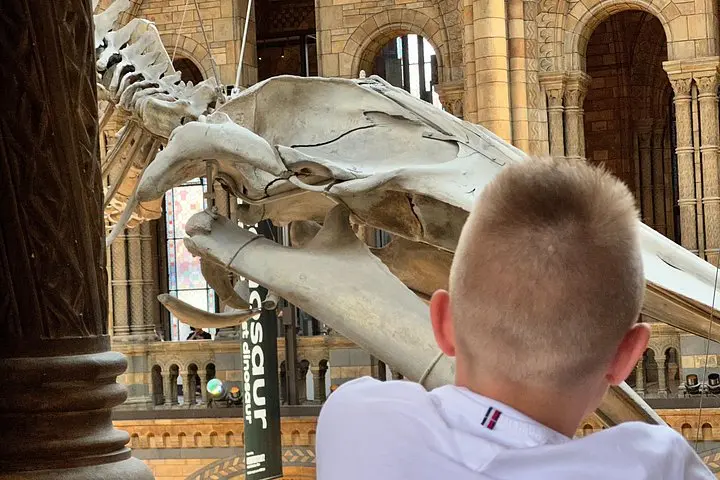
You step through the museum's grand entrance and the Hintze Hall ceiling seems to lower just enough for the blue whale skeleton to command attention; children press closer to the railings, eyes wide at the ribs that once framed oceans.
You step through the museum's grand entrance and the Hintze Hall ceiling seems to lower just enough for the blue whale skeleton to command attention; children press closer to the railings, eyes wide at the ribs that once framed oceans.
This private, kid-focused tour directs that curiosity toward the museum’s five core collections—paleontology, mineralogy, botany, entomology and zoology—framed by stories your guide tailors for younger visitors. The Natural History Museum opened its current building in the late 19th century, designed by Alfred Waterhouse, and today holds roughly 70 million specimens spanning geology and deep time that track Earth’s changing climate and life.
Geology and paleontology are on full display: Jurassic marine reptiles, a towering T. rex display, and the fossilized traces of ancient seas that shaped modern coastlines. The museum is also a working research centre; you’ll pass areas where specimens are studied and conserved, connecting public exhibits with scientific practice.
Practical guidance: allow 2–3 hours for this guided itinerary, arrive 15–20 minutes early for security and to meet your Blue Badge guide, and bring comfortable shoes—there’s a lot of ground to cover on varying floors. The space is stroller- and wheelchair-accessible, with family-friendly restrooms and cafés inside. For families, a private guide keeps the pace and explanations age-appropriate while avoiding crowds.
Finish at the Darwin Centre or the Wildlife Garden if time allows—both offer quieter, hands-on learning that extend the museum’s themes into living and laboratory spaces.