THE ADVENTURE COLLECTIVE® · Independent discovery and booking for outdoor travel

Spend a full day exploring Beng Mealea’s jungle-entangled galleries and the striking pyramid of Koh Ker on this private tour from Siem Reap. Expect uneven stone, long walks, and up-close encounters with Cambodia’s lesser-visited Angkor-era ruins.
Spend a full day exploring Beng Mealea’s jungle-entangled galleries and the striking pyramid of Koh Ker on this private tour from Siem Reap. Expect uneven stone, long walks, and up-close encounters with Cambodia’s lesser-visited Angkor-era ruins.
You step out of an air-conditioned van into a corridor of leaning stones and humid air; vines tug at lintels while birds call from the tangled canopy. Early light grazes carved faces at Beng Mealea, where corridors collapse into green and the temple seems to be quietly testing your curiosity.
Verified experiences and guided adventures in the surrounding area.
Operated by About Sovannaphum · Siem Reap, Siem Reap Province
You step out of an air-conditioned van into a corridor of leaning stones and humid air; vines tug at lintels while birds call from the tangled canopy. Early light grazes carved faces at Beng Mealea, where corridors collapse into green and the temple seems to be quietly testing your curiosity.
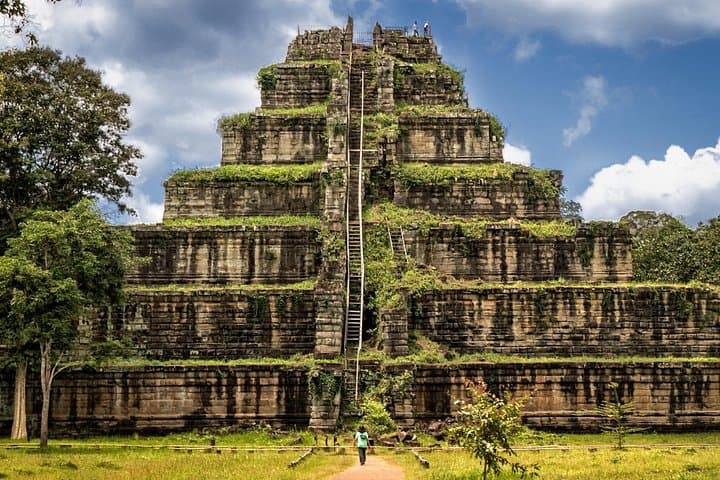
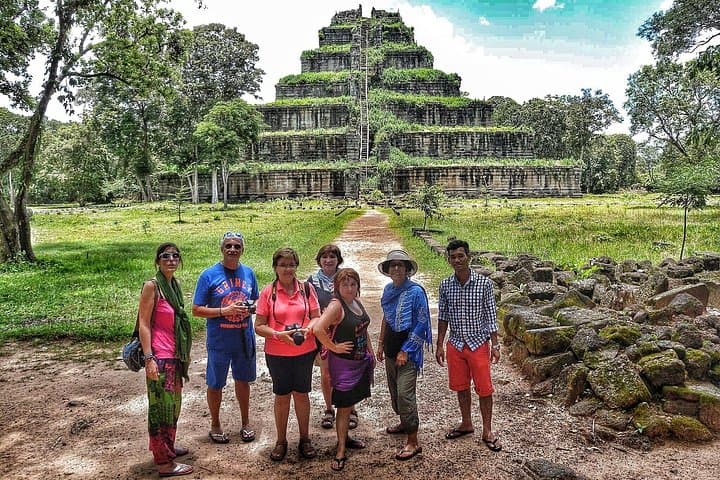
Beng Mealea is an 11th-century sandstone complex whose crumbling galleries and fallen blocks give a raw view of Angkor-era architecture. Later you head northeast to Koh Ker, the short-lived 10th-century capital of King Jayavarman IV, dominated by the stepped pyramid of Prasat Thom—a rare Khmer pyramid form that cuts a sharp geometric silhouette against the sky.
Geology here is primarily sandstone quarried from nearby foothills; weathering and jungle growth create the uneven, moss-slick surfaces visitors walk today. Culturally, both sites show the shifting religious focus of the Khmer Empire—Hindu iconography later layered with Buddhist use—and local villages still maintain traditional crafts and snacks like bamboo sticky rice sold roadside.
Practical guidance: this is a long, active day (expect 8–9 hours total). Wear sturdy shoes for uneven stone and roots, bring 2–3 liters of water, and carry insect repellent and a lightweight, shoulder-covering top for temple respect. Admission is not included—have cash or a card for entrance tickets and small local purchases. Expect narrow steps, low light in galleries, and a few off-the-beaten tracks; follow your guide, avoid climbing fragile structures, and plan for heat in the mid-afternoon. By day’s end you’ll have traded polished sightseeing for the sensation of having walked through history being slowly reclaimed by the wild.
No—admissions are not included in the listed itinerary; your guide will advise where to purchase tickets on arrival and what payment methods are accepted.
Expect several kilometers on foot across uneven temple grounds, with periods of standing and climbing stairs—plan for an active 8–9 hour day.
Children who can manage stairs and long walks will enjoy it, but those with limited mobility may find steps and uneven surfaces challenging; contact the operator about alternatives or reduced walking options.
Lightweight clothing that covers shoulders and knees is respectful; breathable fabrics help in the heat and a light layer is useful for shaded galleries.
About Sovannaphum operates guided outdoor trips and adventures with an emphasis on safety, stewardship, and memorable experiences.
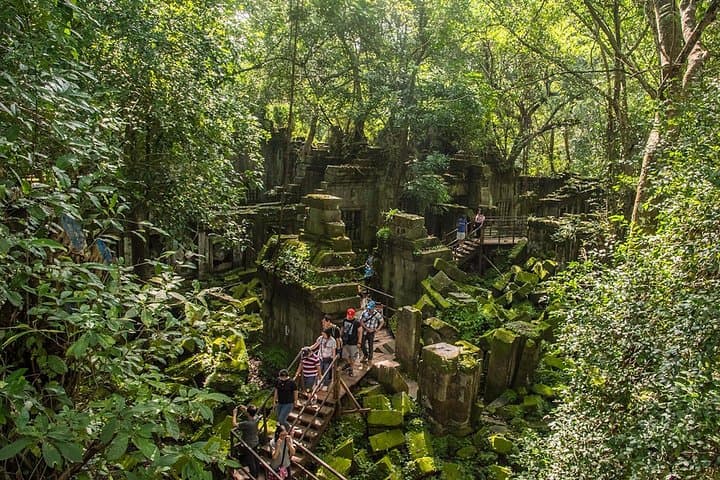
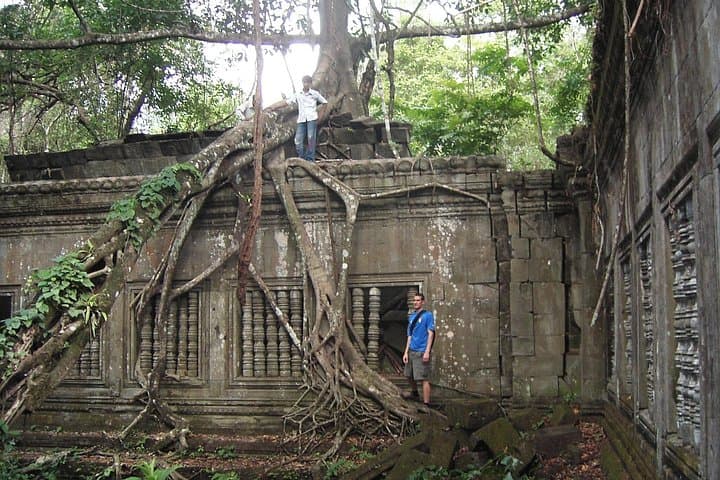
You step out of an air-conditioned van into a corridor of leaning stones and humid air; vines tug at lintels while birds call from the tangled canopy. Early light grazes carved faces at Beng Mealea, where corridors collapse into green and the temple seems to be quietly testing your curiosity.
You step out of an air-conditioned van into a corridor of leaning stones and humid air; vines tug at lintels while birds call from the tangled canopy. Early light grazes carved faces at Beng Mealea, where corridors collapse into green and the temple seems to be quietly testing your curiosity.
Beng Mealea is an 11th-century sandstone complex whose crumbling galleries and fallen blocks give a raw view of Angkor-era architecture. Later you head northeast to Koh Ker, the short-lived 10th-century capital of King Jayavarman IV, dominated by the stepped pyramid of Prasat Thom—a rare Khmer pyramid form that cuts a sharp geometric silhouette against the sky.
Geology here is primarily sandstone quarried from nearby foothills; weathering and jungle growth create the uneven, moss-slick surfaces visitors walk today. Culturally, both sites show the shifting religious focus of the Khmer Empire—Hindu iconography later layered with Buddhist use—and local villages still maintain traditional crafts and snacks like bamboo sticky rice sold roadside.
Practical guidance: this is a long, active day (expect 8–9 hours total). Wear sturdy shoes for uneven stone and roots, bring 2–3 liters of water, and carry insect repellent and a lightweight, shoulder-covering top for temple respect. Admission is not included—have cash or a card for entrance tickets and small local purchases. Expect narrow steps, low light in galleries, and a few off-the-beaten tracks; follow your guide, avoid climbing fragile structures, and plan for heat in the mid-afternoon. By day’s end you’ll have traded polished sightseeing for the sensation of having walked through history being slowly reclaimed by the wild.