THE ADVENTURE COLLECTIVE® · Independent discovery and booking for outdoor travel

Spend six focused hours moving between Kyoto’s most compelling corners: vermilion torii, a golden pavilion, castle corridors and the Arashiyama bamboo groves. This private walking-and-drive format gets you deeper into history and off-the-beaten-track moments with a local guide.
Spend six focused hours moving between Kyoto’s most compelling corners: vermilion torii, a golden pavilion, castle corridors and the Arashiyama bamboo groves. This private walking-and-drive format gets you deeper into history and off-the-beaten-track moments with a local guide.
Morning light breaks over tiled rooftops as you step from a private vehicle into Kyoto’s layered streets — lanterns still cooling from the night, the air threaded with incense. The tour moves like a local rhythm: short drives between far-flung sites, longer spans on foot through temple approaches and bamboo corridors. At Fushimi Inari the torii gates press close, the mountain trail rising to 233 m and offering a quiet, wooded loop for hikers; the red gates seem to tug you forward. Kinkaku-ji’s gilded upper floors flash like a held breath against a mirror pond, while Nijo Castle’s nightingale floors click underfoot, reminding you the city has always guarded itself with ingenuity.
Verified experiences and guided adventures in the surrounding area.
Operated by Kyosako Private Tours Japan · Kyoto, Kyoto Prefecture
Morning light breaks over tiled rooftops as you step from a private vehicle into Kyoto’s layered streets — lanterns still cooling from the night, the air threaded with incense. The tour moves like a local rhythm: short drives between far-flung sites, longer spans on foot through temple approaches and bamboo corridors. At Fushimi Inari the torii gates press close, the mountain trail rising to 233 m and offering a quiet, wooded loop for hikers; the red gates seem to tug you forward. Kinkaku-ji’s gilded upper floors flash like a held breath against a mirror pond, while Nijo Castle’s nightingale floors click underfoot, reminding you the city has always guarded itself with ingenuity.
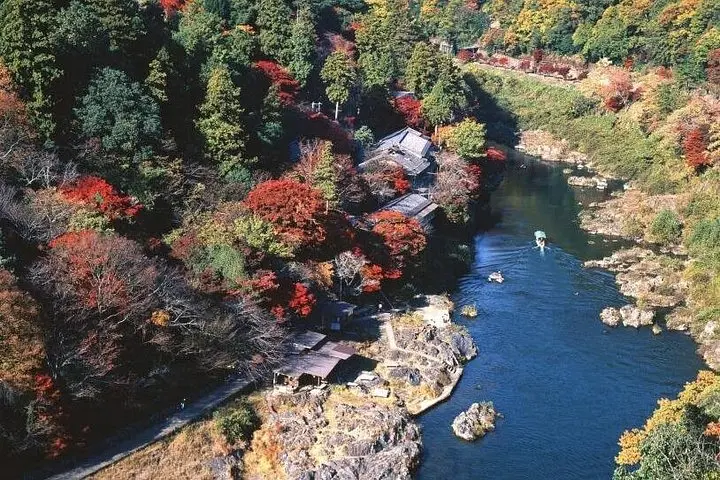
Geology and urban form meet here — low volcanic hills, river terraces (notably the Hozu-gawa) and layered alluvial plains that shaped settlements and transport routes. Culture is immediate: the measured poise of Gion streets, stone-paved Ninenzaka, and the ritual choreography of shrine visits. Local guides add context: why Kyoto’s grid shifted through the centuries and how tea houses shaped neighborhood life.
Practical guidance: this is a 6-hour private itinerary combining vehicle transfers and walking (expect 4–7 km of walking, varied terrain from paved lanes to stone steps, modest elevation gain). Start early to dodge mid-day crowds, carry water and comfortable shoes, and plan for rain in shoulder seasons. The operator provides wheelchair-accessible transport on request; confirm specific stops beforehand. Whether you want temples, a bamboo grove, a boat on the Hozu River or a ninja experience, this format adapts — a compact, flexible way to read Kyoto on foot and by short drives without wasting time.
Expect 4–7 km of walking spread across the 6-hour itinerary, with vehicle transfers between more distant sites.
The operator lists wheelchair-accessible transport and surfaces for many sites—confirm specific stop accessibility when booking.
Yes; the private format allows you to swap or extend stops, include a boat ride on the Hozu River, or add a ninja experience.
Most standard itineraries do not include admissions; confirm with the operator which sights require tickets or reservations.
Kyosako Private Tours Japan operates guided outdoor trips and adventures with an emphasis on safety, stewardship, and memorable experiences.
Morning light breaks over tiled rooftops as you step from a private vehicle into Kyoto’s layered streets — lanterns still cooling from the night, the air threaded with incense. The tour moves like a local rhythm: short drives between far-flung sites, longer spans on foot through temple approaches and bamboo corridors. At Fushimi Inari the torii gates press close, the mountain trail rising to 233 m and offering a quiet, wooded loop for hikers; the red gates seem to tug you forward. Kinkaku-ji’s gilded upper floors flash like a held breath against a mirror pond, while Nijo Castle’s nightingale floors click underfoot, reminding you the city has always guarded itself with ingenuity.
Morning light breaks over tiled rooftops as you step from a private vehicle into Kyoto’s layered streets — lanterns still cooling from the night, the air threaded with incense. The tour moves like a local rhythm: short drives between far-flung sites, longer spans on foot through temple approaches and bamboo corridors. At Fushimi Inari the torii gates press close, the mountain trail rising to 233 m and offering a quiet, wooded loop for hikers; the red gates seem to tug you forward. Kinkaku-ji’s gilded upper floors flash like a held breath against a mirror pond, while Nijo Castle’s nightingale floors click underfoot, reminding you the city has always guarded itself with ingenuity.
Geology and urban form meet here — low volcanic hills, river terraces (notably the Hozu-gawa) and layered alluvial plains that shaped settlements and transport routes. Culture is immediate: the measured poise of Gion streets, stone-paved Ninenzaka, and the ritual choreography of shrine visits. Local guides add context: why Kyoto’s grid shifted through the centuries and how tea houses shaped neighborhood life.
Practical guidance: this is a 6-hour private itinerary combining vehicle transfers and walking (expect 4–7 km of walking, varied terrain from paved lanes to stone steps, modest elevation gain). Start early to dodge mid-day crowds, carry water and comfortable shoes, and plan for rain in shoulder seasons. The operator provides wheelchair-accessible transport on request; confirm specific stops beforehand. Whether you want temples, a bamboo grove, a boat on the Hozu River or a ninja experience, this format adapts — a compact, flexible way to read Kyoto on foot and by short drives without wasting time.