THE ADVENTURE COLLECTIVE® · Independent discovery and booking for outdoor travel

Glide through Luxor’s historic streets by private horse carriage with a local guide, passing Luxor Temple, the Corniche and old-town markets. This 90–120 minute tour blends comfort with cultural interpretation—ideal for families and couples who want a relaxed, immersive preview of the city.
Glide through Luxor’s historic streets by private horse carriage with a local guide, passing Luxor Temple, the Corniche and old-town markets. This 90–120 minute tour blends comfort with cultural interpretation—ideal for families and couples who want a relaxed, immersive preview of the city.
The carriage creaks onto a narrow street as late-afternoon light softens the limestone façades; hooves tap a steady rhythm while the city moves around you—vendors calling, children running between alleys, the Nile a silent ribbon beyond the Corniche.
Verified experiences and guided adventures in the surrounding area.
Operated by Eyes of Egypt · Luxor, Luxor Governorate
The carriage creaks onto a narrow street as late-afternoon light softens the limestone façades; hooves tap a steady rhythm while the city moves around you—vendors calling, children running between alleys, the Nile a silent ribbon beyond the Corniche.
Luxor is ancient Thebes: an open-air chronicle of pharaonic ambition. Your carriage route threads past Luxor Temple and the Avenue of the Sphinxes, where stone guardians mark a processional past. Geologically the city sits on the Nile’s alluvial plain, backed by desert cliffs that delivered stone for millennia; those cliffs and the river still shape local life and trade.
Culture here is immediate and sensory. Markets assert themselves with spices and textiles; guides read the layers of history in temple reliefs and Ottoman-era doorways. Local drivers and guides often double as storytellers, connecting visible monuments to rituals, family histories, and the labor that keeps tourism—and the horses—moving.
Practically: the tour runs about 90–120 minutes with hotel or cruise pickup. Expect cobbled streets and occasional tight turns; mobility-friendly options are available but check ahead. Midday heat can be intense—plan for sun protection and hydration even if bottled water is provided. Bring cash for tips and informal purchases, and ask permission before photographing people or courtyards.
This is a low-effort, high-context way to absorb Luxor’s rhythm—close enough to hear street life, relaxed enough to take the city in without hurrying.
The tour runs approximately 90 to 120 minutes, including pickup and drop-off from East Bank hotels or Nile cruises.
Yes — the experience is rated easy and the operator notes accessibility accommodations; notify at booking if you need a stroller or wheelchair support.
Yes — the itinerary includes views and photo stops at Luxor Temple and the Avenue of the Sphinxes; confirm whether you’ll enter paid sites or stay outside with your guide.
Responsible operators provide water and rest for horses; ask about animal welfare policies before booking and look for signs of good care on arrival.
Eyes of Egypt operates guided outdoor trips and adventures with an emphasis on safety, stewardship, and memorable experiences.
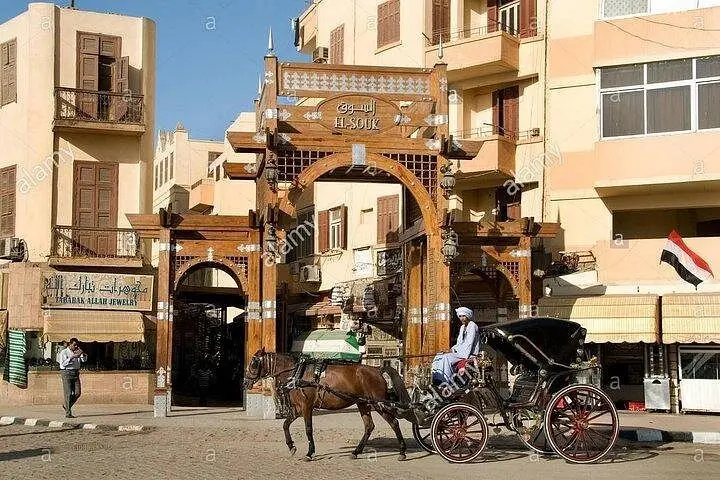
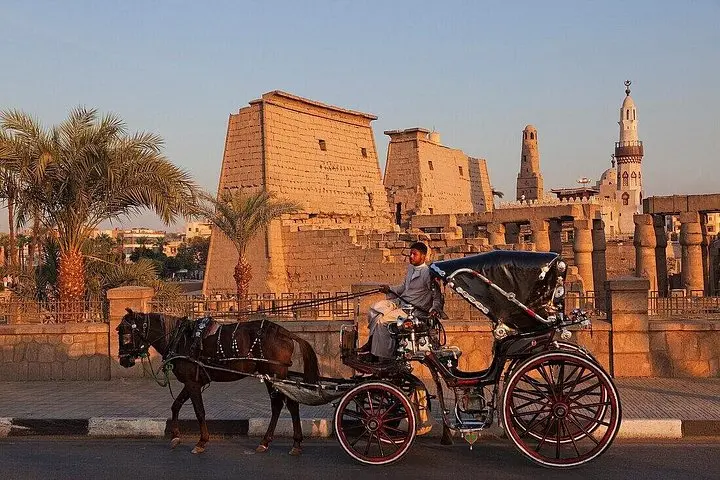
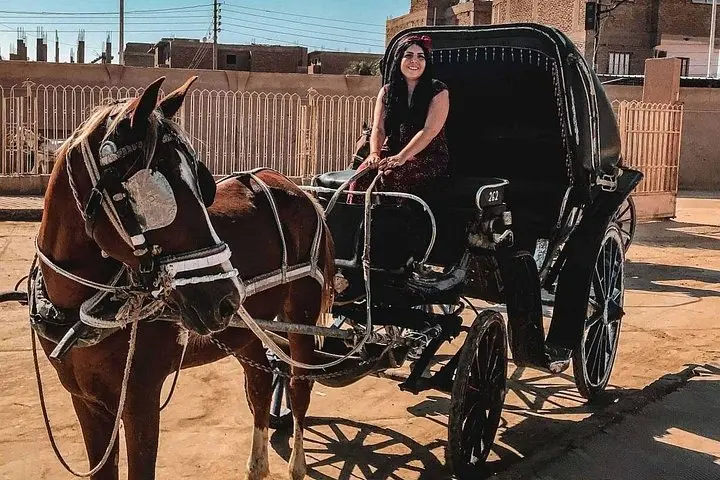
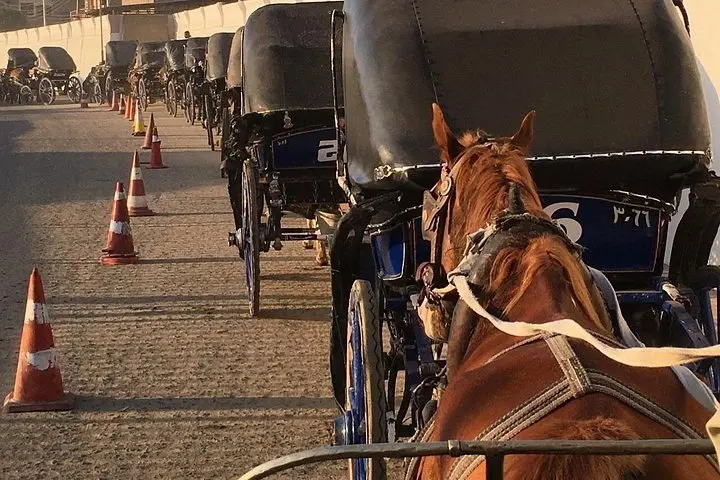
The carriage creaks onto a narrow street as late-afternoon light softens the limestone façades; hooves tap a steady rhythm while the city moves around you—vendors calling, children running between alleys, the Nile a silent ribbon beyond the Corniche.
The carriage creaks onto a narrow street as late-afternoon light softens the limestone façades; hooves tap a steady rhythm while the city moves around you—vendors calling, children running between alleys, the Nile a silent ribbon beyond the Corniche.
Luxor is ancient Thebes: an open-air chronicle of pharaonic ambition. Your carriage route threads past Luxor Temple and the Avenue of the Sphinxes, where stone guardians mark a processional past. Geologically the city sits on the Nile’s alluvial plain, backed by desert cliffs that delivered stone for millennia; those cliffs and the river still shape local life and trade.
Culture here is immediate and sensory. Markets assert themselves with spices and textiles; guides read the layers of history in temple reliefs and Ottoman-era doorways. Local drivers and guides often double as storytellers, connecting visible monuments to rituals, family histories, and the labor that keeps tourism—and the horses—moving.
Practically: the tour runs about 90–120 minutes with hotel or cruise pickup. Expect cobbled streets and occasional tight turns; mobility-friendly options are available but check ahead. Midday heat can be intense—plan for sun protection and hydration even if bottled water is provided. Bring cash for tips and informal purchases, and ask permission before photographing people or courtyards.
This is a low-effort, high-context way to absorb Luxor’s rhythm—close enough to hear street life, relaxed enough to take the city in without hurrying.