THE ADVENTURE COLLECTIVE® · Independent discovery and booking for outdoor travel
Spend a private day at the Giza Plateau and the new Grand Egyptian Museum with an Egyptologist guide. This luxury tour pairs skip‑the‑line access with in‑depth context—ideal for travelers who want history, geology, and local culture in one long day.
Spend a private day at the Giza Plateau and the new Grand Egyptian Museum with an Egyptologist guide. This luxury tour pairs skip‑the‑line access with in‑depth context—ideal for travelers who want history, geology, and local culture in one long day.
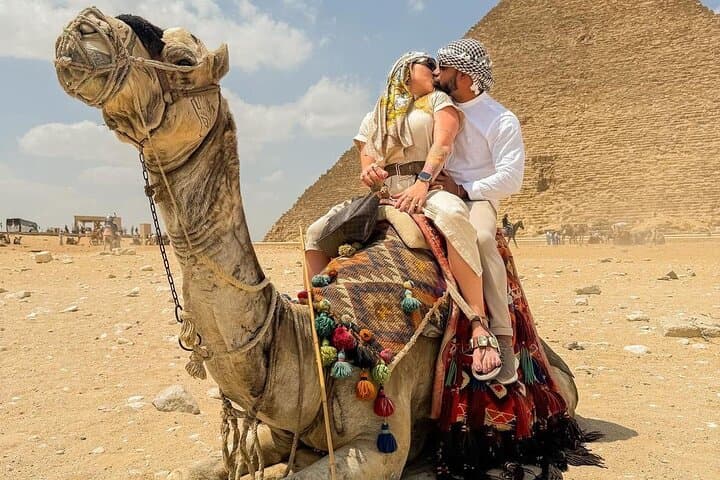
You step from the car onto hot limestone dust; the plateau opens with the three pyramids rising like patient machines of stone, their faces catching a harsh, bright light that makes every edge readable.
Verified experiences and guided adventures in the surrounding area.
Operated by Magic Pyramid Tour · Giza, Cairo Governorate
You step from the car onto hot limestone dust; the plateau opens with the three pyramids rising like patient machines of stone, their faces catching a harsh, bright light that makes every edge readable.
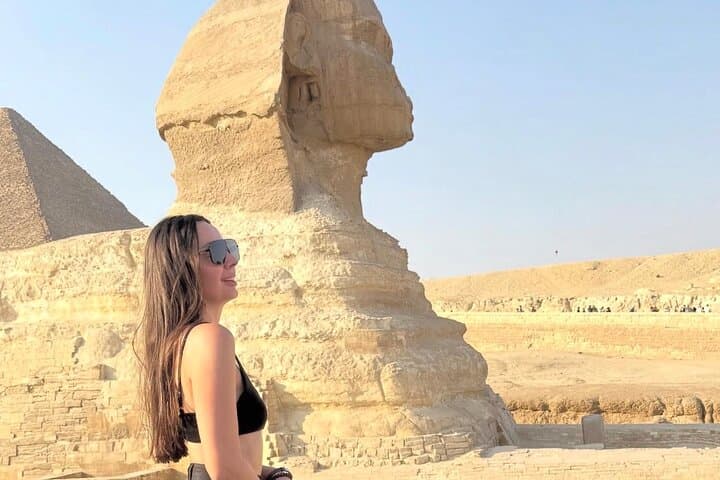
The walk across Giza’s plateau moves between human scale and geological time: quarried Tura limestone and ancient bedrock underfoot, tool marks smoothed by wind. The Great Pyramid, raised around 2560 BCE for Khufu, and the Sphinx—carved from natural bedrock—anchor a landscape that fed Egypt’s worldview for millennia. The nearby Grand Egyptian Museum (GEM), a modern glass-and-concrete frame, houses objects from predynastic pottery to Tutankhamun’s gold, creating a line through 5,000 years of material culture.
Local life happens in small markets and papyrus shops where artisans demonstrate techniques passed down generations. Archaeology here is both spectacle and careful conservation: many finds now live in climate-controlled galleries at GEM while the plateau balances foot traffic with fragile contexts.
Practical guidance: expect 6–7 hours on a private itinerary with skip-the-line access, guided stops at major pyramids, the Sphinx, Solar Boat Museum and GEM galleries. Wear sturdy, closed-toe shoes for uneven stone and sand, sun protection, and carry water—bottled water is often provided but refillable bottles are practical. Start early to avoid the peak heat and maximize light for photos; plan for short drives between sites and allow slow walking to absorb inscriptions and reliefs. Respect signage and staff directions around fragile monuments; photography rules vary inside museum galleries.
The private tour runs about 6–7 hours, typically including Giza Plateau sights and a visit to the Grand Egyptian Museum.
Entrance fees may be included depending on the booking option—confirm whether the all‑inclusive option was selected to cover museum and pyramid tickets.
Many areas, including the GEM and some zones of the plateau, are wheelchair accessible, but terrain near monuments is uneven—notify the operator about mobility needs.
Access to pyramid interiors is limited and sometimes restricted; interior entry often requires separate tickets and may not be included by default.
Magic Pyramid Tour operates guided outdoor trips and adventures with an emphasis on safety, stewardship, and memorable experiences.


You step from the car onto hot limestone dust; the plateau opens with the three pyramids rising like patient machines of stone, their faces catching a harsh, bright light that makes every edge readable.
You step from the car onto hot limestone dust; the plateau opens with the three pyramids rising like patient machines of stone, their faces catching a harsh, bright light that makes every edge readable.
The walk across Giza’s plateau moves between human scale and geological time: quarried Tura limestone and ancient bedrock underfoot, tool marks smoothed by wind. The Great Pyramid, raised around 2560 BCE for Khufu, and the Sphinx—carved from natural bedrock—anchor a landscape that fed Egypt’s worldview for millennia. The nearby Grand Egyptian Museum (GEM), a modern glass-and-concrete frame, houses objects from predynastic pottery to Tutankhamun’s gold, creating a line through 5,000 years of material culture.
Local life happens in small markets and papyrus shops where artisans demonstrate techniques passed down generations. Archaeology here is both spectacle and careful conservation: many finds now live in climate-controlled galleries at GEM while the plateau balances foot traffic with fragile contexts.
Practical guidance: expect 6–7 hours on a private itinerary with skip-the-line access, guided stops at major pyramids, the Sphinx, Solar Boat Museum and GEM galleries. Wear sturdy, closed-toe shoes for uneven stone and sand, sun protection, and carry water—bottled water is often provided but refillable bottles are practical. Start early to avoid the peak heat and maximize light for photos; plan for short drives between sites and allow slow walking to absorb inscriptions and reliefs. Respect signage and staff directions around fragile monuments; photography rules vary inside museum galleries.
