THE ADVENTURE COLLECTIVE® · Independent discovery and booking for outdoor travel

Explore Accra’s most famous market with a private guide who helps you navigate stalls, haggle confidently, and uncover local crafts. Finish at the Accra Arts Centre with a drumming lesson and direct contact with Ghanaian artisans.
Explore Accra’s most famous market with a private guide who helps you navigate stalls, haggle confidently, and uncover local crafts. Finish at the Accra Arts Centre with a drumming lesson and direct contact with Ghanaian artisans.
You step from the air-conditioned car into a corridor of voices — vendors calling, fabric flapping, the smell of fried plantain and ground pepper. Makola Market’s lanes press close; bright kente, beads and fresh produce crowd wooden tables while calculators click and bargains are struck. After two hours here, the tour moves to the Accra Arts Centre, where carved drums and painted masks fill shaded stalls and a short drumming lesson gives the city a heartbeat you can carry.
Verified experiences and guided adventures in the surrounding area.
Operated by Ghanapeopletour · Accra, Greater Accra Region
You step from the air-conditioned car into a corridor of voices — vendors calling, fabric flapping, the smell of fried plantain and ground pepper. Makola Market’s lanes press close; bright kente, beads and fresh produce crowd wooden tables while calculators click and bargains are struck. After two hours here, the tour moves to the Accra Arts Centre, where carved drums and painted masks fill shaded stalls and a short drumming lesson gives the city a heartbeat you can carry.
Makola grew into Accra’s commercial core during the 20th century and still channels the city’s pulse. The market sits on the coastal plain of Greater Accra, a flat urban landscape shaped by lateritic soils and coastal trade routes. The Arts Centre is a post-independence hub that supports Ghanaian crafts and live performance, offering direct contact with makers rather than gallery intermediaries.
Expect an intimate, urban cultural exchange: vendors eager to talk about materials and provenance, artisans demonstrating carving and weaving, and a hands-on drum session that teaches basic West African rhythms.
Practicalities: the private tour includes pick-up in an AC car and bottled water; wear closed-toe walking shoes and keep small bills for quick purchases. Bring a lightweight daypack, sunscreen, and patience for narrow alleys. Photography is welcome but always ask before shooting people or merchandise. The tour runs roughly 3–4 hours, requires moderate mobility to navigate crowded aisles, and is best scheduled in the morning to avoid peak heat and heavier afternoon crowds.
Yes — the tour includes pickup and drop-off by a fully air-conditioned car from your Accra location.
Most market stalls accept cash only; some Art Centre shops may accept cards, but carry cedi for best results.
Yes — families are welcome, but supervise children in crowds and keep them close in congested lanes.
Moderate fitness is recommended: expect up to two hours of walking and standing with occasional weaving through crowds.
Ghanapeopletour operates guided outdoor trips and adventures with an emphasis on safety, stewardship, and memorable experiences.
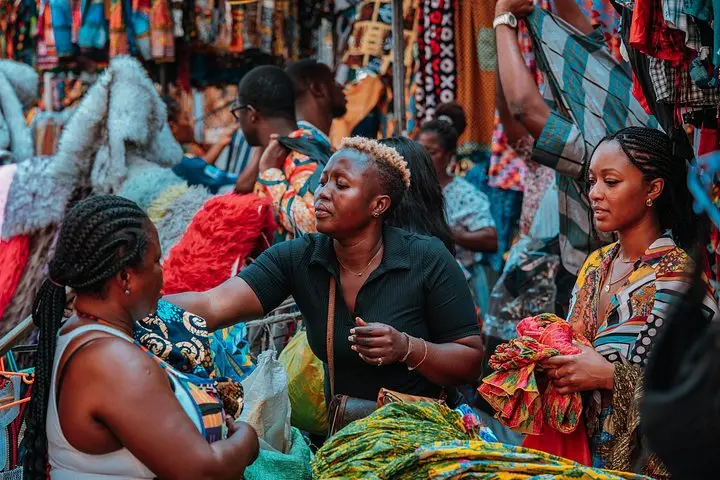
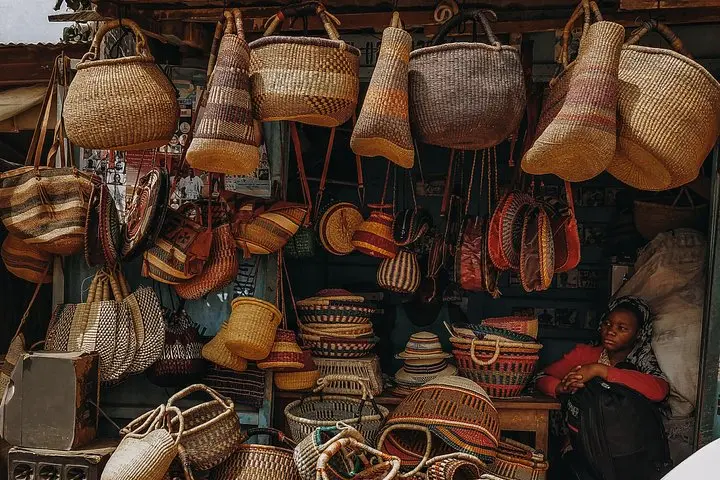
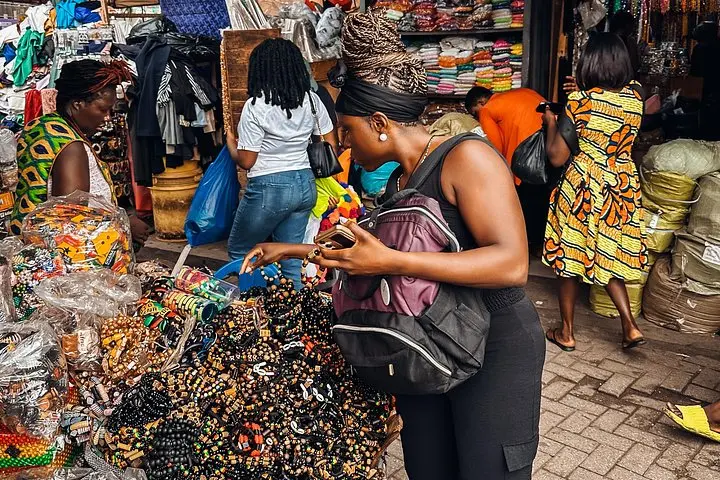
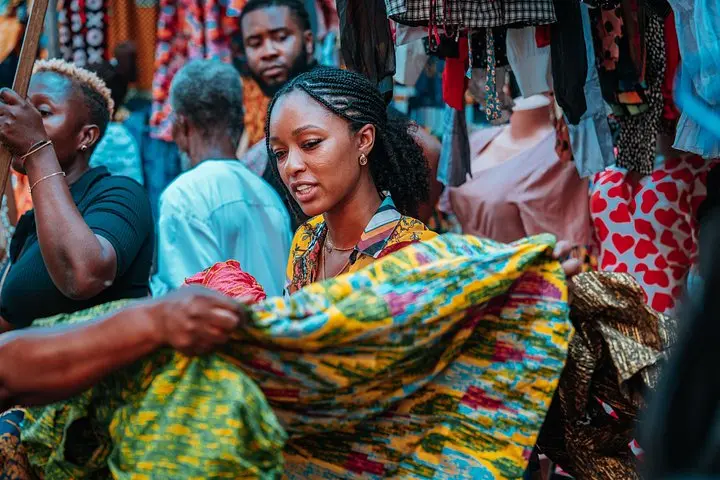
You step from the air-conditioned car into a corridor of voices — vendors calling, fabric flapping, the smell of fried plantain and ground pepper. Makola Market’s lanes press close; bright kente, beads and fresh produce crowd wooden tables while calculators click and bargains are struck. After two hours here, the tour moves to the Accra Arts Centre, where carved drums and painted masks fill shaded stalls and a short drumming lesson gives the city a heartbeat you can carry.
You step from the air-conditioned car into a corridor of voices — vendors calling, fabric flapping, the smell of fried plantain and ground pepper. Makola Market’s lanes press close; bright kente, beads and fresh produce crowd wooden tables while calculators click and bargains are struck. After two hours here, the tour moves to the Accra Arts Centre, where carved drums and painted masks fill shaded stalls and a short drumming lesson gives the city a heartbeat you can carry.
Makola grew into Accra’s commercial core during the 20th century and still channels the city’s pulse. The market sits on the coastal plain of Greater Accra, a flat urban landscape shaped by lateritic soils and coastal trade routes. The Arts Centre is a post-independence hub that supports Ghanaian crafts and live performance, offering direct contact with makers rather than gallery intermediaries.
Expect an intimate, urban cultural exchange: vendors eager to talk about materials and provenance, artisans demonstrating carving and weaving, and a hands-on drum session that teaches basic West African rhythms.
Practicalities: the private tour includes pick-up in an AC car and bottled water; wear closed-toe walking shoes and keep small bills for quick purchases. Bring a lightweight daypack, sunscreen, and patience for narrow alleys. Photography is welcome but always ask before shooting people or merchandise. The tour runs roughly 3–4 hours, requires moderate mobility to navigate crowded aisles, and is best scheduled in the morning to avoid peak heat and heavier afternoon crowds.