THE ADVENTURE COLLECTIVE® · Independent discovery and booking for outdoor travel

Walk the haystack fields and peat-dark lanes of Maramureș with a private guide who opens doors to wooden churches, weaving houses, and woodcarvers. This 4–7 hour rural tour pairs short village walks with hands-on craft visits and cultural interpretation.
Walk the haystack fields and peat-dark lanes of Maramureș with a private guide who opens doors to wooden churches, weaving houses, and woodcarvers. This 4–7 hour rural tour pairs short village walks with hands-on craft visits and cultural interpretation.
A low sky hangs over the rolling haystacks of Maramureș as you step onto a muddy lane, the smell of damp wood and fresh-cut hay following each footfall. Local guides lead small, private groups through villages where gates creak and painted houses lean into the road; every turn reveals carved porches, steep-roofed wooden churches, and women at looms dyeing wool with plant-based colors.
Verified experiences and guided adventures in the surrounding area.
Operated by Joanna · Ieud, Maramureș
A low sky hangs over the rolling haystacks of Maramureș as you step onto a muddy lane, the smell of damp wood and fresh-cut hay following each footfall. Local guides lead small, private groups through villages where gates creak and painted houses lean into the road; every turn reveals carved porches, steep-roofed wooden churches, and women at looms dyeing wool with plant-based colors.
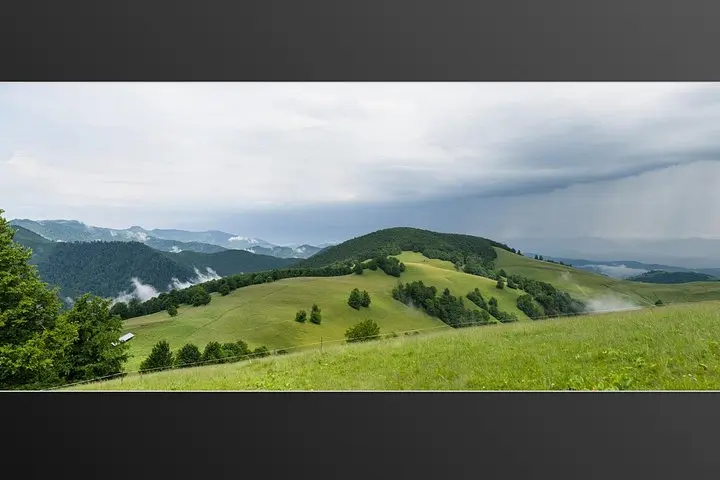
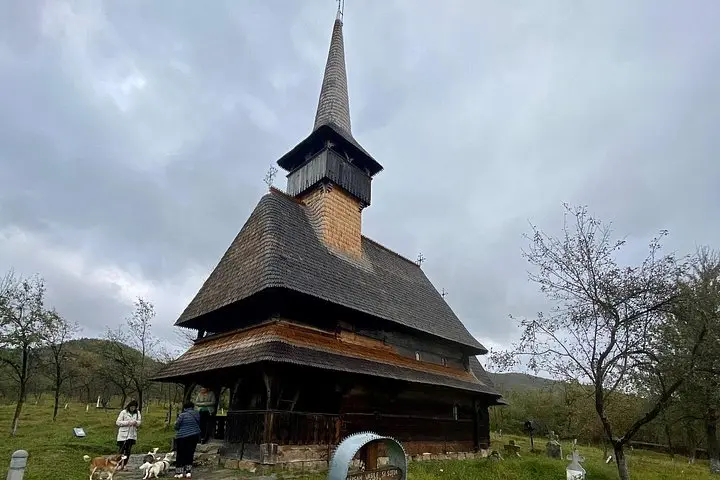
Maramureș's landscape is shaped by folded Carpathian foothills and broad valley terraces where centuries-old farming practices remain visible — haystacks stacked like small towers, field boundaries marked by willow poles. The region’s wooden churches date from the 17th–19th centuries and are notable for tall, thin spires and richly painted iconostases inside; many are on the UNESCO list for their vernacular carpentry.
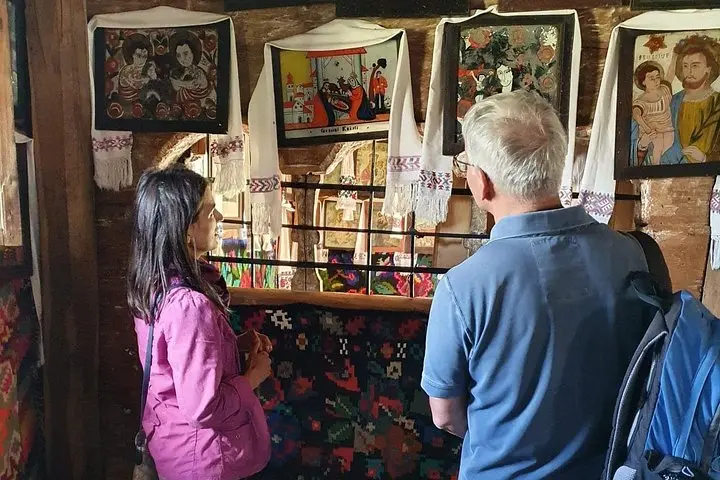
Culture here is tactile: woodcarving shops, hemp-processing demonstrations, and Botiza carpet weaving sessions show living craft traditions rather than museumed artifacts. Guides explain how local dyes, pattern motifs, and religious paintings connect to seasonal cycles and family histories.
Practically, expect multiple short village walks and indoor visits to small workshops and church interiors across a 4–7 hour private tour. Trails are mostly paved lanes or compact dirt; surfaces can be slick after rain. Bring layered clothing, waterproof footwear, and a light daypack — hydration and modest dress for church interiors are essential. Morning light is best for photography; afternoons are quieter for conversations with artisans. These tours are low-impact but support local economies directly, so engage respectfully and consider small purchases to support craft continuity.
Tours run approximately 4–7 hours depending on chosen sites and your private itinerary.
Yes — the tour is rated easy and suited to most ages; note there is standing during demonstrations and some uneven ground.
Most visits include entry and interpretation as indicated in the itinerary, but confirm specifics with your operator for certain sites.
Bring some Romanian lei for small purchases at craft workshops and local stalls, as many accept cash only.
Joanna operates guided outdoor trips and adventures with an emphasis on safety, stewardship, and memorable experiences.
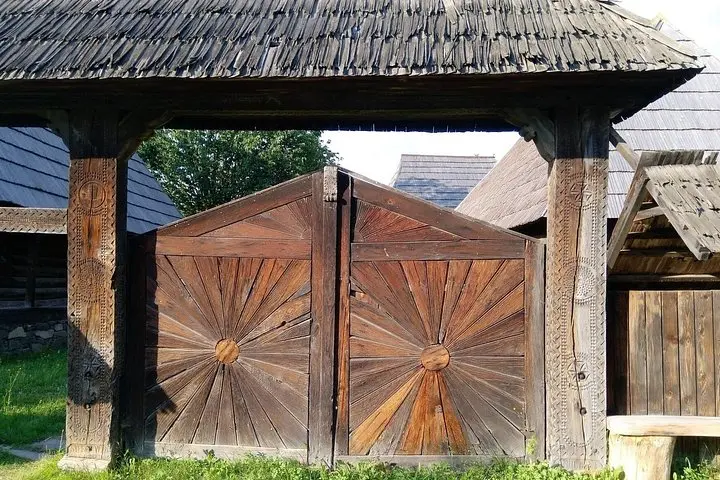
A low sky hangs over the rolling haystacks of Maramureș as you step onto a muddy lane, the smell of damp wood and fresh-cut hay following each footfall. Local guides lead small, private groups through villages where gates creak and painted houses lean into the road; every turn reveals carved porches, steep-roofed wooden churches, and women at looms dyeing wool with plant-based colors.
A low sky hangs over the rolling haystacks of Maramureș as you step onto a muddy lane, the smell of damp wood and fresh-cut hay following each footfall. Local guides lead small, private groups through villages where gates creak and painted houses lean into the road; every turn reveals carved porches, steep-roofed wooden churches, and women at looms dyeing wool with plant-based colors.
Maramureș's landscape is shaped by folded Carpathian foothills and broad valley terraces where centuries-old farming practices remain visible — haystacks stacked like small towers, field boundaries marked by willow poles. The region’s wooden churches date from the 17th–19th centuries and are notable for tall, thin spires and richly painted iconostases inside; many are on the UNESCO list for their vernacular carpentry.
Culture here is tactile: woodcarving shops, hemp-processing demonstrations, and Botiza carpet weaving sessions show living craft traditions rather than museumed artifacts. Guides explain how local dyes, pattern motifs, and religious paintings connect to seasonal cycles and family histories.
Practically, expect multiple short village walks and indoor visits to small workshops and church interiors across a 4–7 hour private tour. Trails are mostly paved lanes or compact dirt; surfaces can be slick after rain. Bring layered clothing, waterproof footwear, and a light daypack — hydration and modest dress for church interiors are essential. Morning light is best for photography; afternoons are quieter for conversations with artisans. These tours are low-impact but support local economies directly, so engage respectfully and consider small purchases to support craft continuity.