THE ADVENTURE COLLECTIVE® · Independent discovery and booking for outdoor travel

Spend three hours exploring Merzouga’s Erg Chebbi by 4x4 — visit a nomadic family, the black desert fossil fields, and Khamlia for Gnawa music with a local lunch included. Short, culturally rich, and ideal for travelers wanting a concentrated desert experience.
Spend three hours exploring Merzouga’s Erg Chebbi by 4x4 — visit a nomadic family, the black desert fossil fields, and Khamlia for Gnawa music with a local lunch included. Short, culturally rich, and ideal for travelers wanting a concentrated desert experience.
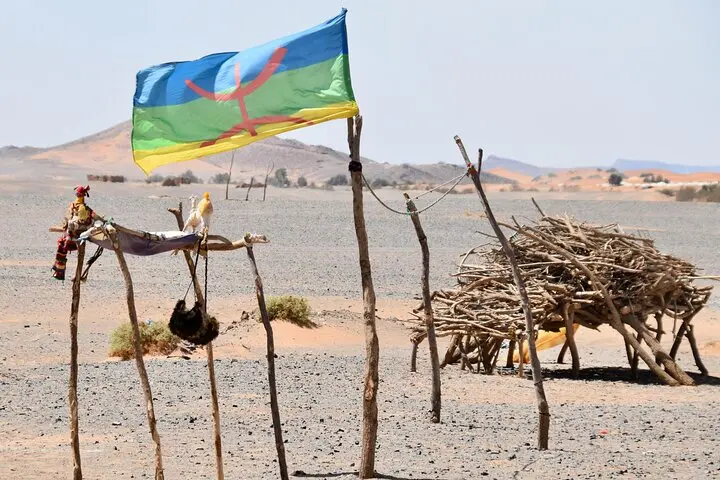
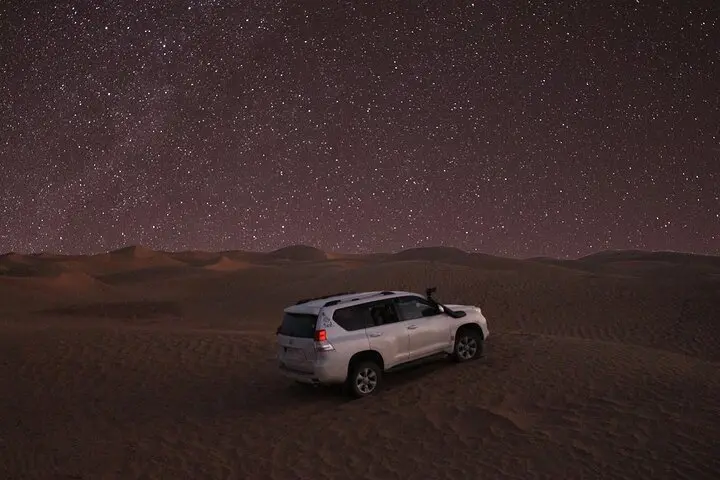
A wash of ochre rolls to the horizon as the 4x4 crunches up a dune shoulder; wind rearranges the sand while the vehicle steadies and the driver points toward a smear of tents and black volcanic outcrops. You arrive at Erg Chebbi the way the desert accepts most visitors — fast, sandy, and already ancient.
Verified experiences and guided adventures in the surrounding area.
Operated by Mouhou Tours · Merzouga, Drâa-Tafilalet (Errachidia Province)
A wash of ochre rolls to the horizon as the 4x4 crunches up a dune shoulder; wind rearranges the sand while the vehicle steadies and the driver points toward a smear of tents and black volcanic outcrops. You arrive at Erg Chebbi the way the desert accepts most visitors — fast, sandy, and already ancient.
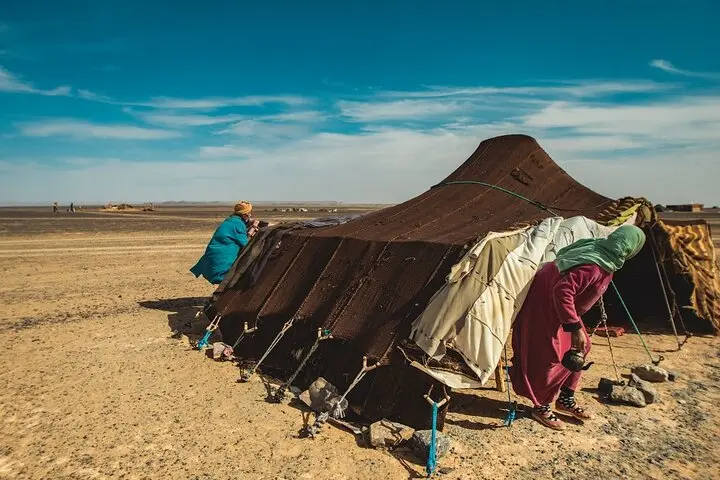
This half-day cultural loop moves between living nomad camps, the fossil-strewn Black Desert and the music village of Khamlia. The dunes here are recent deposits of Saharan wind; nearby black desert fields are volcanic and littered with marine fossils that testify to a very different geological past when the sea covered this basin. Rissani and Erfoud were caravan hubs on trans-Saharan routes; today Berber families and Gnawa musicians keep oral histories and rhythms alive for travelers.
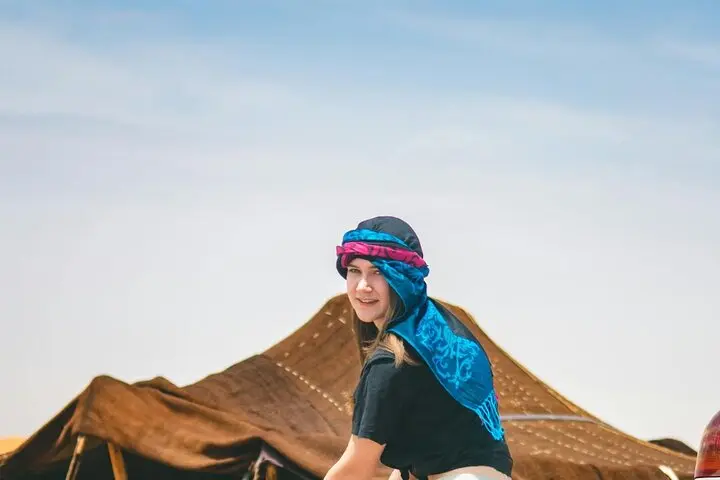
Expect intimate encounters: tea under a Berber tent, short walks in soft sand, a stop at a local restaurant for a hearty lunch (Berber-style flatbreads and tagines), and a Khamlia performance where percussive calls push the heat into a pulse.
Practical edge: the route is short (about three hours), but sun and sand are constant. Wear closed shoes for moving around camps, bring layered sun protection, and carry water — the desert’s rhythm rewards slow attention. Respect private spaces, don’t remove fossils, and tip guides and musicians locally to support livelihoods. This tour is a compact, sensory way to see Merzouga’s dunes and cultural threads without committing to an overnight crossing.
Most operators offer pickup from Merzouga and nearby towns; confirm your pickup point when booking and provide full names and passport details if requested.
The tour is classified as easy, but moving on soft sand and getting into a 4x4 requires basic mobility; contact the operator ahead for accommodations.
Lunch is served in a local restaurant and typically features Berber-style dishes such as flatbreads, tagine or 'Berber pizza' and mint tea; vegetarian options are usually available with notice.
No — removing fossils or archaeological material is discouraged and often illegal; photograph and ask your guide about conservation rules instead.
Mouhou Tours operates guided outdoor trips and adventures with an emphasis on safety, stewardship, and memorable experiences.
A wash of ochre rolls to the horizon as the 4x4 crunches up a dune shoulder; wind rearranges the sand while the vehicle steadies and the driver points toward a smear of tents and black volcanic outcrops. You arrive at Erg Chebbi the way the desert accepts most visitors — fast, sandy, and already ancient.
A wash of ochre rolls to the horizon as the 4x4 crunches up a dune shoulder; wind rearranges the sand while the vehicle steadies and the driver points toward a smear of tents and black volcanic outcrops. You arrive at Erg Chebbi the way the desert accepts most visitors — fast, sandy, and already ancient.
This half-day cultural loop moves between living nomad camps, the fossil-strewn Black Desert and the music village of Khamlia. The dunes here are recent deposits of Saharan wind; nearby black desert fields are volcanic and littered with marine fossils that testify to a very different geological past when the sea covered this basin. Rissani and Erfoud were caravan hubs on trans-Saharan routes; today Berber families and Gnawa musicians keep oral histories and rhythms alive for travelers.
Expect intimate encounters: tea under a Berber tent, short walks in soft sand, a stop at a local restaurant for a hearty lunch (Berber-style flatbreads and tagines), and a Khamlia performance where percussive calls push the heat into a pulse.
Practical edge: the route is short (about three hours), but sun and sand are constant. Wear closed shoes for moving around camps, bring layered sun protection, and carry water — the desert’s rhythm rewards slow attention. Respect private spaces, don’t remove fossils, and tip guides and musicians locally to support livelihoods. This tour is a compact, sensory way to see Merzouga’s dunes and cultural threads without committing to an overnight crossing.