THE ADVENTURE COLLECTIVE® · Independent discovery and booking for outdoor travel

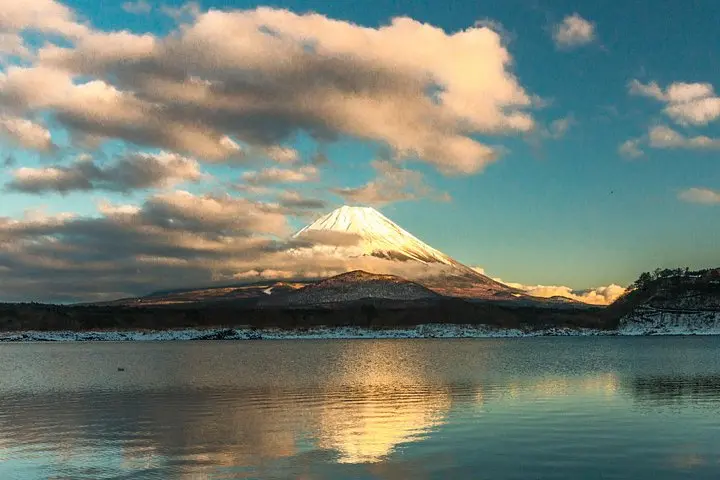
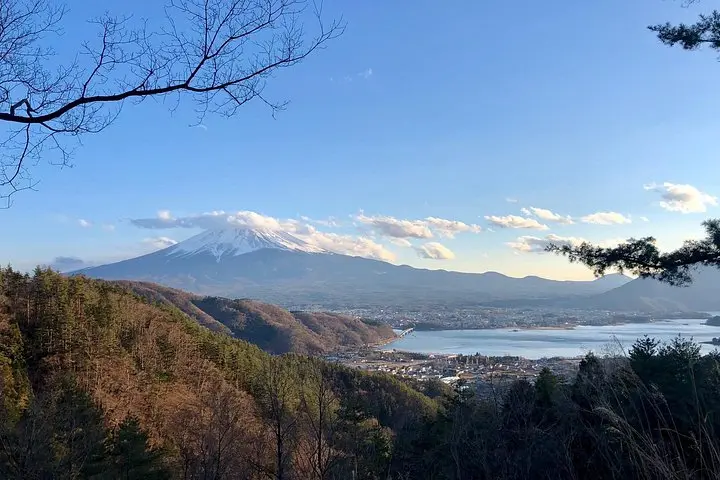
Spend a flexible 5–6 hour private tour around Lake Kawaguchiko and Aokigahara with an English-speaking local guide. See Mt. Fuji from curated viewpoints, walk ancient cedar groves, explore lava-formed caves, and time the light for memorable photos.
Spend a flexible 5–6 hour private tour around Lake Kawaguchiko and Aokigahara with an English-speaking local guide. See Mt. Fuji from curated viewpoints, walk ancient cedar groves, explore lava-formed caves, and time the light for memorable photos.
You arrive to the low light of the Five Lakes region with Mount Fuji rising like a patient presence behind cloud and tree — the guide opens the van door and cool lake air steps in, carrying the distant rush of a waterfall and the resin-scented hush of an ancient cedar grove.
Verified experiences and guided adventures in the surrounding area.
Operated by Hidden Japan · Fujikawaguchiko, Yamanashi
You arrive to the low light of the Five Lakes region with Mount Fuji rising like a patient presence behind cloud and tree — the guide opens the van door and cool lake air steps in, carrying the distant rush of a waterfall and the resin-scented hush of an ancient cedar grove.
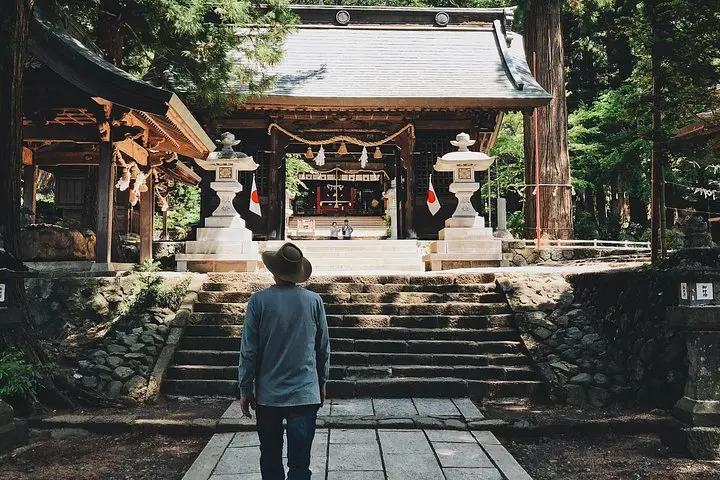
This private, 5–6 hour loop focuses on the Kawaguchiko–Saiko corridor: lakeside viewpoints for Fuji, the 1,200-year-old cedars at Asama Shrine, the moss-dark lanes of Aokigahara (the “Sea of Trees”), and the basalt chambers of Ryugu (Dragon) Cave. Geologically the area records Fuji’s repeated eruptions — lava flows from the 864 AD Jogan eruption cliff the forest floor and fed the caves that now cool into black, pitted rock.
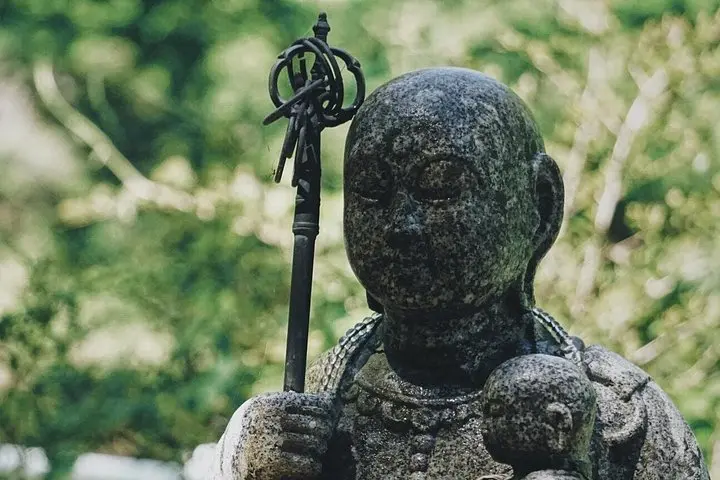
Culturally the route threads Shinto reverence for the mountain (Asama Shrine is part of Mt. Fuji’s World Cultural Heritage designation) with village life around the lakes; small roadside shrines and fishing piers speak to a long relationship between people and the volcano.
Practical guidance: tours are van-based with short walks on packed earth and lava rock; comfortable walking shoes and a windproof layer are essential. Morning light and late afternoon both deliver strong Fuji views; cloud cover changes quickly, so plan flexibility. Carry water, a compact rain shell, and a camera with a polarizer for lake reflections. Respect trail signage in Aokigahara — stay on marked paths and avoid disturbing fragile moss and roots. The private guide provides local context, door-to-door pickup in the Kawaguchiko area, and the flexibility to emphasize photography, short hikes, or cultural stops depending on weather and interest.
Pickup and drop-off are provided within the Kawaguchiko/Fujikawaguchiko area; specific locations are arranged at booking.
Guides adjust the route to maximize clear views and focus on alternative highlights like Aokigahara, Asama Shrine, or Ryugu Cave; refunds follow the operator’s weather policy.
Children can join but must be accompanied by an adult at all times and stay on marked paths; some sections are uneven and densely forested.
The itinerary includes vehicle transport and short walks; many viewing points and the dragon cave have steps or uneven ground — accessibility may be limited, so consult the operator before booking.
Hidden Japan operates guided outdoor trips and adventures with an emphasis on safety, stewardship, and memorable experiences.
You arrive to the low light of the Five Lakes region with Mount Fuji rising like a patient presence behind cloud and tree — the guide opens the van door and cool lake air steps in, carrying the distant rush of a waterfall and the resin-scented hush of an ancient cedar grove.
You arrive to the low light of the Five Lakes region with Mount Fuji rising like a patient presence behind cloud and tree — the guide opens the van door and cool lake air steps in, carrying the distant rush of a waterfall and the resin-scented hush of an ancient cedar grove.
This private, 5–6 hour loop focuses on the Kawaguchiko–Saiko corridor: lakeside viewpoints for Fuji, the 1,200-year-old cedars at Asama Shrine, the moss-dark lanes of Aokigahara (the “Sea of Trees”), and the basalt chambers of Ryugu (Dragon) Cave. Geologically the area records Fuji’s repeated eruptions — lava flows from the 864 AD Jogan eruption cliff the forest floor and fed the caves that now cool into black, pitted rock.
Culturally the route threads Shinto reverence for the mountain (Asama Shrine is part of Mt. Fuji’s World Cultural Heritage designation) with village life around the lakes; small roadside shrines and fishing piers speak to a long relationship between people and the volcano.
Practical guidance: tours are van-based with short walks on packed earth and lava rock; comfortable walking shoes and a windproof layer are essential. Morning light and late afternoon both deliver strong Fuji views; cloud cover changes quickly, so plan flexibility. Carry water, a compact rain shell, and a camera with a polarizer for lake reflections. Respect trail signage in Aokigahara — stay on marked paths and avoid disturbing fragile moss and roots. The private guide provides local context, door-to-door pickup in the Kawaguchiko area, and the flexibility to emphasize photography, short hikes, or cultural stops depending on weather and interest.