THE ADVENTURE COLLECTIVE® · Independent discovery and booking for outdoor travel

See Mt. Fuji framed by a sea of pink moss phlox on a private spring tour from Tokyo. This full-day, English-assisted drive gets you to Kawaguchi, Yamanaka and Chureito Pagoda with time for photos and short walks.
See Mt. Fuji framed by a sea of pink moss phlox on a private spring tour from Tokyo. This full-day, English-assisted drive gets you to Kawaguchi, Yamanaka and Chureito Pagoda with time for photos and short walks.
A low hum of tires on asphalt gives way to a field of hot-pink petals. The Shibazakura—moss phlox—spreads like a living carpet beneath Mt. Fuji’s white crown, the mountain’s flanks cutting a clean silhouette against the spring sky. You move from viewpoint to viewpoint in a private, air-conditioned vehicle, timing photos and short walks to the light.
Verified experiences and guided adventures in the surrounding area.
Operated by Asoko LLC · Fujikawaguchiko, Yamanashi Prefecture
A low hum of tires on asphalt gives way to a field of hot-pink petals. The Shibazakura—moss phlox—spreads like a living carpet beneath Mt. Fuji’s white crown, the mountain’s flanks cutting a clean silhouette against the spring sky. You move from viewpoint to viewpoint in a private, air-conditioned vehicle, timing photos and short walks to the light.
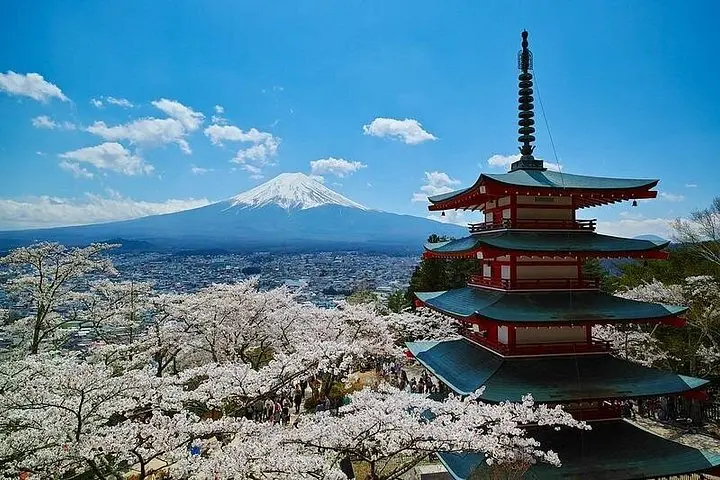
The Shibazakura bloom is an agricultural spectacle rooted in horticultural practice: growers cultivate thousands of phlox plants each year to create the seasonal sea of color. Mt. Fuji itself is a Pleistocene-Holocene stratovolcano, last erupting in 1707; its geology defines the region’s soils and the views that have inspired artists and pilgrims for centuries. Nearby Chureito Pagoda, built in the mid-20th century as part of Arakura Sengen Shrine, frames Fuji and fields with a classic, cultural foreground.
Practical guidance: this is a full-day private tour (roughly 10 hours from central Tokyo). Expect short walks across gravel paths and stairs at pagoda viewpoints—comfortable walking shoes and a light jacket are useful. Weekends and Golden Week fill quickly; midweek mornings give the best light and fewer people. Bring cash for small food stalls; many facilities accept cards but not all. Restroom facilities are available at major stops, but lines form during peak hours. The English-speaking driver will handle navigation and timing, while you control the pace—use that flexibility for golden-hour photos at Kawaguchi or a lakeside Hoto noodle lunch. Treat the landscapes respectfully: stay on paths and avoid picking plants so the blooms return next year.
The private tour is approximately 10 hours and typically includes pick-up and drop-off within Tokyo’s 23 wards; timings may be adjusted for other pickup areas.
Admission fees are not included by default—budget for festival entry where applicable and parking fees noted by the operator.
Yes; the English-speaking driver escorts can adjust stops and timing—confirm any changes via WhatsApp or Viator messaging before the trip.
Infant seats are available (one per vehicle). Some viewpoints require stairs and uneven paths, so accessibility varies by stop.
Asoko LLC operates guided outdoor trips and adventures with an emphasis on safety, stewardship, and memorable experiences.
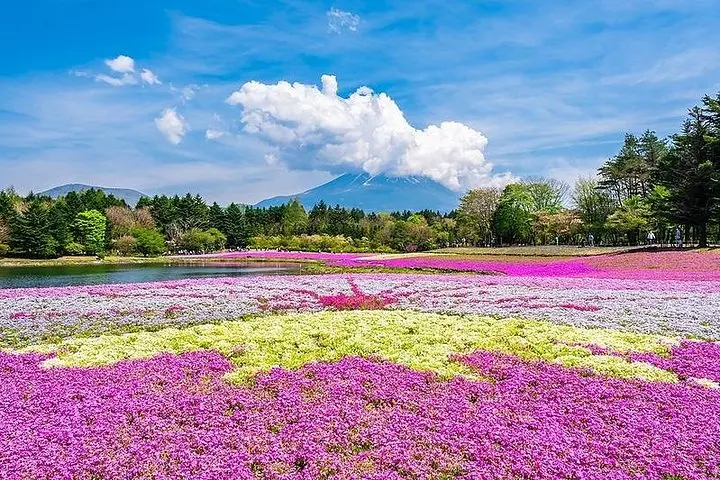
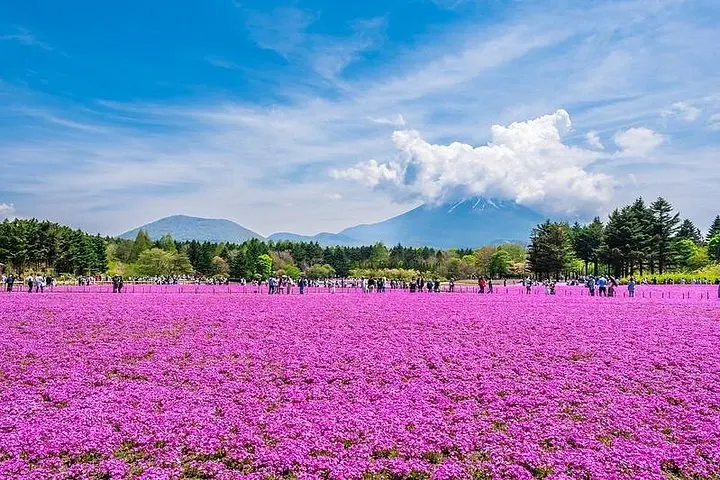
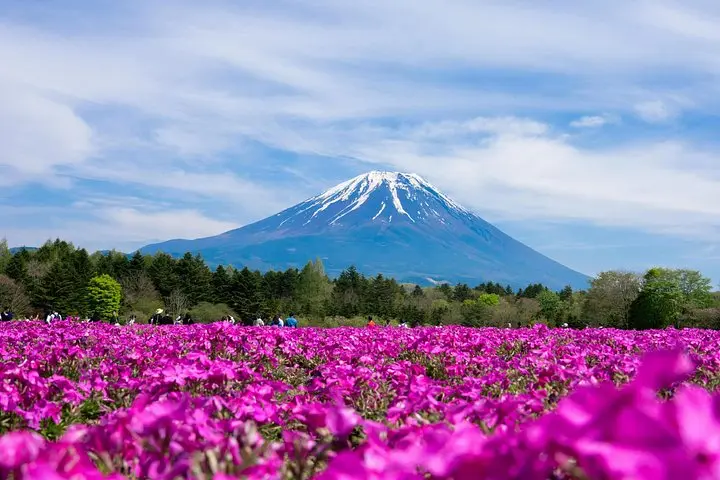
A low hum of tires on asphalt gives way to a field of hot-pink petals. The Shibazakura—moss phlox—spreads like a living carpet beneath Mt. Fuji’s white crown, the mountain’s flanks cutting a clean silhouette against the spring sky. You move from viewpoint to viewpoint in a private, air-conditioned vehicle, timing photos and short walks to the light.
A low hum of tires on asphalt gives way to a field of hot-pink petals. The Shibazakura—moss phlox—spreads like a living carpet beneath Mt. Fuji’s white crown, the mountain’s flanks cutting a clean silhouette against the spring sky. You move from viewpoint to viewpoint in a private, air-conditioned vehicle, timing photos and short walks to the light.
The Shibazakura bloom is an agricultural spectacle rooted in horticultural practice: growers cultivate thousands of phlox plants each year to create the seasonal sea of color. Mt. Fuji itself is a Pleistocene-Holocene stratovolcano, last erupting in 1707; its geology defines the region’s soils and the views that have inspired artists and pilgrims for centuries. Nearby Chureito Pagoda, built in the mid-20th century as part of Arakura Sengen Shrine, frames Fuji and fields with a classic, cultural foreground.
Practical guidance: this is a full-day private tour (roughly 10 hours from central Tokyo). Expect short walks across gravel paths and stairs at pagoda viewpoints—comfortable walking shoes and a light jacket are useful. Weekends and Golden Week fill quickly; midweek mornings give the best light and fewer people. Bring cash for small food stalls; many facilities accept cards but not all. Restroom facilities are available at major stops, but lines form during peak hours. The English-speaking driver will handle navigation and timing, while you control the pace—use that flexibility for golden-hour photos at Kawaguchi or a lakeside Hoto noodle lunch. Treat the landscapes respectfully: stay on paths and avoid picking plants so the blooms return next year.