THE ADVENTURE COLLECTIVE® · Independent discovery and booking for outdoor travel

A full-day private drive from Munich that pairs Germany’s highest peak with fairy-tale castles and Alpine towns. Expect panoramic cable-car views, medieval streets, and a flexible two-hour stop at the highlight you choose.
A full-day private drive from Munich that pairs Germany’s highest peak with fairy-tale castles and Alpine towns. Expect panoramic cable-car views, medieval streets, and a flexible two-hour stop at the highlight you choose.
You step into soft Bavarian morning light in Munich and the city slips behind you as the van threads between green fields and the rising teeth of the Alps. Alpine air sharpens with altitude; pines lean into views while the road drops toward crystalline lakes and ribboned rivers. By midmorning you stand at the base of Germany’s highest peak, Zugspitze (2,962 m), where a glass-and-steel cable car slices the sky and delivers a 360° panorama that reaches Austria, Italy, and Switzerland.
Verified experiences and guided adventures in the surrounding area.
Operated by Explore - Europe · Garmisch-Partenkirchen, Bavaria
You step into soft Bavarian morning light in Munich and the city slips behind you as the van threads between green fields and the rising teeth of the Alps. Alpine air sharpens with altitude; pines lean into views while the road drops toward crystalline lakes and ribboned rivers. By midmorning you stand at the base of Germany’s highest peak, Zugspitze (2,962 m), where a glass-and-steel cable car slices the sky and delivers a 360° panorama that reaches Austria, Italy, and Switzerland.
This route stitches together centuries: the 19th-century theatricalism of King Ludwig II’s Neuschwanstein castle, the medieval lanes of Füssen and Landsberg, and the violin-making legacy of Mittenwald beneath the Karwendel range. Geologically, Zugspitze is a limestone summit carved by ice; its terraces give way to glacial cirques and the jewel-blue Eibsee below. Culturally, the region balances tourism with strong local crafts—Lüftlmalerei frescoes and centuries-old luthier shops remain visible in small towns.
Practical edge: the tour is full-day (8–10 hours) and vehicle-based with short, easy walks at viewpoints and castle grounds. Cable car fares to the summit are separate (summer round-trip adult fares have been around €75—check current rates) and castle entry requires pre-booked tickets. Bring layered clothing (it can be 10–15°C cooler on the summit), sturdy shoes for uneven paths, and a photo-ready mind for Mary’s Bridge views of Neuschwanstein. The driver is English-speaking but not a licensed guide; expect helpful local orientation, bottled water included, and flexibility to choose which stop gets your two-hour visit. Early starts avoid crowds at the castle and cable car lines; keep ID handy for occasional border checks near the summit.
No—the tour provides transport and a two-hour stop but cable car tickets to the summit are typically paid on-site or pre-booked separately; check current fares before you go.
Yes—when booking you indicate your preferred stop (e.g., Neuschwanstein or Zugspitze) and the itinerary is tailored accordingly.
The driver is English-speaking and provides local orientation, but this is not a professional guided historical tour—expect practical commentary rather than detailed guided interpretation.
Yes—infant seats are available and the day is vehicle-based with short walks, but castle interiors may have stairs and Zugspitze platforms can be chilly for young children.
Explore - Europe operates guided outdoor trips and adventures with an emphasis on safety, stewardship, and memorable experiences.
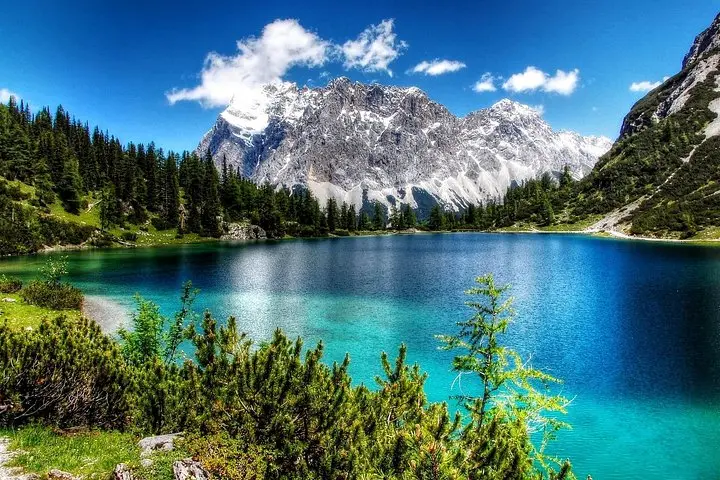
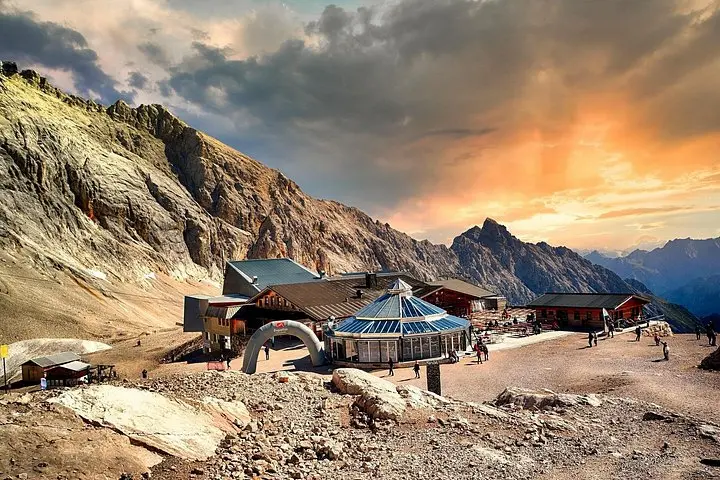
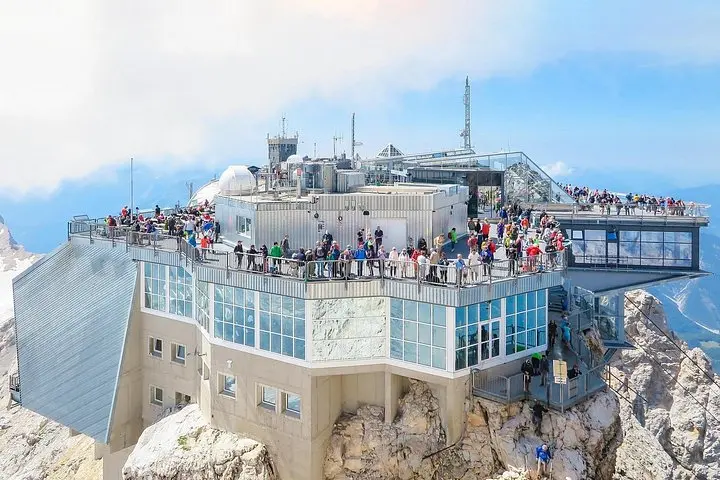
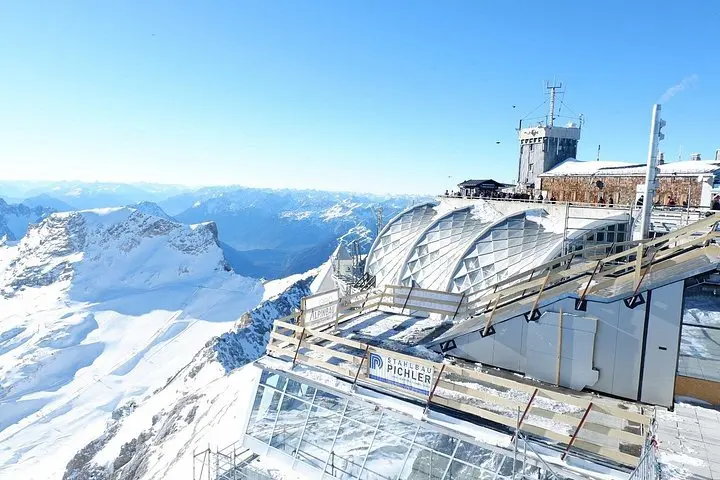
You step into soft Bavarian morning light in Munich and the city slips behind you as the van threads between green fields and the rising teeth of the Alps. Alpine air sharpens with altitude; pines lean into views while the road drops toward crystalline lakes and ribboned rivers. By midmorning you stand at the base of Germany’s highest peak, Zugspitze (2,962 m), where a glass-and-steel cable car slices the sky and delivers a 360° panorama that reaches Austria, Italy, and Switzerland.
You step into soft Bavarian morning light in Munich and the city slips behind you as the van threads between green fields and the rising teeth of the Alps. Alpine air sharpens with altitude; pines lean into views while the road drops toward crystalline lakes and ribboned rivers. By midmorning you stand at the base of Germany’s highest peak, Zugspitze (2,962 m), where a glass-and-steel cable car slices the sky and delivers a 360° panorama that reaches Austria, Italy, and Switzerland.
This route stitches together centuries: the 19th-century theatricalism of King Ludwig II’s Neuschwanstein castle, the medieval lanes of Füssen and Landsberg, and the violin-making legacy of Mittenwald beneath the Karwendel range. Geologically, Zugspitze is a limestone summit carved by ice; its terraces give way to glacial cirques and the jewel-blue Eibsee below. Culturally, the region balances tourism with strong local crafts—Lüftlmalerei frescoes and centuries-old luthier shops remain visible in small towns.
Practical edge: the tour is full-day (8–10 hours) and vehicle-based with short, easy walks at viewpoints and castle grounds. Cable car fares to the summit are separate (summer round-trip adult fares have been around €75—check current rates) and castle entry requires pre-booked tickets. Bring layered clothing (it can be 10–15°C cooler on the summit), sturdy shoes for uneven paths, and a photo-ready mind for Mary’s Bridge views of Neuschwanstein. The driver is English-speaking but not a licensed guide; expect helpful local orientation, bottled water included, and flexibility to choose which stop gets your two-hour visit. Early starts avoid crowds at the castle and cable car lines; keep ID handy for occasional border checks near the summit.