THE ADVENTURE COLLECTIVE® · Independent discovery and booking for outdoor travel

A private drive along Auckland’s rugged west coast delivers close, respectful viewing of one of the Southern Hemisphere’s most impressive gannet colonies. Learn breeding cycles, coastal geology and local context while staying on viewing platforms and out of the birds’ way.
A private drive along Auckland’s rugged west coast delivers close, respectful viewing of one of the Southern Hemisphere’s most impressive gannet colonies. Learn breeding cycles, coastal geology and local context while staying on viewing platforms and out of the birds’ way.
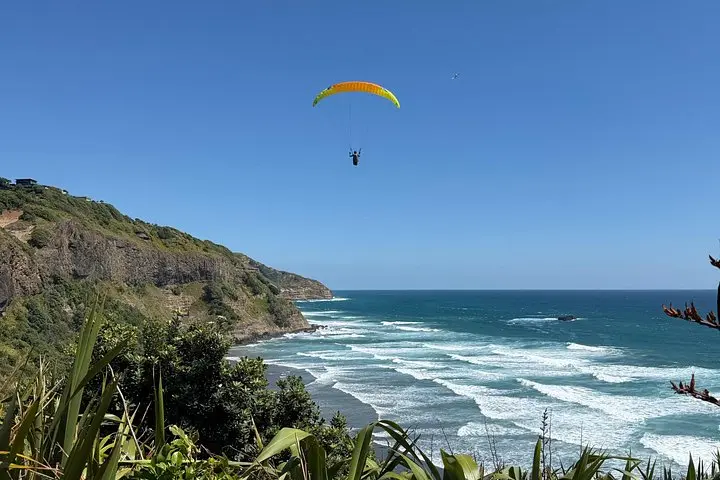
You step from the car into wind that carries salt and the crack of surf; the black sand at your feet seems to drink the light as the cliffs loom, and beyond them the gannets wheel like living white arrows.
Verified experiences and guided adventures in the surrounding area.
Operated by Shine Shuttle · Muriwai, Auckland
You step from the car into wind that carries salt and the crack of surf; the black sand at your feet seems to drink the light as the cliffs loom, and beyond them the gannets wheel like living white arrows.
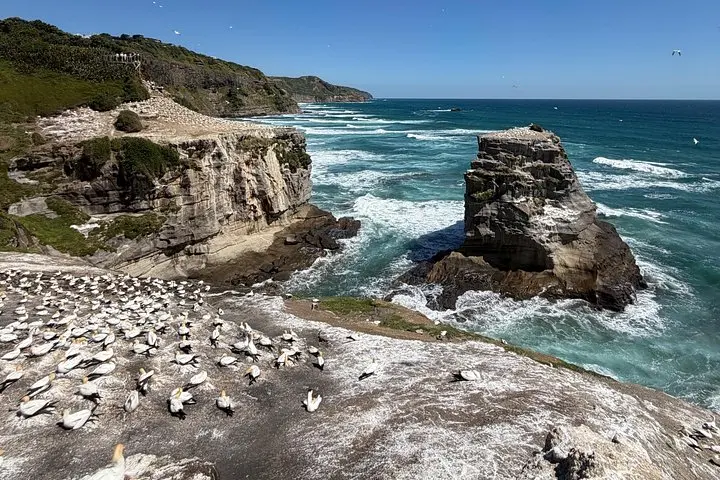
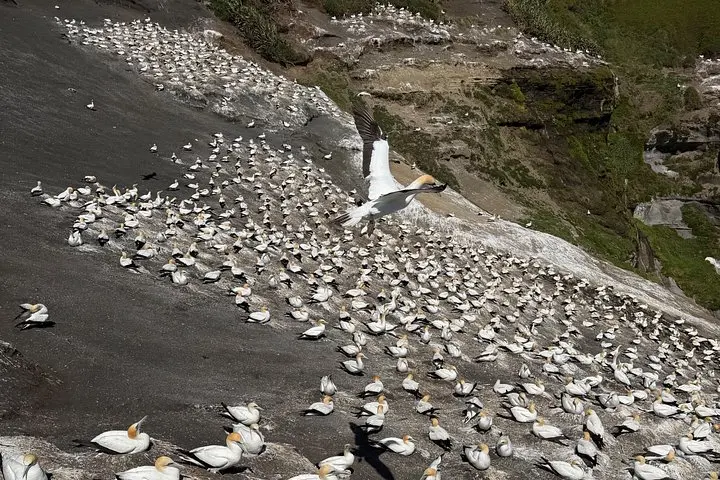
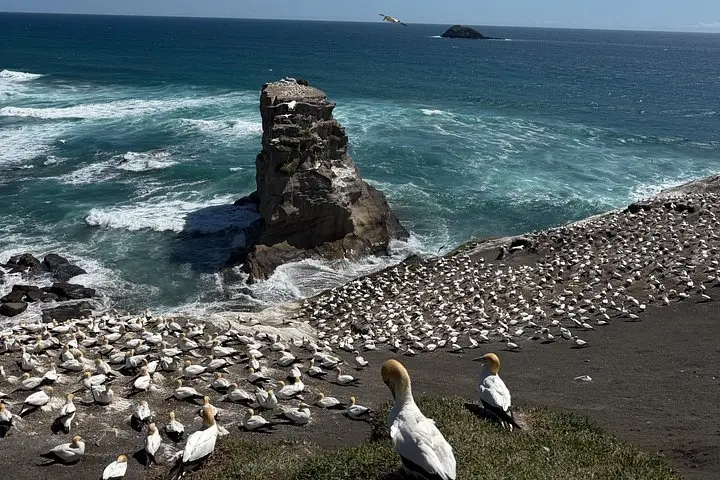
Muriwai’s colony—one of New Zealand’s most accessible mainland gannet sites—occupies cliff-top ledges where Australasian gannets breed from late winter into summer. The beach itself is a product of volcanic-era basalt ground down and carried by longshore currents, its iron-rich sand dark against the ocean.
Local iwi have long-standing connections to the coast and its resources; today the area is managed with both recreational use and wildlife protection in mind. The gannets arrived on mainland sites in the 20th century and have made Muriwai globally significant for seabird viewing.
On a private tour you’ll follow short walking tracks to viewing platforms, binoculars raised against wind that often dares you to stand still. Guides explain breeding cycles, chick-rearing and why disturbance matters; they’ll also brief you on safety at viewpoints and local cultural context.
Plan for strong coastal winds and changeable skies—layers and a windproof shell are non-negotiable. Morning and late-afternoon light are best for photography and calmer conditions; avoid approaching nests and never fly drones near the colony. From central Auckland the drive is roughly 40–50 minutes, and many private tours include door-to-door transport.
Whether you come for birdlife, geology, or raw west-coast atmosphere, Muriwai delivers a compact, high-impact coastal wildlife experience that’s both accessible and responsibly run.
Seasonal viewing runs roughly August–March; late spring and summer show active nesting and chicks, while August–October is when many pairs begin breeding.
It’s about a 40–50 minute drive from central Auckland depending on traffic; many private tours include pickup and drop-off from Auckland accommodations.
Public access is regulated—use the established tracks and viewing platforms and follow signage; do not approach nests or cross fenced areas.
Yes—this experience is rated easy and suitable for most ages, though cliff-edge viewpoints require supervision and stable mobility.
Shine Shuttle operates guided outdoor trips and adventures with an emphasis on safety, stewardship, and memorable experiences.
You step from the car into wind that carries salt and the crack of surf; the black sand at your feet seems to drink the light as the cliffs loom, and beyond them the gannets wheel like living white arrows.
You step from the car into wind that carries salt and the crack of surf; the black sand at your feet seems to drink the light as the cliffs loom, and beyond them the gannets wheel like living white arrows.
Muriwai’s colony—one of New Zealand’s most accessible mainland gannet sites—occupies cliff-top ledges where Australasian gannets breed from late winter into summer. The beach itself is a product of volcanic-era basalt ground down and carried by longshore currents, its iron-rich sand dark against the ocean.
Local iwi have long-standing connections to the coast and its resources; today the area is managed with both recreational use and wildlife protection in mind. The gannets arrived on mainland sites in the 20th century and have made Muriwai globally significant for seabird viewing.
On a private tour you’ll follow short walking tracks to viewing platforms, binoculars raised against wind that often dares you to stand still. Guides explain breeding cycles, chick-rearing and why disturbance matters; they’ll also brief you on safety at viewpoints and local cultural context.
Plan for strong coastal winds and changeable skies—layers and a windproof shell are non-negotiable. Morning and late-afternoon light are best for photography and calmer conditions; avoid approaching nests and never fly drones near the colony. From central Auckland the drive is roughly 40–50 minutes, and many private tours include door-to-door transport.
Whether you come for birdlife, geology, or raw west-coast atmosphere, Muriwai delivers a compact, high-impact coastal wildlife experience that’s both accessible and responsibly run.