THE ADVENTURE COLLECTIVE® · Independent discovery and booking for outdoor travel

Combine two of central Vietnam’s top cultural stops in one efficient day: My Son’s ruined Cham temples and Marble Mountain’s caves and pagodas. This private tour includes hotel pickup and lunch, plus local insights from a guide.
Combine two of central Vietnam’s top cultural stops in one efficient day: My Son’s ruined Cham temples and Marble Mountain’s caves and pagodas. This private tour includes hotel pickup and lunch, plus local insights from a guide.
You step out of the air‑conditioned van into a valley that feels older than the road that brought you. Towers of weathered brick rise among green rice paddies at My Son, their carved faces watching the slow turn of the season while the surrounding hills press in like guardians. Later, on the marble slopes above Da Nang, caves collect shadow and incense, and the sea’s breeze pushes through pagoda courtyards.
Verified experiences and guided adventures in the surrounding area.
Operated by Ha An Uyen Company · Hoi An, Quang Nam
You step out of the air‑conditioned van into a valley that feels older than the road that brought you. Towers of weathered brick rise among green rice paddies at My Son, their carved faces watching the slow turn of the season while the surrounding hills press in like guardians. Later, on the marble slopes above Da Nang, caves collect shadow and incense, and the sea’s breeze pushes through pagoda courtyards.
My Son was the ritual heart of the Champa kingdom from the 4th century; many sanctuaries here were rebuilt through the 7th–13th centuries, their sandstone and brick telling a story of Hindu forms adapted to local craft. Marble Mountain is a cluster of limestone and marble outcrops called the Five Elements—geology worn into staircases, grottoes, and Buddhist shrines. Local villages around Non Nuoc still carve stone by hand, and wartime traces remain in caves once used as infirmaries.
Practical guide: the tour combines roughly two hours at each site with hotel pickup and lunch, so expect 3–5 hours total. Paths at My Son are uneven and shaded; Marble Mountain adds stone steps and short vertical sections—good walking shoes and a light daypack are essential. Bring cash for small carvings or temple donations, a hat, and water; mornings are cooler and less crowded. Respect ropes and signage—ancient reliefs are fragile and protected. With a guide you’ll move efficiently between viewpoints, learn Cham iconography, and leave with a clearer sense of how culture and landscape shaped one another here.
For the private tour option admission to My Son and Marble Mountain is included—confirm at booking as options vary.
My Son is about a 45–60 minute drive west of Hoi An; Marble Mountain is a short drive north toward Da Nang.
The tour is family‑friendly, but both sites have uneven steps and surfaces—it’s not recommended for those with serious mobility restrictions.
Early morning avoids heat and peak crowds; late afternoon is cooler but can be busier at Marble Mountain.
Ha An Uyen Company operates guided outdoor trips and adventures with an emphasis on safety, stewardship, and memorable experiences.
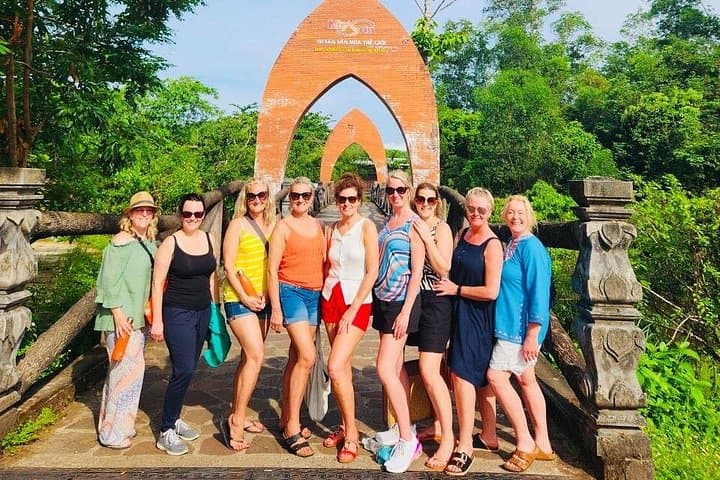

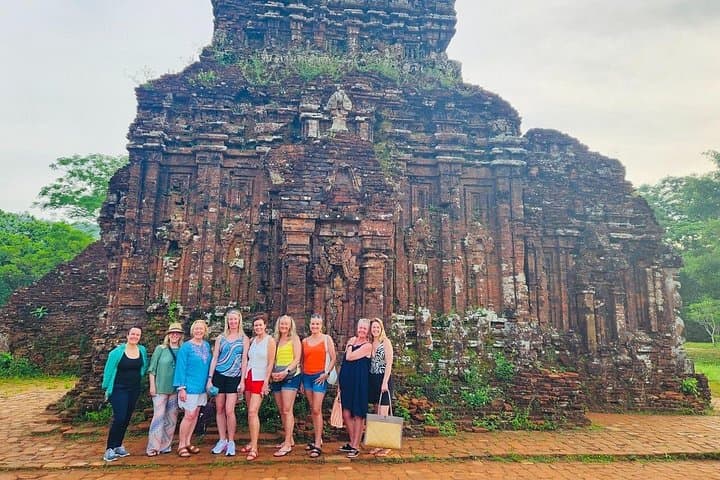
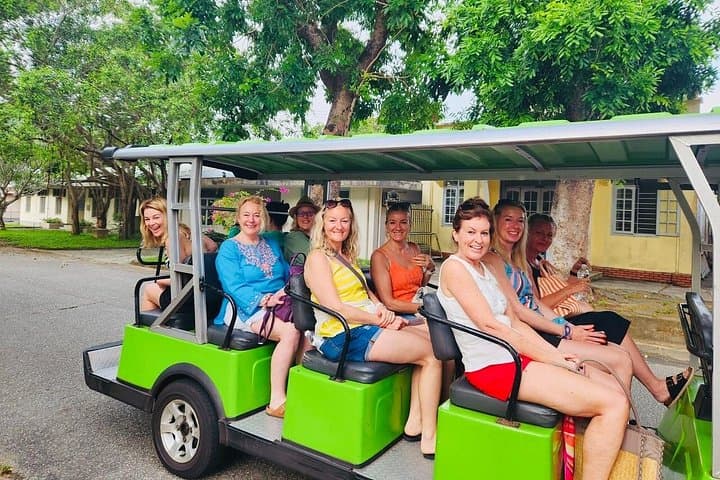
You step out of the air‑conditioned van into a valley that feels older than the road that brought you. Towers of weathered brick rise among green rice paddies at My Son, their carved faces watching the slow turn of the season while the surrounding hills press in like guardians. Later, on the marble slopes above Da Nang, caves collect shadow and incense, and the sea’s breeze pushes through pagoda courtyards.
You step out of the air‑conditioned van into a valley that feels older than the road that brought you. Towers of weathered brick rise among green rice paddies at My Son, their carved faces watching the slow turn of the season while the surrounding hills press in like guardians. Later, on the marble slopes above Da Nang, caves collect shadow and incense, and the sea’s breeze pushes through pagoda courtyards.
My Son was the ritual heart of the Champa kingdom from the 4th century; many sanctuaries here were rebuilt through the 7th–13th centuries, their sandstone and brick telling a story of Hindu forms adapted to local craft. Marble Mountain is a cluster of limestone and marble outcrops called the Five Elements—geology worn into staircases, grottoes, and Buddhist shrines. Local villages around Non Nuoc still carve stone by hand, and wartime traces remain in caves once used as infirmaries.
Practical guide: the tour combines roughly two hours at each site with hotel pickup and lunch, so expect 3–5 hours total. Paths at My Son are uneven and shaded; Marble Mountain adds stone steps and short vertical sections—good walking shoes and a light daypack are essential. Bring cash for small carvings or temple donations, a hat, and water; mornings are cooler and less crowded. Respect ropes and signage—ancient reliefs are fragile and protected. With a guide you’ll move efficiently between viewpoints, learn Cham iconography, and leave with a clearer sense of how culture and landscape shaped one another here.