THE ADVENTURE COLLECTIVE® · Independent discovery and booking for outdoor travel

Skip the beach clubs and see Mykonos’ quieter side on a private luxury minibus. In four hours you’ll visit Ano Mera, Armenistis Lighthouse, secluded coves and panoramic photo points with a local driver-guide.
Skip the beach clubs and see Mykonos’ quieter side on a private luxury minibus. In four hours you’ll visit Ano Mera, Armenistis Lighthouse, secluded coves and panoramic photo points with a local driver-guide.
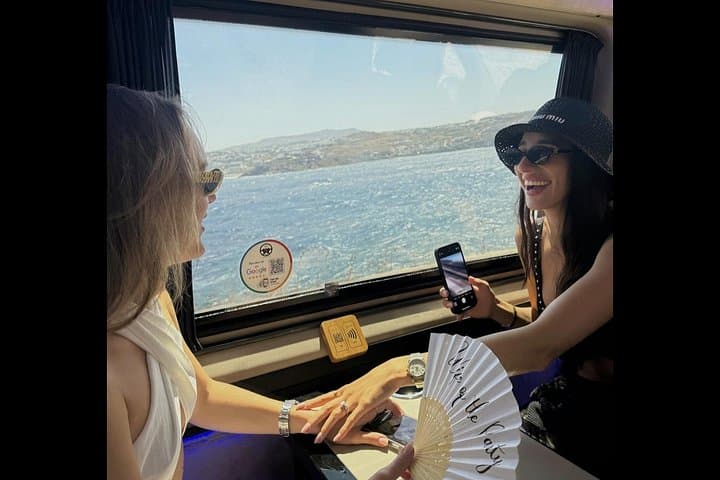
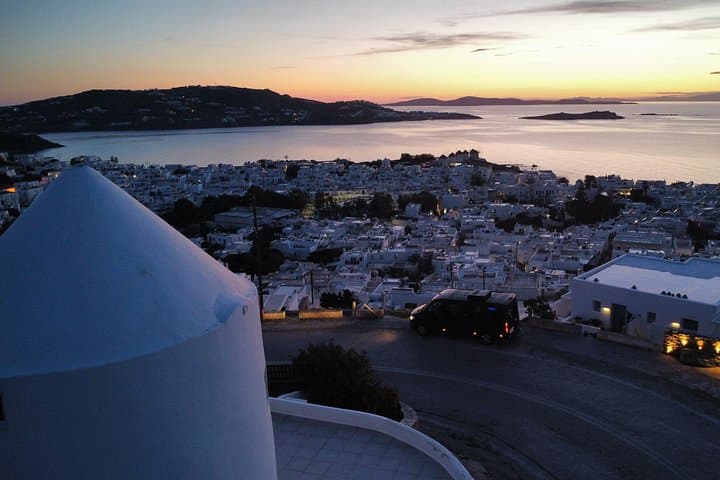
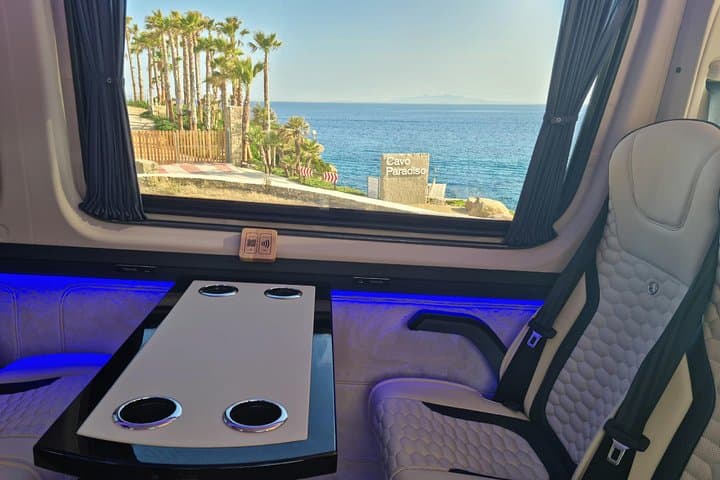
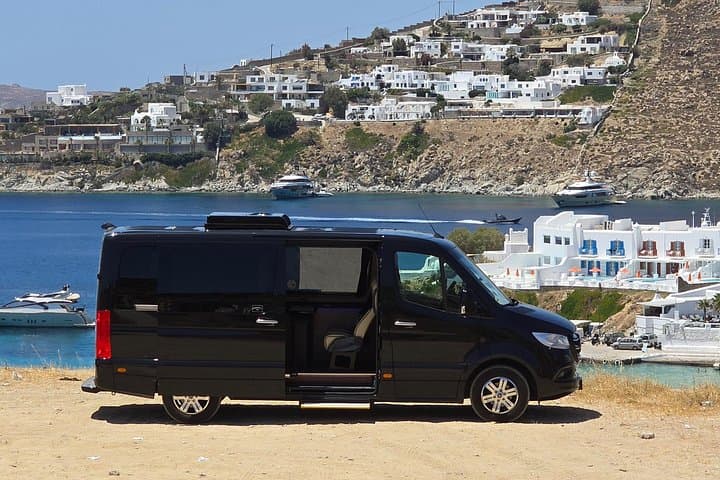
You step off the minibus on a wind-scoured promontory and the Aegean opens like a working map: white villages clinging to low hills, ribboned beaches, and a lighthouse keeping patient watch over shipping lanes. The Mercedes Sprinter hums quietly behind you — climate control, Wi‑Fi, and a driver-guide who knows each back road — and for four hours you trade beach crowds for the quieter face of Mykonos.
Verified experiences and guided adventures in the surrounding area.
Operated by SZS Mykonos Transfer · Mykonos, South Aegean
You step off the minibus on a wind-scoured promontory and the Aegean opens like a working map: white villages clinging to low hills, ribboned beaches, and a lighthouse keeping patient watch over shipping lanes. The Mercedes Sprinter hums quietly behind you — climate control, Wi‑Fi, and a driver-guide who knows each back road — and for four hours you trade beach crowds for the quieter face of Mykonos.
Begin with Ano Mera, where the 16th-century Panagia Tourliani monastery anchors village life; marble bell towers and a centuries-old icon still draw islanders on August 15. Geologically, Mykonos is a low, wind-swept mound of schist and granite; its soils are thin, stones dominate, and shorelines swing from pebble coves to long sandy stretches like Kalo Livadi. Culture here is compact and practical: small tavernas, pre-Christian ruins at Divounia, and fishing settlements that keep old rhythms alive.
The Armenistis lighthouse — built in 1891 after the Volta shipwreck — offers broad sea views; from there, the island’s north coast reads as both navigation history and modern lookout. Expect short, photo-friendly stops at Agios Sostis and Kalafatis, and a quiet stretch at Divounia if you want solitude.
Practical guidance: bring sun protection and sturdy shoes for village walks, carry cash for family-run tavernas, and plan the tour in morning or late afternoon to avoid peak heat. The pace is relaxed but timings are tight; respect the schedule to see all highlights.
Pickup and drop-off are arranged—confirm your pickup point when booking to coordinate times for hotels or the cruise port.
Yes; baby car seats (0–36 kg) are available upon request—note this on booking so the driver can prepare one.
Stops vary: short photo windows and longer visits (e.g., Panagia Tourliani) are scheduled—there’s typically time to walk, photograph, and grab a quick snack.
The tour runs in most conditions; cancellation for a full refund is available if canceled at least 24 hours prior. Heavy seas or storms may affect coastal stops.
SZS Mykonos Transfer operates guided outdoor trips and adventures with an emphasis on safety, stewardship, and memorable experiences.
You step off the minibus on a wind-scoured promontory and the Aegean opens like a working map: white villages clinging to low hills, ribboned beaches, and a lighthouse keeping patient watch over shipping lanes. The Mercedes Sprinter hums quietly behind you — climate control, Wi‑Fi, and a driver-guide who knows each back road — and for four hours you trade beach crowds for the quieter face of Mykonos.
You step off the minibus on a wind-scoured promontory and the Aegean opens like a working map: white villages clinging to low hills, ribboned beaches, and a lighthouse keeping patient watch over shipping lanes. The Mercedes Sprinter hums quietly behind you — climate control, Wi‑Fi, and a driver-guide who knows each back road — and for four hours you trade beach crowds for the quieter face of Mykonos.
Begin with Ano Mera, where the 16th-century Panagia Tourliani monastery anchors village life; marble bell towers and a centuries-old icon still draw islanders on August 15. Geologically, Mykonos is a low, wind-swept mound of schist and granite; its soils are thin, stones dominate, and shorelines swing from pebble coves to long sandy stretches like Kalo Livadi. Culture here is compact and practical: small tavernas, pre-Christian ruins at Divounia, and fishing settlements that keep old rhythms alive.
The Armenistis lighthouse — built in 1891 after the Volta shipwreck — offers broad sea views; from there, the island’s north coast reads as both navigation history and modern lookout. Expect short, photo-friendly stops at Agios Sostis and Kalafatis, and a quiet stretch at Divounia if you want solitude.
Practical guidance: bring sun protection and sturdy shoes for village walks, carry cash for family-run tavernas, and plan the tour in morning or late afternoon to avoid peak heat. The pace is relaxed but timings are tight; respect the schedule to see all highlights.