THE ADVENTURE COLLECTIVE® · Independent discovery and booking for outdoor travel

Spend eight hours exploring Nara’s ancient temples, roaming deer, and quiet merchant lanes with a national government‑licensed guide. Choose a customized itinerary of 3–4 highlights—Todaiji, Kasuga Taisha, Wakakusa and more—on a walkable, accessible day trip from Kyoto.
Spend eight hours exploring Nara’s ancient temples, roaming deer, and quiet merchant lanes with a national government‑licensed guide. Choose a customized itinerary of 3–4 highlights—Todaiji, Kasuga Taisha, Wakakusa and more—on a walkable, accessible day trip from Kyoto.
You step off the train or meet your guide in Kyoto as the morning light warms temple roofs; within an hour you’re walking beneath cedar alleys toward Nara Park where deer thread between stone lanterns and pilgrims. The rhythm of the day is a steady, human pace—short walks between world-class temples, a climb up a grassy slope for a city view, and time at museums and merchant lanes.
Verified experiences and guided adventures in the surrounding area.
Operated by Japan Guide Agency · Nara, Nara Prefecture
You step off the train or meet your guide in Kyoto as the morning light warms temple roofs; within an hour you’re walking beneath cedar alleys toward Nara Park where deer thread between stone lanterns and pilgrims. The rhythm of the day is a steady, human pace—short walks between world-class temples, a climb up a grassy slope for a city view, and time at museums and merchant lanes.
Nara was Japan’s first permanent capital (710–794), and its layout, temples and shrines—Todaiji, Kasuga Taisha, Kofukuji—still reveal that early political and religious geography. Geologically the plain sits on alluvial soils framed by low hills like Mount Wakakusa (≈350 m), whose grassy flank provides quick elevation for sweeping views. Culturally the city preserves Heian and Nara-period architecture, machiya merchant houses in Naramachi, and living traditions of shrine festivals.
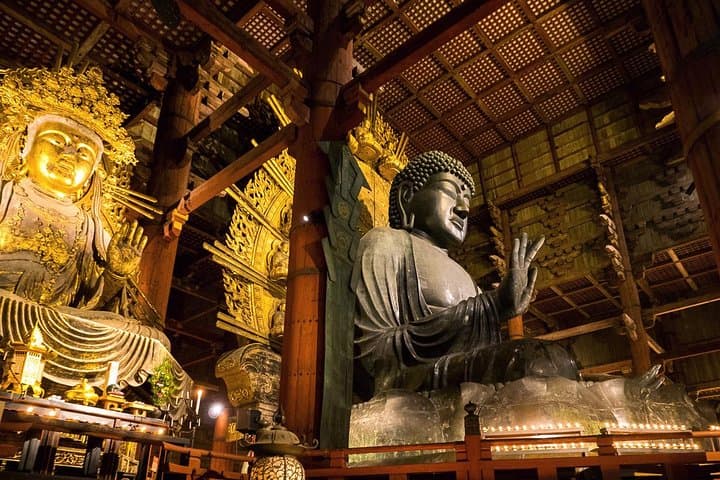
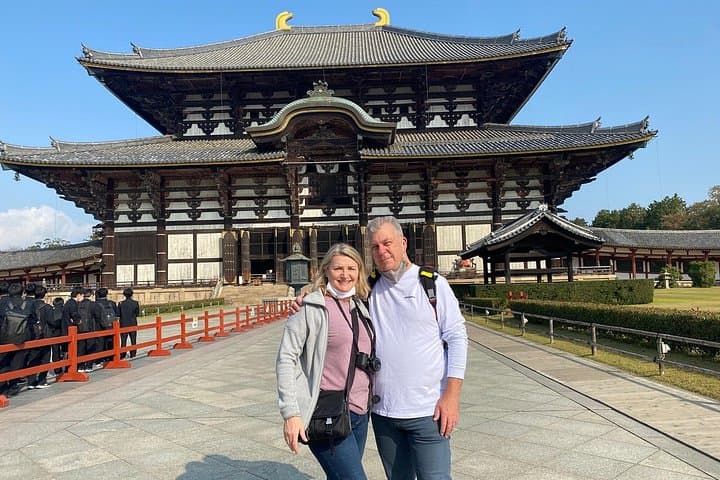
On an 8‑hour private tour with a national government-licensed guide you’ll choose 3–4 sites from a curated list to match pace and interests: big‑hall Buddhism at Todaiji, lantern‑lined Kasuga paths, quiet museum galleries, or a short walk up Wakakusa. Most routes are paved or compacted gravel; expect flat urban walking with a short steep section if you climb the mountain (15–30 minutes to a mid-plateau).
Practical edge: start early to avoid crowds and temple service times, carry water and small change for garden or inner‑shrine fees, and follow your guide’s local etiquette brief—do not feed deer by hand and remove shoes where required. The private format makes timing flexible; bring comfortable shoes, a light rain layer, and a curiosity for both architecture and everyday Nara life.
Meet-up is arranged on foot within a designated area of Kyoto; the guide will confirm the exact meeting point when the booking is finalized.
Yes — the private format lets you choose 3–4 sites from the provided list to match your interests and pacing.
Many of Nara’s main attractions and paths are wheelchair accessible, but some inner shrine areas and the Wakakusa slope have steps or uneven surfaces—check specific site access with your guide.
Deer are protected and habituated; observe from a distance, avoid feeding by hand, and follow your guide’s advice to prevent bites or nips.
Japan Guide Agency operates guided outdoor trips and adventures with an emphasis on safety, stewardship, and memorable experiences.

You step off the train or meet your guide in Kyoto as the morning light warms temple roofs; within an hour you’re walking beneath cedar alleys toward Nara Park where deer thread between stone lanterns and pilgrims. The rhythm of the day is a steady, human pace—short walks between world-class temples, a climb up a grassy slope for a city view, and time at museums and merchant lanes.
You step off the train or meet your guide in Kyoto as the morning light warms temple roofs; within an hour you’re walking beneath cedar alleys toward Nara Park where deer thread between stone lanterns and pilgrims. The rhythm of the day is a steady, human pace—short walks between world-class temples, a climb up a grassy slope for a city view, and time at museums and merchant lanes.
Nara was Japan’s first permanent capital (710–794), and its layout, temples and shrines—Todaiji, Kasuga Taisha, Kofukuji—still reveal that early political and religious geography. Geologically the plain sits on alluvial soils framed by low hills like Mount Wakakusa (≈350 m), whose grassy flank provides quick elevation for sweeping views. Culturally the city preserves Heian and Nara-period architecture, machiya merchant houses in Naramachi, and living traditions of shrine festivals.
On an 8‑hour private tour with a national government-licensed guide you’ll choose 3–4 sites from a curated list to match pace and interests: big‑hall Buddhism at Todaiji, lantern‑lined Kasuga paths, quiet museum galleries, or a short walk up Wakakusa. Most routes are paved or compacted gravel; expect flat urban walking with a short steep section if you climb the mountain (15–30 minutes to a mid-plateau).
Practical edge: start early to avoid crowds and temple service times, carry water and small change for garden or inner‑shrine fees, and follow your guide’s local etiquette brief—do not feed deer by hand and remove shoes where required. The private format makes timing flexible; bring comfortable shoes, a light rain layer, and a curiosity for both architecture and everyday Nara life.