THE ADVENTURE COLLECTIVE® · Independent discovery and booking for outdoor travel

A private, full-day guided tour that follows New Zealand units across the Western Front, from Arras tunnels to the Somme craters and preserved trenches. Expect a driven itinerary with short walks, museum stops, and tailored visits to family-linked sites.
A private, full-day guided tour that follows New Zealand units across the Western Front, from Arras tunnels to the Somme craters and preserved trenches. Expect a driven itinerary with short walks, museum stops, and tailored visits to family-linked sites.
On a gray morning in northern France the minibus banks off a narrow lane and the guide points to chalky slopes where shellfire carved the fields. The day unfolds along the Western Front: subterranean tunnels at Arras, the churned earth of the Somme, and preserved trench lines at Beaumont-Hamel. These places feel patient; the landscape remembers.
Verified experiences and guided adventures in the surrounding area.
Operated by Chemins d'Histoire Battlefield Tours · Arras, Hauts-de-France
On a gray morning in northern France the minibus banks off a narrow lane and the guide points to chalky slopes where shellfire carved the fields. The day unfolds along the Western Front: subterranean tunnels at Arras, the churned earth of the Somme, and preserved trench lines at Beaumont-Hamel. These places feel patient; the landscape remembers.
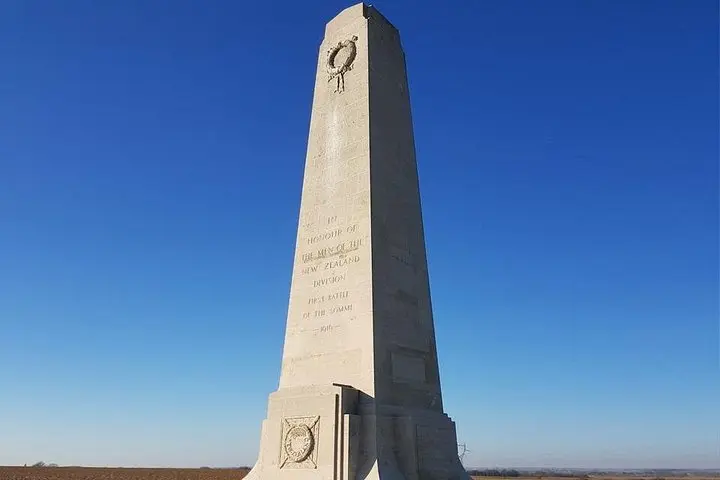
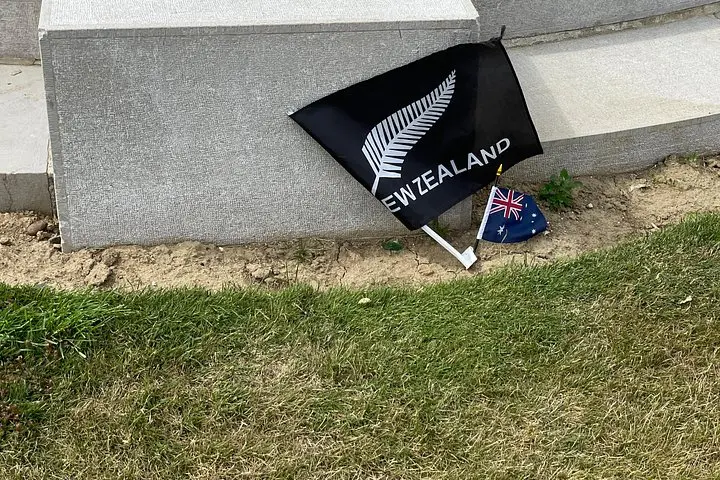
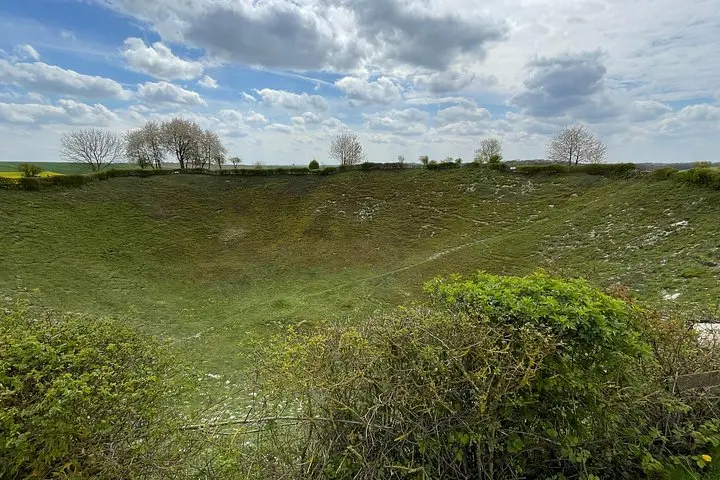
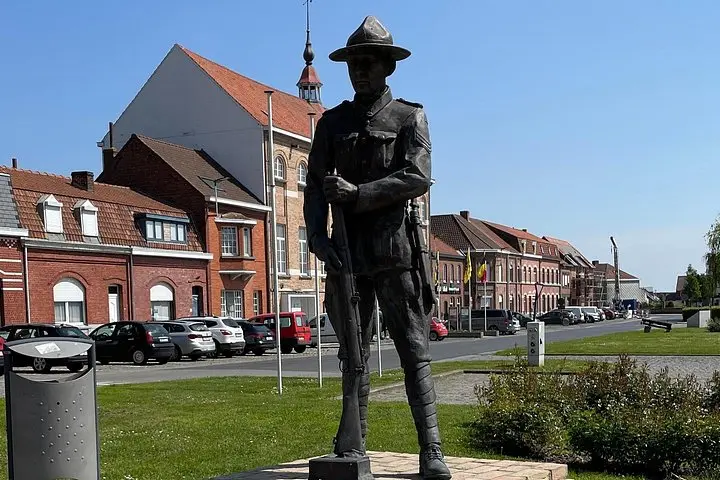
The route traces sites where New Zealand units fought in 1916–18, placing modern visitors against geology of chalk and clay that shaped drainage, dugouts, and mine craters like Lochnagar. Towns such as Bapaume and Pozières show both wartime scars and practical rebuilding—stone churches, memorials, and small museums (Tommy Museum) that frame personal stories. Cultural touchstones include regimental memorials and annual ceremonies that reinforce the New Zealand connection to this land.
Practical guidance is concrete: this private, fully guided 7–8 hour tour is driven, with short walks at memorials, craters, and trenches—expect uneven ground, exposed rims, and steps into tunnel exhibits. Wear sturdy walking shoes, layer for variable northern French weather, and bring ID for museum entries. Lunch is provided or self-selected at museum cafés; notify the operator of family names or special sites in advance so the itinerary can be tailored. Photography is welcome, but respect memorial etiquette and cemetery signage. Mobility limitations are accommodated to a degree, but some preserved trenches and crater rims are not wheelchair-accessible. Book with at least 24-hour cancellation flexibility; the private format delivers an intimate, focused experience across a landscape that still speaks of its past.
Yes—this is a strictly private tour and can be tailored in advance to focus on specific battles, cemeteries, or family-related sites.
Most of the day is driven; expect multiple short walks of 10–45 minutes on uneven ground, crater rims, and small museum sites.
Admission is included for scheduled sites like the Arras tunnels and select museum entries; bring ID and check accessibility at specific locations.
Full refund if cancelled at least 24 hours before departure; cancellations within 24 hours are non-refundable per operator policy.
Chemins d'Histoire Battlefield Tours operates guided outdoor trips and adventures with an emphasis on safety, stewardship, and memorable experiences.
On a gray morning in northern France the minibus banks off a narrow lane and the guide points to chalky slopes where shellfire carved the fields. The day unfolds along the Western Front: subterranean tunnels at Arras, the churned earth of the Somme, and preserved trench lines at Beaumont-Hamel. These places feel patient; the landscape remembers.
On a gray morning in northern France the minibus banks off a narrow lane and the guide points to chalky slopes where shellfire carved the fields. The day unfolds along the Western Front: subterranean tunnels at Arras, the churned earth of the Somme, and preserved trench lines at Beaumont-Hamel. These places feel patient; the landscape remembers.
The route traces sites where New Zealand units fought in 1916–18, placing modern visitors against geology of chalk and clay that shaped drainage, dugouts, and mine craters like Lochnagar. Towns such as Bapaume and Pozières show both wartime scars and practical rebuilding—stone churches, memorials, and small museums (Tommy Museum) that frame personal stories. Cultural touchstones include regimental memorials and annual ceremonies that reinforce the New Zealand connection to this land.
Practical guidance is concrete: this private, fully guided 7–8 hour tour is driven, with short walks at memorials, craters, and trenches—expect uneven ground, exposed rims, and steps into tunnel exhibits. Wear sturdy walking shoes, layer for variable northern French weather, and bring ID for museum entries. Lunch is provided or self-selected at museum cafés; notify the operator of family names or special sites in advance so the itinerary can be tailored. Photography is welcome, but respect memorial etiquette and cemetery signage. Mobility limitations are accommodated to a degree, but some preserved trenches and crater rims are not wheelchair-accessible. Book with at least 24-hour cancellation flexibility; the private format delivers an intimate, focused experience across a landscape that still speaks of its past.