THE ADVENTURE COLLECTIVE® · Independent discovery and booking for outdoor travel

Spend a day moving between the packed lanes of Old Delhi and the broad, formal avenues of New Delhi. This private full-day tour pairs a Chandni Chowk rickshaw ride with visits to Jama Masjid, Red Fort, India Gate and key monuments—ideal for first-time visitors who want a curated grounding in Delhi’s layered history.
Spend a day moving between the packed lanes of Old Delhi and the broad, formal avenues of New Delhi. This private full-day tour pairs a Chandni Chowk rickshaw ride with visits to Jama Masjid, Red Fort, India Gate and key monuments—ideal for first-time visitors who want a curated grounding in Delhi’s layered history.
The day opens in a canyon of spice-scented alleys: rickshaw bells thread through Chandni Chowk as vendors call out, and the minarets of Jama Masjid loom above sun-warmed stone. A private car ferries you next to the wide, formal avenues of New Delhi—India Gate and the stately Rashtrapati Bhavan standing like civic punctuation against the sky.
Verified experiences and guided adventures in the surrounding area.
Operated by Agra Trip · New Delhi, Delhi
The day opens in a canyon of spice-scented alleys: rickshaw bells thread through Chandni Chowk as vendors call out, and the minarets of Jama Masjid loom above sun-warmed stone. A private car ferries you next to the wide, formal avenues of New Delhi—India Gate and the stately Rashtrapati Bhavan standing like civic punctuation against the sky.
Old Delhi began as Shahjahanabad in 1639 under Mughal rule; its narrow lanes and market overhangs still carry that dense, lived-in history. New Delhi is a later, imperial project by Edwin Lutyens and Herbert Baker—broad axes, planned vistas, colonial-era architecture that contrasts sharply with the Mughal fabric to the north. Geologically this plain is part of the Indo-Gangetic alluvium, flat and forgiving underfoot, which is why the city sprawled here for centuries.
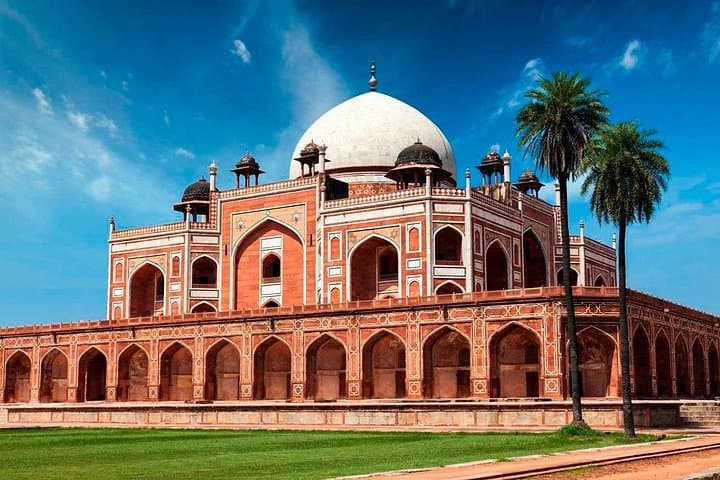
Expect a mix of walking on uneven bazaar stones and short drives in air-conditioned comfort. The itinerary typically covers Jama Masjid, Chandni Chowk (with a rickshaw ride), Red Fort exterior, then the New Delhi circuit: Humayun’s Tomb, Qutub Minar, Lotus Temple, India Gate and government buildings. Guides provide cultural context—religious practices, Mughal-era anecdotes, and modern political life—while you move between sights.
Practical guidance: start early to avoid peak heat and crowds, carry a refillable water bottle and a light scarf for modest dress in religious sites. Comfortable shoes matter—expect 2–4 miles of walking spread across the day. If you choose the all-inclusive option, monument tickets and lunch are bundled; otherwise budget for entry fees and a proper lunch stop. A private tour gives flexibility—ask your guide to skip or extend stops to match your pace.
Yes—this private itinerary includes a short rickshaw ride through Chandni Chowk as part of the Old Delhi section.
Entry is included only if you select the all-inclusive option; otherwise tickets are paid on-site or arranged by the guide as an add-on.
Pickup and drop-off at Delhi hotels or the airport are included in the tour package.
Yes; the tour is rated easy, but it involves walking and some stairs at monuments—notify the operator of mobility needs so the itinerary can be adjusted.
Agra Trip operates guided outdoor trips and adventures with an emphasis on safety, stewardship, and memorable experiences.


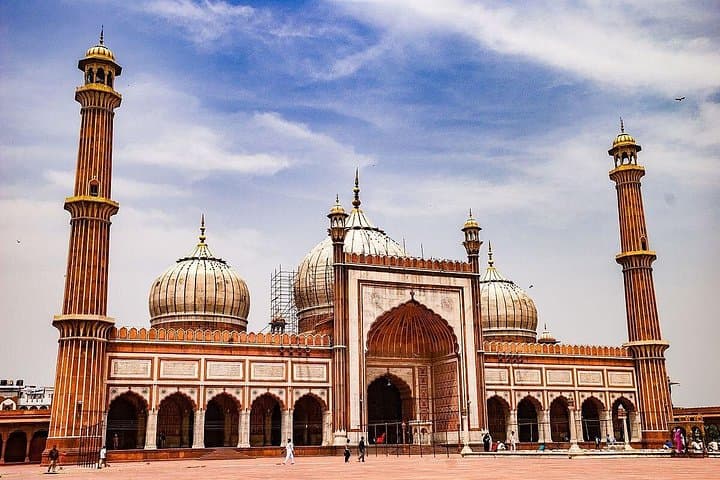
The day opens in a canyon of spice-scented alleys: rickshaw bells thread through Chandni Chowk as vendors call out, and the minarets of Jama Masjid loom above sun-warmed stone. A private car ferries you next to the wide, formal avenues of New Delhi—India Gate and the stately Rashtrapati Bhavan standing like civic punctuation against the sky.
The day opens in a canyon of spice-scented alleys: rickshaw bells thread through Chandni Chowk as vendors call out, and the minarets of Jama Masjid loom above sun-warmed stone. A private car ferries you next to the wide, formal avenues of New Delhi—India Gate and the stately Rashtrapati Bhavan standing like civic punctuation against the sky.
Old Delhi began as Shahjahanabad in 1639 under Mughal rule; its narrow lanes and market overhangs still carry that dense, lived-in history. New Delhi is a later, imperial project by Edwin Lutyens and Herbert Baker—broad axes, planned vistas, colonial-era architecture that contrasts sharply with the Mughal fabric to the north. Geologically this plain is part of the Indo-Gangetic alluvium, flat and forgiving underfoot, which is why the city sprawled here for centuries.
Expect a mix of walking on uneven bazaar stones and short drives in air-conditioned comfort. The itinerary typically covers Jama Masjid, Chandni Chowk (with a rickshaw ride), Red Fort exterior, then the New Delhi circuit: Humayun’s Tomb, Qutub Minar, Lotus Temple, India Gate and government buildings. Guides provide cultural context—religious practices, Mughal-era anecdotes, and modern political life—while you move between sights.
Practical guidance: start early to avoid peak heat and crowds, carry a refillable water bottle and a light scarf for modest dress in religious sites. Comfortable shoes matter—expect 2–4 miles of walking spread across the day. If you choose the all-inclusive option, monument tickets and lunch are bundled; otherwise budget for entry fees and a proper lunch stop. A private tour gives flexibility—ask your guide to skip or extend stops to match your pace.