THE ADVENTURE COLLECTIVE® · Independent discovery and booking for outdoor travel

Spend a full day walking between two of central Vietnam’s most evocative sites: the jungle-framed ruins of My Son Sanctuary and the lantern-lit streets of Hoi An Ancient City. This private tour includes transport, admission, a local lunch and a guide to bring the architecture and histories to life.
Spend a full day walking between two of central Vietnam’s most evocative sites: the jungle-framed ruins of My Son Sanctuary and the lantern-lit streets of Hoi An Ancient City. This private tour includes transport, admission, a local lunch and a guide to bring the architecture and histories to life.
Morning light filters through palms as your private car winds away from Da Nang toward a valley of red-brick towers—My Son’s temples rise from paddy fields like sentries of a lost kingdom. The air smells of wet earth and incense; the guide’s voice threads history into the stones while you step across mossy thresholds and uneven paths.
Verified experiences and guided adventures in the surrounding area.
Operated by Da Nang Hoi An Private Shore Excursion & Local Tours · Hoi An, Quang Nam
Morning light filters through palms as your private car winds away from Da Nang toward a valley of red-brick towers—My Son’s temples rise from paddy fields like sentries of a lost kingdom. The air smells of wet earth and incense; the guide’s voice threads history into the stones while you step across mossy thresholds and uneven paths.
My Son was the religious heart of the Champa kingdom from roughly the 4th to the 13th centuries; the ruins sit on volcanic red clay and are catalogued as a UNESCO site after decades of restoration. Later, Hoi An grew into a bustling trading port—Japanese merchants, Chinese guilds and European traders left wood, plaster and laneways that still shape the town’s streets.
Expect mostly flat walking in both sites: plan on 3–6 km (2–4 miles) of walking total with short stair sections at temple pavilions and a handful of uneven, rocky surfaces. The Thu Bon River threads Hoi An’s waterfront and dares you to pause at a café for a cooling drink as lanterns begin to glow.
Practical edge: this is an all-day, private tour (8–9 hours) with hotel pickup, entrance fees and lunch included. Bring sun protection, sturdy low-profile shoes for temple trails, and a small daypack for water and camera gear. Modest dress is required at religious sites—shoulders and knees covered—and carry some local currency for market purchases.
Timing your visit early in the morning or late afternoon reduces crowds and heat; the guide’s local knowledge turns architectural details into a map of trade, faith and survival in central Vietnam.
The tour runs about 8–9 hours and includes private transport, licensed English-speaking guide, entrance tickets to My Son and Hoi An, bottled water and a set-menu lunch.
Children can join but must be supervised; the tour requires walking on uneven ground and short stair sections, so limited mobility visitors may find parts challenging.
Bring some Vietnamese dong for market purchases, tips and snacks; small vendors in Hoi An typically accept cash only.
Modest attire is expected: shoulders and knees should be covered when entering religious structures at My Son and assembly halls in Hoi An.
Da Nang Hoi An Private Shore Excursion & Local Tours operates guided outdoor trips and adventures with an emphasis on safety, stewardship, and memorable experiences.
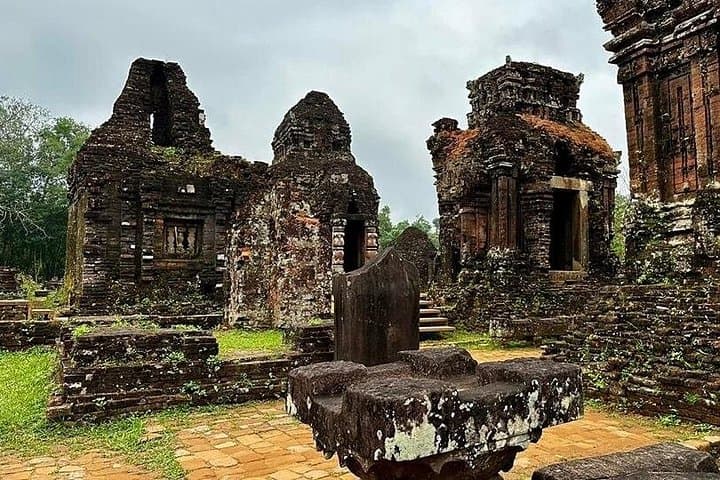


Morning light filters through palms as your private car winds away from Da Nang toward a valley of red-brick towers—My Son’s temples rise from paddy fields like sentries of a lost kingdom. The air smells of wet earth and incense; the guide’s voice threads history into the stones while you step across mossy thresholds and uneven paths.
Morning light filters through palms as your private car winds away from Da Nang toward a valley of red-brick towers—My Son’s temples rise from paddy fields like sentries of a lost kingdom. The air smells of wet earth and incense; the guide’s voice threads history into the stones while you step across mossy thresholds and uneven paths.
My Son was the religious heart of the Champa kingdom from roughly the 4th to the 13th centuries; the ruins sit on volcanic red clay and are catalogued as a UNESCO site after decades of restoration. Later, Hoi An grew into a bustling trading port—Japanese merchants, Chinese guilds and European traders left wood, plaster and laneways that still shape the town’s streets.
Expect mostly flat walking in both sites: plan on 3–6 km (2–4 miles) of walking total with short stair sections at temple pavilions and a handful of uneven, rocky surfaces. The Thu Bon River threads Hoi An’s waterfront and dares you to pause at a café for a cooling drink as lanterns begin to glow.
Practical edge: this is an all-day, private tour (8–9 hours) with hotel pickup, entrance fees and lunch included. Bring sun protection, sturdy low-profile shoes for temple trails, and a small daypack for water and camera gear. Modest dress is required at religious sites—shoulders and knees covered—and carry some local currency for market purchases.
Timing your visit early in the morning or late afternoon reduces crowds and heat; the guide’s local knowledge turns architectural details into a map of trade, faith and survival in central Vietnam.