THE ADVENTURE COLLECTIVE® · Independent discovery and booking for outdoor travel

A full-day private tour to Phnom Kulen explores the riverbed Shiva lingas, a reclining Buddha carved from stone, and cooling waterfall pools. Expect motorbike segments, short jungle treks, and guided cultural interpretation with local guides.
A full-day private tour to Phnom Kulen explores the riverbed Shiva lingas, a reclining Buddha carved from stone, and cooling waterfall pools. Expect motorbike segments, short jungle treks, and guided cultural interpretation with local guides.
At first light the road north from Siem Reap opens into humid jungle and the hum of motorbike engines — the day’s pace set by ancient stone and rushing water. Phnom Kulen climbs out of flat rice plains as a low, forested massif; rivers thread the hill with channels carved over centuries, and the shallow bed upstream reveals thousands of small carved lingas that the current teases into view.
Verified experiences and guided adventures in the surrounding area.
Operated by Naga Angkor Tour · Siem Reap, Siem Reap Province
At first light the road north from Siem Reap opens into humid jungle and the hum of motorbike engines — the day’s pace set by ancient stone and rushing water. Phnom Kulen climbs out of flat rice plains as a low, forested massif; rivers thread the hill with channels carved over centuries, and the shallow bed upstream reveals thousands of small carved lingas that the current teases into view.
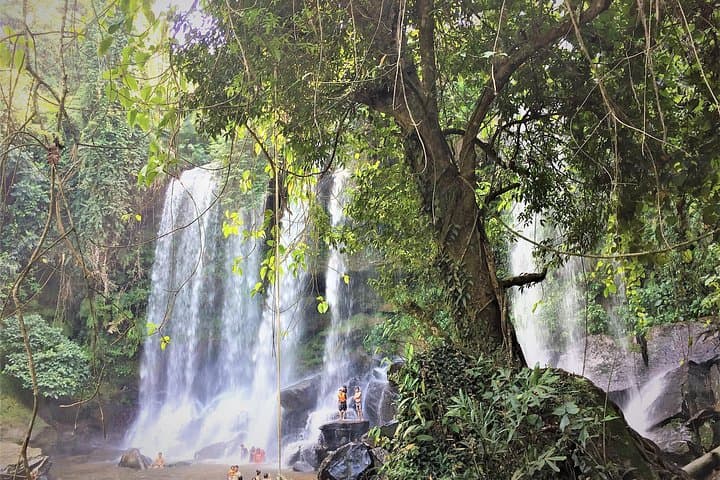
The hill is where Jayavarman II staged the 9th-century “devaraja” ritual that helped birth the Khmer state; later eras left a reclining Buddha carved directly from bedrock and dozens of collapsed shrine mounds now half-swallowed by forest. Geologically, Kulen is an uplifted sandstone plateau; rain funnels through narrow channels and drops over stacked ledges into plunge pools that dare you to swim.
Culturally the site is both pilgrimage and picnic: locals come to the sacred ponds and bathing spots, while guides point out seasonal shifts in the shallow pools’ mineral colors. Expect a mix of short treks (some slippery stone), guided interpretation of the riverbed lingas, a visit to the reclining Buddha, and an hour for bathing beneath the main fall.
Practical edge: carry a dry bag and wear shoes that grip wet rock. Morning departures avoid mid-day sun and bring clearer light for photographing the carved lingas. Respect shrine areas — cover shoulders and remove hats at marked sites. In the rainy season channels deepen and trails get slick; allow extra time for the day and listen to your guide for safe swim zones.
Most tours include pickup; this private option uses motorbikes with pickup and drop-off from central Siem Reap locations.
Guides designate safe swim areas; currents can be strong after heavy rain so always follow the guide’s instructions.
Visitors under 12 generally do not need an Angkor temple pass, but bring passport copies for children as required by operators.
Flip-flops are not recommended—choose slip-resistant water shoes for traction on wet stone and riverbeds.
Naga Angkor Tour operates guided outdoor trips and adventures with an emphasis on safety, stewardship, and memorable experiences.
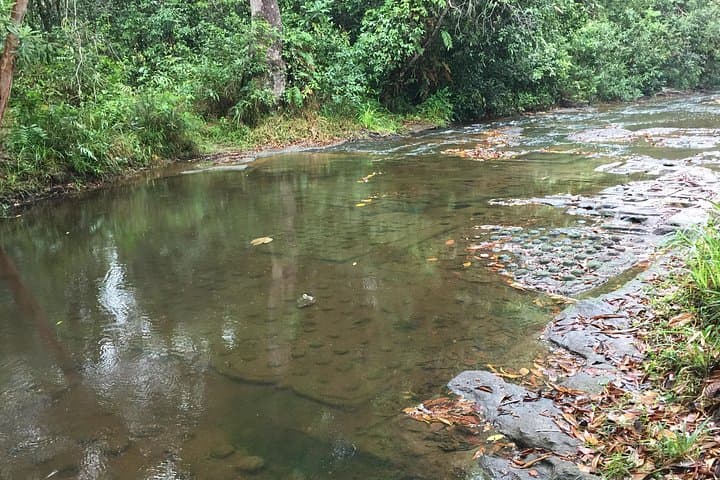


At first light the road north from Siem Reap opens into humid jungle and the hum of motorbike engines — the day’s pace set by ancient stone and rushing water. Phnom Kulen climbs out of flat rice plains as a low, forested massif; rivers thread the hill with channels carved over centuries, and the shallow bed upstream reveals thousands of small carved lingas that the current teases into view.
At first light the road north from Siem Reap opens into humid jungle and the hum of motorbike engines — the day’s pace set by ancient stone and rushing water. Phnom Kulen climbs out of flat rice plains as a low, forested massif; rivers thread the hill with channels carved over centuries, and the shallow bed upstream reveals thousands of small carved lingas that the current teases into view.
The hill is where Jayavarman II staged the 9th-century “devaraja” ritual that helped birth the Khmer state; later eras left a reclining Buddha carved directly from bedrock and dozens of collapsed shrine mounds now half-swallowed by forest. Geologically, Kulen is an uplifted sandstone plateau; rain funnels through narrow channels and drops over stacked ledges into plunge pools that dare you to swim.
Culturally the site is both pilgrimage and picnic: locals come to the sacred ponds and bathing spots, while guides point out seasonal shifts in the shallow pools’ mineral colors. Expect a mix of short treks (some slippery stone), guided interpretation of the riverbed lingas, a visit to the reclining Buddha, and an hour for bathing beneath the main fall.
Practical edge: carry a dry bag and wear shoes that grip wet rock. Morning departures avoid mid-day sun and bring clearer light for photographing the carved lingas. Respect shrine areas — cover shoulders and remove hats at marked sites. In the rainy season channels deepen and trails get slick; allow extra time for the day and listen to your guide for safe swim zones.