THE ADVENTURE COLLECTIVE® · Independent discovery and booking for outdoor travel

Step onto the Giza Plateau for a private, photographer-led session that captures the Great Pyramid, Second Pyramid, and the Sphinx. This practical two-hour tour uses the shuttle system and optional camel or horse rides to place you in iconic frames with minimal fuss.
Step onto the Giza Plateau for a private, photographer-led session that captures the Great Pyramid, Second Pyramid, and the Sphinx. This practical two-hour tour uses the shuttle system and optional camel or horse rides to place you in iconic frames with minimal fuss.
The plateau opens like a stage. A private driver slides through Cairo’s edge and deposits you where stone meets sky; the Great Pyramid towers ahead, dust and light trading places across its faces. A photographer reads the light, and the desert—flat, wind-brushed, insistent—pushes forward a horizon that makes every silhouette cinematic.
Verified experiences and guided adventures in the surrounding area.
Operated by Egypt Discovery Tours · Giza, Cairo Governorate
The plateau opens like a stage. A private driver slides through Cairo’s edge and deposits you where stone meets sky; the Great Pyramid towers ahead, dust and light trading places across its faces. A photographer reads the light, and the desert—flat, wind-brushed, insistent—pushes forward a horizon that makes every silhouette cinematic.
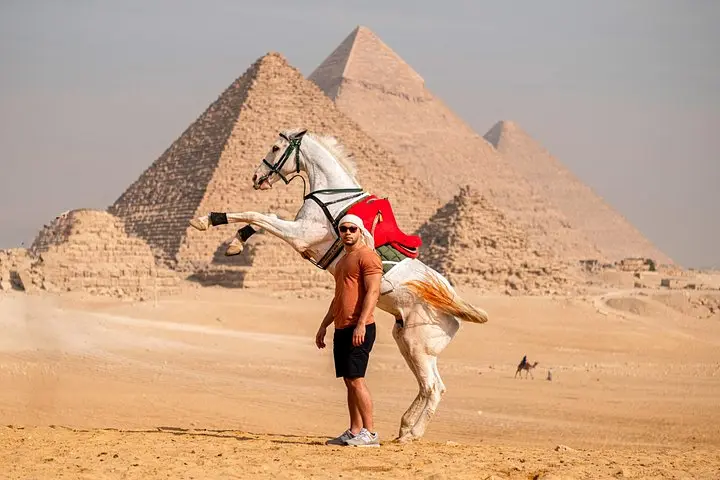
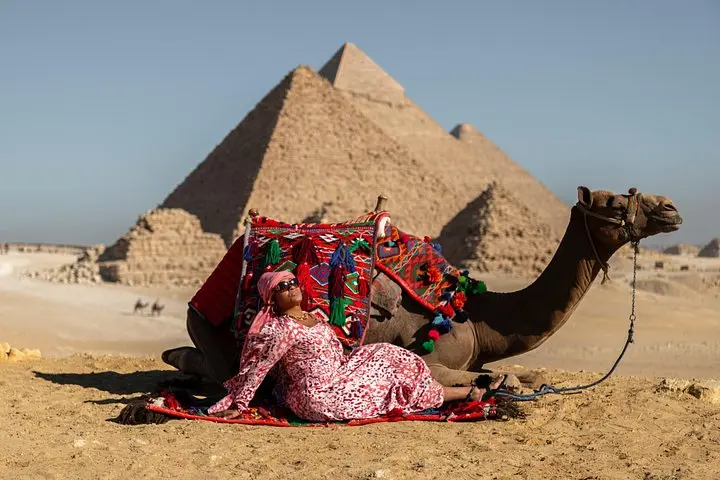
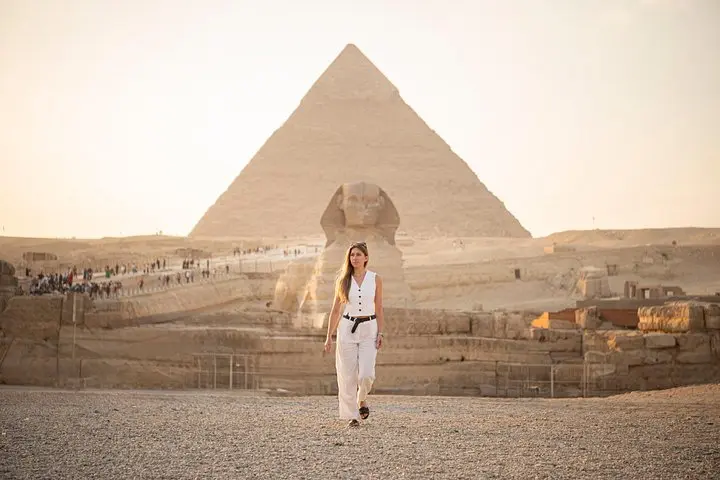
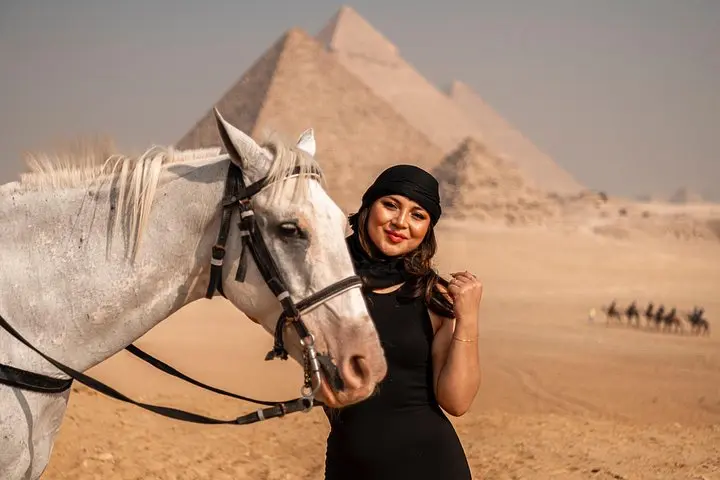
This two-hour session moves on a practical loop: shuttle hop to Panorama Point, a brief camel or horse ride to a framed vista, a close-up by the stones between the Great and Second Pyramid, and final portraits at the Great Sphinx. The plateau itself is an Old Kingdom necropolis—construction of the Great Pyramid dates to around 2560 BCE—built from quarried limestone and aligned with astronomical precision. The Sphinx, carved from bedrock, keeps a quiet, eroded watch that speaks to millennia of human passage and shifting sands.
Photographers favor early morning or late afternoon light; the new shuttle system trims walking time and concentrates shots into distinct, accessible stations. Permits and clothing rules matter here—formal gowns and exaggerated historical costumes are restricted, and modest attire eases movement and access.
Practical notes: bring sun protection and a power bank, plan for 2 hours including transit, and expect 40–50 edited images delivered digitally within a few days. Stay on marked routes, be mindful of local sensibilities, and allow a little extra time if you opt for camel portraits—these animals set their own pace. With preparation, the experience balances effortless portraiture and sober contact with one of humanity’s oldest landscapes.
No. Entrance fees to the Giza Plateau and specific pyramid interior access are not included; the tour uses public shuttle stops and exterior viewpoints.
Yes—short camel or horse rides at Panorama Point are optional and timed for photos; rides are brief and suitable for most people but check with your guide for any restrictions.
Photos are delivered via Google Drive, typically 3–4 days after the shoot, with around 40–50 enhanced images provided.
Formal wedding-style gowns and tuxedos require permits and prior approval; exaggerated historical costumes and promotional branding are not allowed without authorization.
Egypt Discovery Tours operates guided outdoor trips and adventures with an emphasis on safety, stewardship, and memorable experiences.
The plateau opens like a stage. A private driver slides through Cairo’s edge and deposits you where stone meets sky; the Great Pyramid towers ahead, dust and light trading places across its faces. A photographer reads the light, and the desert—flat, wind-brushed, insistent—pushes forward a horizon that makes every silhouette cinematic.
The plateau opens like a stage. A private driver slides through Cairo’s edge and deposits you where stone meets sky; the Great Pyramid towers ahead, dust and light trading places across its faces. A photographer reads the light, and the desert—flat, wind-brushed, insistent—pushes forward a horizon that makes every silhouette cinematic.
This two-hour session moves on a practical loop: shuttle hop to Panorama Point, a brief camel or horse ride to a framed vista, a close-up by the stones between the Great and Second Pyramid, and final portraits at the Great Sphinx. The plateau itself is an Old Kingdom necropolis—construction of the Great Pyramid dates to around 2560 BCE—built from quarried limestone and aligned with astronomical precision. The Sphinx, carved from bedrock, keeps a quiet, eroded watch that speaks to millennia of human passage and shifting sands.
Photographers favor early morning or late afternoon light; the new shuttle system trims walking time and concentrates shots into distinct, accessible stations. Permits and clothing rules matter here—formal gowns and exaggerated historical costumes are restricted, and modest attire eases movement and access.
Practical notes: bring sun protection and a power bank, plan for 2 hours including transit, and expect 40–50 edited images delivered digitally within a few days. Stay on marked routes, be mindful of local sensibilities, and allow a little extra time if you opt for camel portraits—these animals set their own pace. With preparation, the experience balances effortless portraiture and sober contact with one of humanity’s oldest landscapes.