THE ADVENTURE COLLECTIVE® · Independent discovery and booking for outdoor travel

Stand before the Great Pyramid, examine the Sphinx up close, and explore Saqqara’s step pyramid with a private guide. This full-day tour blends compelling history with practical logistics for first-time visitors to Giza.
Stand before the Great Pyramid, examine the Sphinx up close, and explore Saqqara’s step pyramid with a private guide. This full-day tour blends compelling history with practical logistics for first-time visitors to Giza.
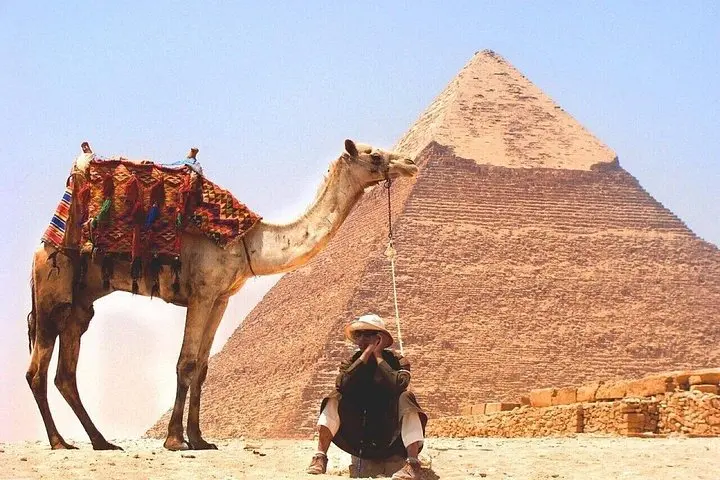
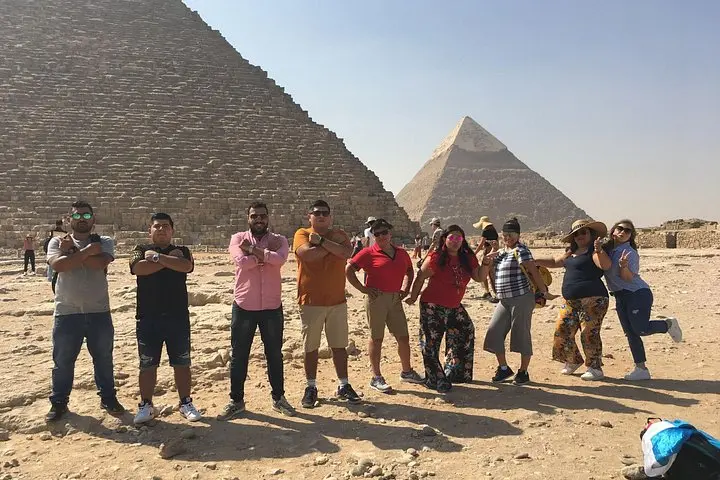
The crunch of limestone dust and the sudden rise of stone against an endless sky—arrive at Giza and the three great pyramids command the flat horizon. Your private guide meets you at an air-conditioned vehicle and steers straight toward Khufu’s massive silhouette, where the scale of the Great Pyramid becomes a quiet, physical fact rather than a postcard image.
Verified experiences and guided adventures in the surrounding area.
Operated by ToBadaa · Giza, Giza Governorate
The crunch of limestone dust and the sudden rise of stone against an endless sky—arrive at Giza and the three great pyramids command the flat horizon. Your private guide meets you at an air-conditioned vehicle and steers straight toward Khufu’s massive silhouette, where the scale of the Great Pyramid becomes a quiet, physical fact rather than a postcard image.
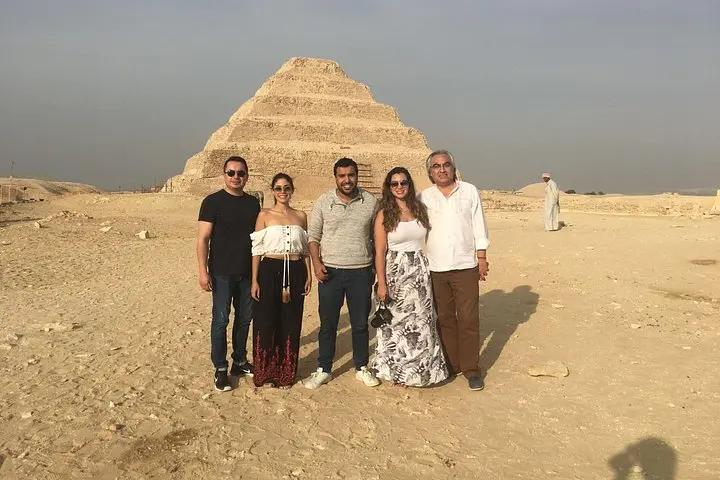
This landscape is Old Kingdom ground: Khufu, Khafre and Menkaure shaped these monuments between 2580–2500 BCE using local Tura limestone and labor organized at imperial scale. Nearby the Great Sphinx keeps an immovable watch; its human face and lion body anchor centuries of myth and archaeological debate. A short drive opens Saqqara’s Step Pyramid, the architectural ancestor that records a shift from mastaba tombs to monumental stone. Memphis, once the capital, offers fragments of colossal statues that hint at a lost urban rhythm.
Practically: expect mostly flat, sandy walking on uneven surfaces and short climbs by temple thresholds. Photography is excellent in morning light; midday heats intensify on summer afternoons. Entrance fees for sites are typically separate from private-tour costs—confirm tickets in advance. Bring sun protection, at least 1–2 liters of water, and comfortable closed-toe shoes for gravel and packed sand. Modest dress is respectful in this conservative cultural setting; plan restroom and snack stops into your schedule. Guides add value beyond logistics—ask about pyramid construction techniques, burial rituals, and modern conservation efforts to turn a photo stop into a fuller understanding of millennia-old engineering.
Entrance fees are typically not included—confirm with the operator ahead of time; guides often handle ticket purchase but expect to pay separately if not prepaid.
Yes—terrain is mostly flat and the tour is described as physically easy, though mobility limitations may make uneven ground and short staircases challenging.
Access inside pyramids is limited and often requires an extra ticket with restricted visitor numbers; verify availability in advance if interior access is important.
Modest, lightweight clothing that covers shoulders and knees is respectful in Egypt; comfortable layers and sun protection are recommended.
ToBadaa operates guided outdoor trips and adventures with an emphasis on safety, stewardship, and memorable experiences.
The crunch of limestone dust and the sudden rise of stone against an endless sky—arrive at Giza and the three great pyramids command the flat horizon. Your private guide meets you at an air-conditioned vehicle and steers straight toward Khufu’s massive silhouette, where the scale of the Great Pyramid becomes a quiet, physical fact rather than a postcard image.
The crunch of limestone dust and the sudden rise of stone against an endless sky—arrive at Giza and the three great pyramids command the flat horizon. Your private guide meets you at an air-conditioned vehicle and steers straight toward Khufu’s massive silhouette, where the scale of the Great Pyramid becomes a quiet, physical fact rather than a postcard image.
This landscape is Old Kingdom ground: Khufu, Khafre and Menkaure shaped these monuments between 2580–2500 BCE using local Tura limestone and labor organized at imperial scale. Nearby the Great Sphinx keeps an immovable watch; its human face and lion body anchor centuries of myth and archaeological debate. A short drive opens Saqqara’s Step Pyramid, the architectural ancestor that records a shift from mastaba tombs to monumental stone. Memphis, once the capital, offers fragments of colossal statues that hint at a lost urban rhythm.
Practically: expect mostly flat, sandy walking on uneven surfaces and short climbs by temple thresholds. Photography is excellent in morning light; midday heats intensify on summer afternoons. Entrance fees for sites are typically separate from private-tour costs—confirm tickets in advance. Bring sun protection, at least 1–2 liters of water, and comfortable closed-toe shoes for gravel and packed sand. Modest dress is respectful in this conservative cultural setting; plan restroom and snack stops into your schedule. Guides add value beyond logistics—ask about pyramid construction techniques, burial rituals, and modern conservation efforts to turn a photo stop into a fuller understanding of millennia-old engineering.