THE ADVENTURE COLLECTIVE® · Independent discovery and booking for outdoor travel

Explore the Ramesseum’s reliefs and Howard Carter’s private artifacts on a focused, three‑hour private tour from Luxor. Ideal for history lovers who want deep context without the crowds.
Explore the Ramesseum’s reliefs and Howard Carter’s private artifacts on a focused, three‑hour private tour from Luxor. Ideal for history lovers who want deep context without the crowds.
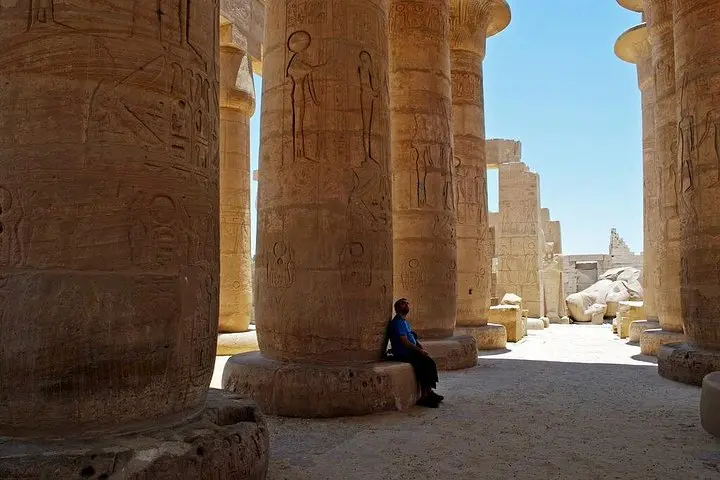
Morning light scours the mud-brick ridges of the Nile’s west bank as your air‑conditioned vehicle slips off the main road and into the quieter approach to the Ramesseum. Sand crunches underfoot; temple stones lean with centuries of sun. Your Egyptologist guide leads past battered reliefs that still point to battles and funerary rites, translating glyphs into human stories rather than museum labels.
Verified experiences and guided adventures in the surrounding area.
Operated by Egypt Best Day Tours · Luxor, Luxor Governorate
Morning light scours the mud-brick ridges of the Nile’s west bank as your air‑conditioned vehicle slips off the main road and into the quieter approach to the Ramesseum. Sand crunches underfoot; temple stones lean with centuries of sun. Your Egyptologist guide leads past battered reliefs that still point to battles and funerary rites, translating glyphs into human stories rather than museum labels.
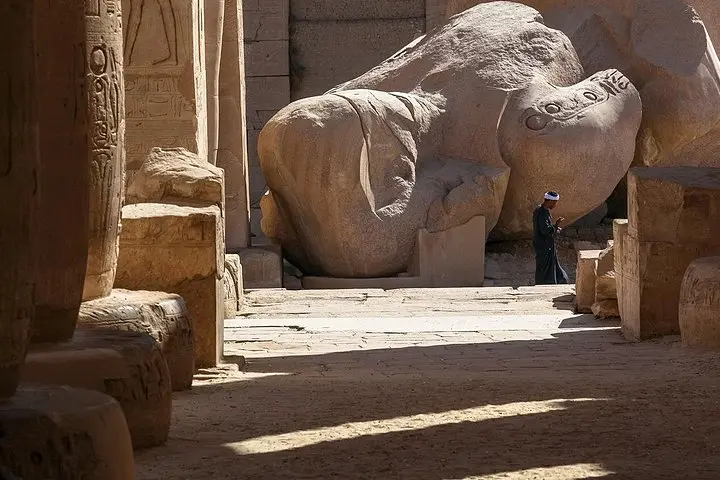
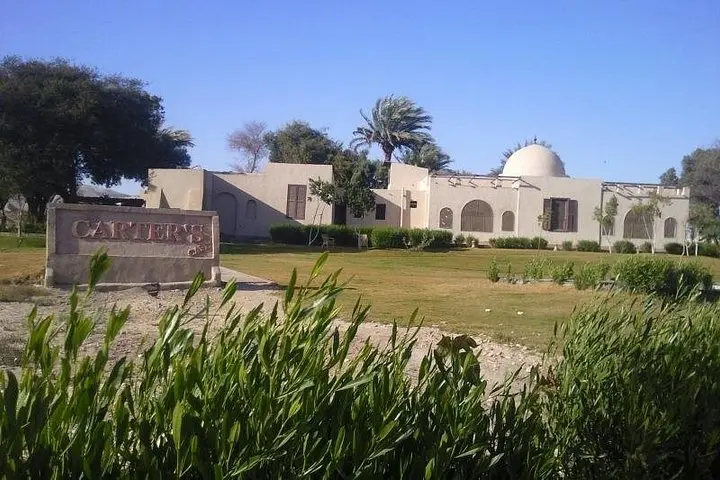
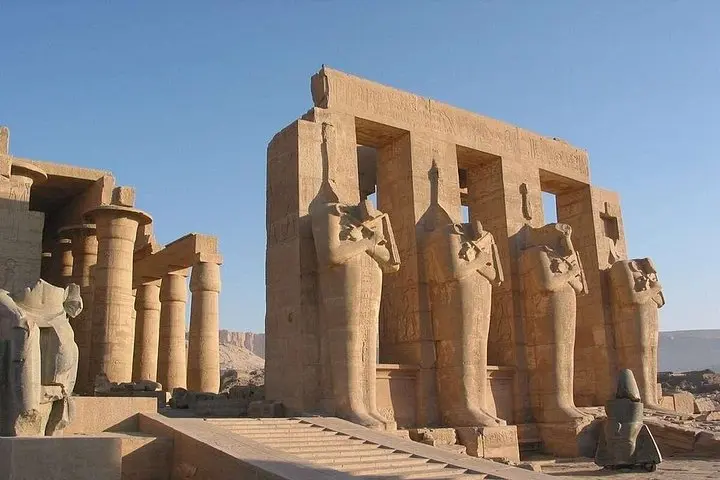
The Ramesseum, Ramesses II’s mortuary temple, is an exposed lesson in New Kingdom statecraft—colossal statues, battle scenes carved in low relief and foundation blocks that record both victories and piety. A short drive away sits the unassuming Howard Carter House, where the tools and cameras of early 20th‑century archaeology reveal the methodical work behind Tutankhamun’s discovery and the colonial era’s relationship to Egyptology.
This compact private tour balances art-history and on-the-ground logistics: expect roughly three hours of touring with short walks over uneven paved and sandy surfaces and minimal elevation change. Photography is generally allowed; historic rooms may have restricted access. Your guide handles admissions and pickup from most Luxor hotels or cruise piers, giving you a focused, crowd‑light experience.
Practical edge: go early to avoid midday heat, carry a full water bottle, wear closed-toe walking shoes and sun protection, and dress respectfully for temple sites. If you want sharper photos, bring a fast prime lens and be prepared to pause while your guide reads inscriptions aloud—this is where the stone voices of ancient Egypt become intelligible.
This private tour runs about three hours, including pickup and return to your Luxor hotel or cruise ship.
Yes — admissions to the Ramesseum and the Howard Carter House are included with the tour price.
The tour is rated easy with short walks; however, there are uneven surfaces and some steps that may challenge mobility-impaired visitors—contact the operator for specific accessibility arrangements.
Photography is generally permitted but may be limited in specific rooms; follow your guide’s instructions to avoid causing damage or violating rules.
Egypt Best Day Tours operates guided outdoor trips and adventures with an emphasis on safety, stewardship, and memorable experiences.
Morning light scours the mud-brick ridges of the Nile’s west bank as your air‑conditioned vehicle slips off the main road and into the quieter approach to the Ramesseum. Sand crunches underfoot; temple stones lean with centuries of sun. Your Egyptologist guide leads past battered reliefs that still point to battles and funerary rites, translating glyphs into human stories rather than museum labels.
Morning light scours the mud-brick ridges of the Nile’s west bank as your air‑conditioned vehicle slips off the main road and into the quieter approach to the Ramesseum. Sand crunches underfoot; temple stones lean with centuries of sun. Your Egyptologist guide leads past battered reliefs that still point to battles and funerary rites, translating glyphs into human stories rather than museum labels.
The Ramesseum, Ramesses II’s mortuary temple, is an exposed lesson in New Kingdom statecraft—colossal statues, battle scenes carved in low relief and foundation blocks that record both victories and piety. A short drive away sits the unassuming Howard Carter House, where the tools and cameras of early 20th‑century archaeology reveal the methodical work behind Tutankhamun’s discovery and the colonial era’s relationship to Egyptology.
This compact private tour balances art-history and on-the-ground logistics: expect roughly three hours of touring with short walks over uneven paved and sandy surfaces and minimal elevation change. Photography is generally allowed; historic rooms may have restricted access. Your guide handles admissions and pickup from most Luxor hotels or cruise piers, giving you a focused, crowd‑light experience.
Practical edge: go early to avoid midday heat, carry a full water bottle, wear closed-toe walking shoes and sun protection, and dress respectfully for temple sites. If you want sharper photos, bring a fast prime lens and be prepared to pause while your guide reads inscriptions aloud—this is where the stone voices of ancient Egypt become intelligible.