THE ADVENTURE COLLECTIVE® · Independent discovery and booking for outdoor travel

Experience the Sheikh Zayed Grand Mosque on a private round-trip from Dubai. Walk marble courtyards, learn Islamic architectural symbolism, and capture sunset views from Wahat Al Karama.
Experience the Sheikh Zayed Grand Mosque on a private round-trip from Dubai. Walk marble courtyards, learn Islamic architectural symbolism, and capture sunset views from Wahat Al Karama.
You arrive on a late-afternoon highway as the cityscape thins and the desert flattens, the mosque’s domes appearing like a white horizon that pulls the eye. Under a wide Gulf sky the Sheikh Zayed Grand Mosque reads in crisp marble: geometric rhythms, palm-inspired columns and filigree that flip light into shadow. The tour moves at a deliberate pace — a guided walk through vast courtyards, beneath chandeliers that hang like slowed stars, and into prayer halls rug-strewn with the world’s largest hand-knotted carpet.
Verified experiences and guided adventures in the surrounding area.
Operated by Wander With Nada · Abu Dhabi, Abu Dhabi
You arrive on a late-afternoon highway as the cityscape thins and the desert flattens, the mosque’s domes appearing like a white horizon that pulls the eye. Under a wide Gulf sky the Sheikh Zayed Grand Mosque reads in crisp marble: geometric rhythms, palm-inspired columns and filigree that flip light into shadow. The tour moves at a deliberate pace — a guided walk through vast courtyards, beneath chandeliers that hang like slowed stars, and into prayer halls rug-strewn with the world’s largest hand-knotted carpet.
Built over roughly eleven years and opened in 2007 under Sheikh Zayed’s vision, the mosque combines materials and crafts from across the world — Italian marble, Turkish stonework, and Iranian mosaics — reflecting contemporary Islamic architectural practice and regional intent. The site sits on Abu Dhabi’s coastal plain; its clean lines contrast with dune and city, creating a focal point for national memory and ritual.
Expect cultural framing as much as sightseeing: your guide will explain wudu (ablution) practices, prayer timing, and the symbolism laced through the columns and calligraphy. Wahat Al Karama, the adjacent memorial plaza, offers a reflective counterpoint — angled panels and a shallow reflecting pool that frame the mosque’s silhouette.
Practicalities: modest dress is required (abayas provided for women), shoes are removed for some indoor areas, and sunset light delivers the most dramatic photos but also higher visitor numbers. Bring sun protection for courtyard time, a reusable water bottle (bottled water provided on the tour), and plan for about 5–6 hours round trip from Dubai including transport.
Yes. Modest dress covering shoulders and knees is required; women may be asked to wear an abaya and headscarf (sets are provided on loan).
Photography is generally allowed in public areas but avoid photographing worshippers during prayer and follow guide instructions for restricted zones.
The full experience, including transport and stops, is about 5–6 hours depending on traffic and pickup location in Dubai.
The site has accessible ramps and the tour notes stroller accessibility; check with the operator for specific wheelchair assistance needs.
Wander With Nada operates guided outdoor trips and adventures with an emphasis on safety, stewardship, and memorable experiences.
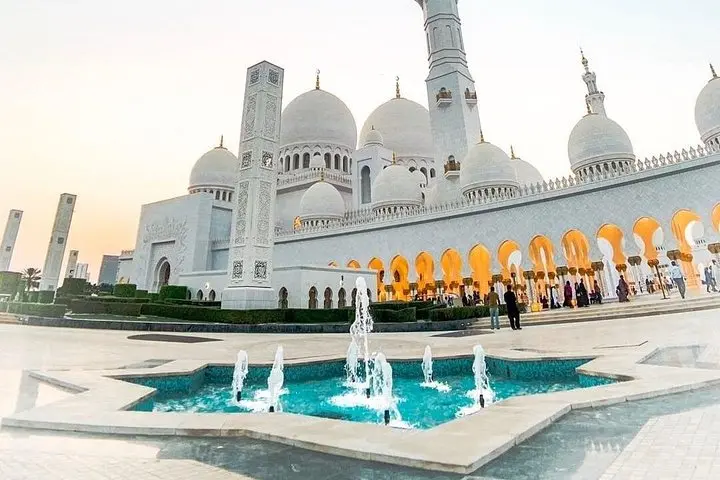
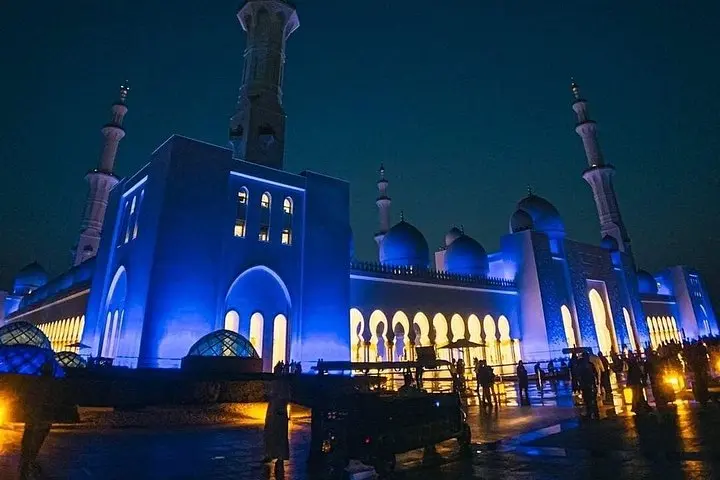
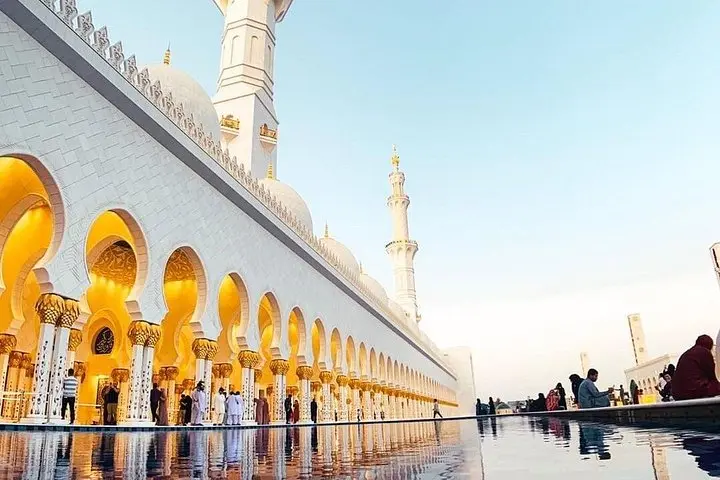
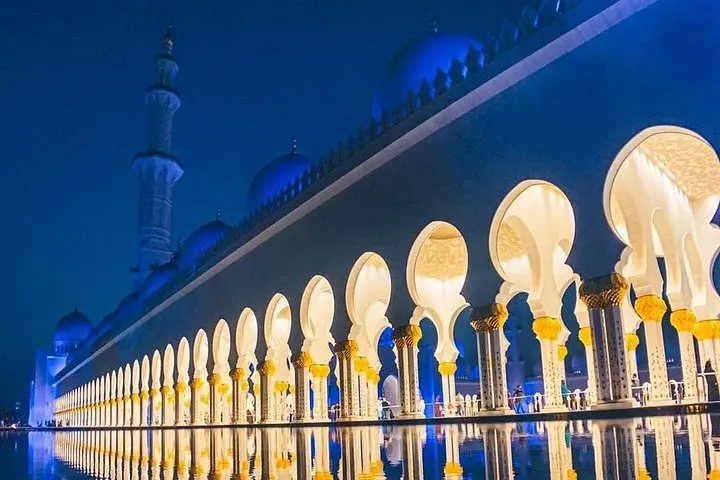
You arrive on a late-afternoon highway as the cityscape thins and the desert flattens, the mosque’s domes appearing like a white horizon that pulls the eye. Under a wide Gulf sky the Sheikh Zayed Grand Mosque reads in crisp marble: geometric rhythms, palm-inspired columns and filigree that flip light into shadow. The tour moves at a deliberate pace — a guided walk through vast courtyards, beneath chandeliers that hang like slowed stars, and into prayer halls rug-strewn with the world’s largest hand-knotted carpet.
You arrive on a late-afternoon highway as the cityscape thins and the desert flattens, the mosque’s domes appearing like a white horizon that pulls the eye. Under a wide Gulf sky the Sheikh Zayed Grand Mosque reads in crisp marble: geometric rhythms, palm-inspired columns and filigree that flip light into shadow. The tour moves at a deliberate pace — a guided walk through vast courtyards, beneath chandeliers that hang like slowed stars, and into prayer halls rug-strewn with the world’s largest hand-knotted carpet.
Built over roughly eleven years and opened in 2007 under Sheikh Zayed’s vision, the mosque combines materials and crafts from across the world — Italian marble, Turkish stonework, and Iranian mosaics — reflecting contemporary Islamic architectural practice and regional intent. The site sits on Abu Dhabi’s coastal plain; its clean lines contrast with dune and city, creating a focal point for national memory and ritual.
Expect cultural framing as much as sightseeing: your guide will explain wudu (ablution) practices, prayer timing, and the symbolism laced through the columns and calligraphy. Wahat Al Karama, the adjacent memorial plaza, offers a reflective counterpoint — angled panels and a shallow reflecting pool that frame the mosque’s silhouette.
Practicalities: modest dress is required (abayas provided for women), shoes are removed for some indoor areas, and sunset light delivers the most dramatic photos but also higher visitor numbers. Bring sun protection for courtyard time, a reusable water bottle (bottled water provided on the tour), and plan for about 5–6 hours round trip from Dubai including transport.